ISO 9001 & CE Certified Semiconductor Fab Solutions
CE Certified Semiconductor Quartz Boat Factories & Factory
Ultra-high purity fused silica wafer boats, diffusion carriers, and thermal process glassware engineered for 100mm to 300mm sub-micron semiconductor fabs.
Precision Fab Glassware Catalog
Semiconductor Quartz Boats & High-Purity Process Ware
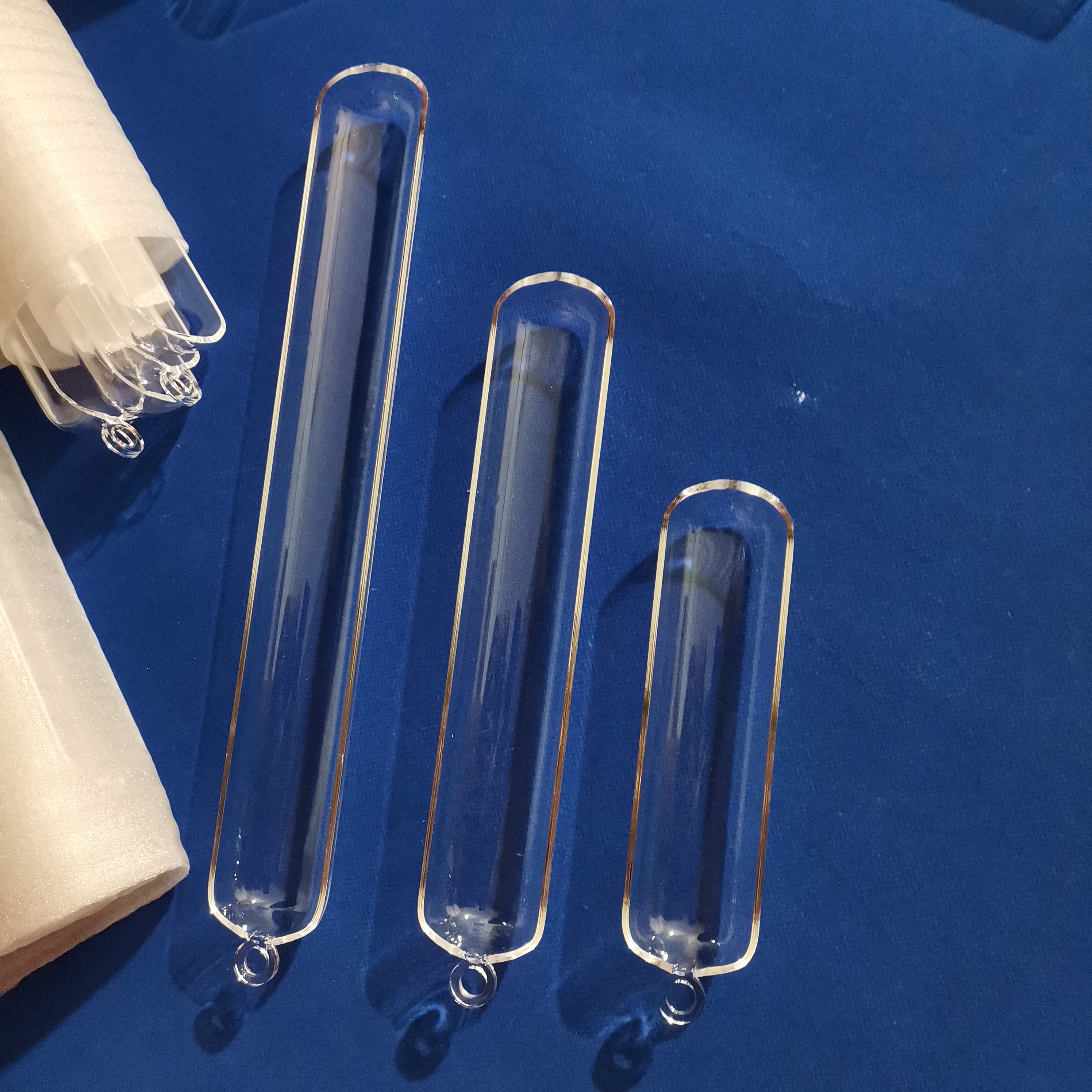
Directly supplied by Kemzo Quartz's Donghai manufacturing lines. Every item is fabricated from electric-arc fused or synthetic silica, flame-polished, and serialized for full traceability in critical wafer processing.
In microelectronic front-end-of-line (FEOL) wafer processing, the semiconductor quartz boat (wafer carrier) serves as the mechanical backbone within diffusion furnaces, oxidation chambers, and Low-Pressure Chemical Vapor Deposition (LPCVD) reactors. During thermal oxidation and dopant drive-in steps—frequently operating between 950°C and 1250°C—the quartz boat must sustain structural rigidity without warping, while demonstrating near-zero chemical affinity or cross-contamination with the silicon wafers. A mechanical failure or dimensional drift of a fraction of a millimeter can induce automated wafer handling end-effector collisions, leading to catastrophic wafer scrap events valued in hundreds of thousands of dollars.
Manufacturing an elite-tier semiconductor quartz boat demands mastery over thermo-mechanical stress relief, raw mineral crystallization kinetics, and high-precision diamond tooling. At Kemzo Quartz (Donghai Kemzo Quartz Products Co., Ltd.), boats are configured into horizontal ladder assemblies, cantilever-compatible carriers, or high-aspect vertical towers. Each geometry requires dedicated weld seam normalization using oxy-hydrogen micro-torches to guarantee that residual stress remains under 2.0 MPa throughout hundreds of aggressive thermal thermal ramp-up and ramp-down cycles.
Key Structural Architectures of Semiconductor Quartz Boats
Horizontal Ladder Boats
Engineered for traditional horizontal diffusion tubes (100mm to 150mm wafers). Utilizing multi-rod structural geometries with crossbars to prevent axial sagging. Slotted rails are machine-indexed to support 25 to 50 wafer batches with precision gas-flow channels.
Cantilevered Wafer Carriers
Designed for non-contact automated paddle insertion. Suspended inside horizontal process tubes without sliding contact on the inner tube wall, fully eliminating quartz-on-quartz frictional particle generation during critical POCl₃ deposition phases.
Vertical Boat Towers (200mm / 300mm)
Monolithic, high-stability vertical quartz towers customized for modern 200mm and 300mm fabs. Provides uniform gas distribution across wafers with minimal thermal mass, optimizing temperature uniformity (±0.5°C) across the entire furnace zone.
The primary failure mode of semiconductor quartz boats during prolonged fab cycling is devitrification—the solid-state phase transformation of amorphous fused silica into crystalline beta-cristobalite. This polymorphic inversion is accompanied by a localized volumetric contraction (~5%) during cooling through 270°C, precipitating surface micro-cracks, structural spalling, and particulate shedding onto prime wafer surfaces. Devitrification is catalytically accelerated by trace alkali metal contaminations (Na⁺, K⁺, Li⁺) and excessive hydroxyl (OH⁻) radical content.
To prevent devitrification and ensure automated robotic transfer arms (EFEM / AGV systems) load wafers without mechanical pinching, Kemzo Quartz combines 5-axis ultrasonic CNC diamond grinding with computerized fire-polishing. Every wafer slot undergoes multi-stage radius edging (R0.2mm to R0.5mm) to eradicate subsurface micro-fissures. Below is an exhaustive comparison of the machining and material thresholds achieved in our Donghai facility:
Physical / Chemical Property
Industrial Grade Quartz
Kemzo Fab-Standard Fused Quartz
Synthetic Silica High-End Grade
Impact on Wafer Yield
Total Alkali Content (Na, K, Li)
> 2.5 ppm
< 0.5 ppm
< 0.05 ppm
Eliminates mobile ion drift & cristobalite seeding
Prevents wafer edge chipping and particulate shedding
CE Certification Standards & Factory Quality Control Protocols
Procuring semiconductor quartz boats from Chinese production factories requires thorough validation against stringent international safety and purity criteria. While fused silica itself is an inorganic vitreous material, obtaining authentic CE Certification for semiconductor processing apparatus verifies compliance with essential EU directives, including the Machinery Directive (2006/42/EC) for robotic compatibility and safety, as well as strict chemical limits under RoHS Directive 2011/65/EU and REACH Regulation (EC 1907/2006).
At Donghai Kemzo Quartz Products Co., Ltd., our ISO 9001 certified manufacturing plant implements an uncompromised 4-stage quality gate protocol before any quartz boat is packaged for global export:
01
Spectroscopic Raw Ingot Analysis
Every natural quartz crystalline batch undergoes Inductively Coupled Plasma Mass Spectrometry (ICP-MS) to confirm trace metals remain below 0.1 ppm before drawing or melting occurs.
02
Ultrasonic Multi-Axis Profiling
Slotted rods are shaped on vibration-damped CNC work centers with laser interferometer feedback, holding parallel tolerances within ±0.03mm across 600mm boat profiles.
03
High-Temp Thermal Annealing
Boats undergo high-temperature furnace soaking at 1215°C followed by controlled cooling to the 1120°C strain point, completely relaxing internal stresses induced during hand welding.
04
Cleanroom Leaching & Vacuum Pack
Processed in Class 100/1000 cleanrooms: 10% HF/HNO₃ ultra-pure acid bath etching, 18.2 MΩ·cm DI water cascade rinsing, particulate testing, and double clean-film heat-sealed bagging.
Global Procurement Trends & Future Technological Roadmap (2025–2030)
The semiconductor hardware market is navigating a decisive transformation. Driven by automotive electrification (EVs), AI hyperscale data centers, and advanced node transitions, procurement departments are reconsidering their quartz supply chains. In particular, fabs are optimizing their Total Cost of Ownership (TCO) by transitioning from legacy suppliers toward directly partnered, CE-certified Chinese manufacturing factories capable of customized engineering.
Market Trend
Expansion in SiC & GaN Wide-Bandgap Fabs
Silicon Carbide (SiC) and Gallium Nitride (GaN) power device fabrication involves extended high-temperature thermal steps exceeding 1200°C. Standard quartz boats sag unacceptably under these conditions. Sourcing teams are increasingly specifying low-OH fused quartz and hybrid quartz-SiC composites capable of delivering 300+ thermal cycles without structural deformation.
Tech Roadmap
Transition to 300mm Monolithic Vertical Boats
As 200mm legacy fabs modernize and 300mm fabs expand, modular slotted rods joined by hand welding are giving way to monolithic, robot-assembled vertical quartz towers. These designs minimize manual weld points, maximize gas-flow dynamics for atomic-layer depositions (ALD), and eliminate particle traps.
Semiconductor manufacturers across North America, Europe, and East Asia are moving away from single-source monopolies for consumable quartz components. Qualifying Kemzo Quartz provides fabs with direct access to China's Donghai quartz cluster, mitigating geopolitical bottlenecks and reducing lead times by up to 60%.
Process Evolution
AI-Driven Optical Inspection & Serialization
Automated wafer fabs require comprehensive end-to-end component traceability. Modern semiconductor quartz boats now feature permanent, non-contaminating femtosecond-laser etched DataMatrix 2D barcodes on their base rails, tracking cleaning history, furnace cycles, and maintenance rotations automatically.
Why Global Fabs Partner with Donghai Kemzo Quartz Co., Ltd.
Established in 2011, Donghai Kemzo Quartz Products Co., Ltd. is located in Donghai County, Lianyungang, Jiangsu Province—celebrated internationally as China's quartz capital due to its rich mineral reserves and high-precision glassworking cluster. Combining raw silica beneficiation, automated electric fusion lines, and cleanroom secondary fabrication, Kemzo provides OEM and ODM solutions to semiconductor, solar PV, and precision research institutions across over 30 countries.
Source-Region Raw Ore
Direct access to Donghai high-purity natural silica allows continuous quality control over chemical impurities from the mineral stage onward.
OEM to Exact CAD Drawings
Over 11 years of custom engineering. Send us standard 2D/3D CAD drawings (STEP, DWG) and receive a verified DFM engineering analysis within 24 hours.
Rapid Fab Response Team
Average inquiry response time under 1 hour. Multi-lingual engineering sales team offering transparent FOB, CIF, DDP, and door-to-door express delivery.
Jiangsu High-Tech Recognition
Officially certified Jiangsu High Technology Enterprise and ISO 9001 registered manufacturer with 10+ modernized quartz production lines.
Semiconductor Quartz Boat Procurement FAQ
Technical guidance and commercial clarity addressing the most common inquiries from semiconductor fab engineers and procurement officers.
What defines a "CE Certified" semiconductor quartz boat?
A CE-certified semiconductor quartz boat verifies compliance with harmonized European standards relevant to fab tooling. This includes documentation under the Machinery Directive (2006/42/EC) ensuring dimensional precision, mechanical integrity, and safe integration into automated wafer handling robotics without hazardous failure modes. Furthermore, it validates conformity with RoHS Directive 2011/65/EU and REACH (EC 1907/2006), verifying that no restricted heavy metals or toxic organic processing additives are present in the component matrix.
How does Kemzo Quartz control trace metal impurities to prevent wafer contamination?
Contamination control begins with raw high-purity natural silica sand refined in Donghai, followed by electrical fusion in vacuum furnaces to prevent ambient particulate absorption. During secondary machining, all tooling utilizes deionized water cooling. Post-machining, quartz boats undergo hot chemical etching in high-purity hydrofluoric and nitric acid baths (HF/HNO₃) inside cleanrooms to dissolve trace surface metals. Batch testing is documented via Inductively Coupled Plasma Mass Spectrometry (ICP-MS) reports, verifying alkali (Na, K, Li) and heavy metal (Fe, Cu, Ni) levels below 0.1–0.5 ppm.
What are the standard dimensional tolerances for wafer slot pitch and width?
Standard tolerances for manual diffusion loading are ±0.10mm. However, for modern automated cassette-to-boat robotic end-effectors, Kemzo Quartz machines slotted rails to a tight pitch tolerance of ±0.03mm and slot width tolerance of ±0.02mm. Perpendicularity and overall parallelism across the 4-rod assembly are held within 0.15mm, fully verified on coordinate measuring machines (CMM) prior to packaging.
What is the expected operating lifetime and cleaning protocol for a quartz boat in POCl₃ diffusion?
In phosphorus oxychloride (POCl₃) diffusion running at 850°C–950°C, phosphosilicate glass (PSG) builds up on the quartz rails. With proper maintenance—leaching the PSG in a 5%–10% HF acid bath every 15–25 runs—a Kemzo high-purity boat typically sustains 150 to 300 thermal cycles. To avoid premature thermal fatigue, the ramp rate must be controlled (typically 5°C–10°C/min between 600°C and 1000°C), and periodic thermal re-annealing can be performed to restore structural longevity.
How are fragile semiconductor quartz boats packed for international air and sea freight?
Packaging is engineered to semiconductor cleanroom standards. Each boat is pre-cleaned, sealed in double-layer polyethylene antistatic cleanroom bags, and suspended inside a custom-cut high-density EPE foam cradle that isolates all delicate rods and slot teeth from shock. This internal assembly is placed in a heavy-duty corrugated box and secured inside a shock-mounted, export-grade fumigated wooden crate with moisture desiccant packs and exterior "Tip-N-Tell" / shock sensor indicators.
Can you produce custom carrier boats directly from CAD drawings or physical samples?
Yes. Over 70% of our semiconductor production is built to custom engineering drawings. Customers can upload CAD models (STEP, IGES, DXF, or PDF), or supply a decommissioned physical carrier for coordinate reverse-engineering. Our technical engineering division will confirm slot spacing, thermal sag allowance, and weld clearances, delivering formal CAD manufacturing blueprints and quotation pricing within 24 to 48 hours.
Request Engineering Review & Quotation for Semiconductor Quartz Boats
Partner directly with Donghai's leading ISO 9001 certified quartz manufacturer. Submit your CAD drawings, dimensional specifications, or batch requirements for prompt technical evaluation within 1 hour.