High-Precision Optical Quartz & Pyrometric Components
Direct from Donghai Kemzo Quartz Products Co., Ltd. — Manufactured to micron-level mechanical tolerances, custom optical finishes, and rigorous spectral transmission standards.
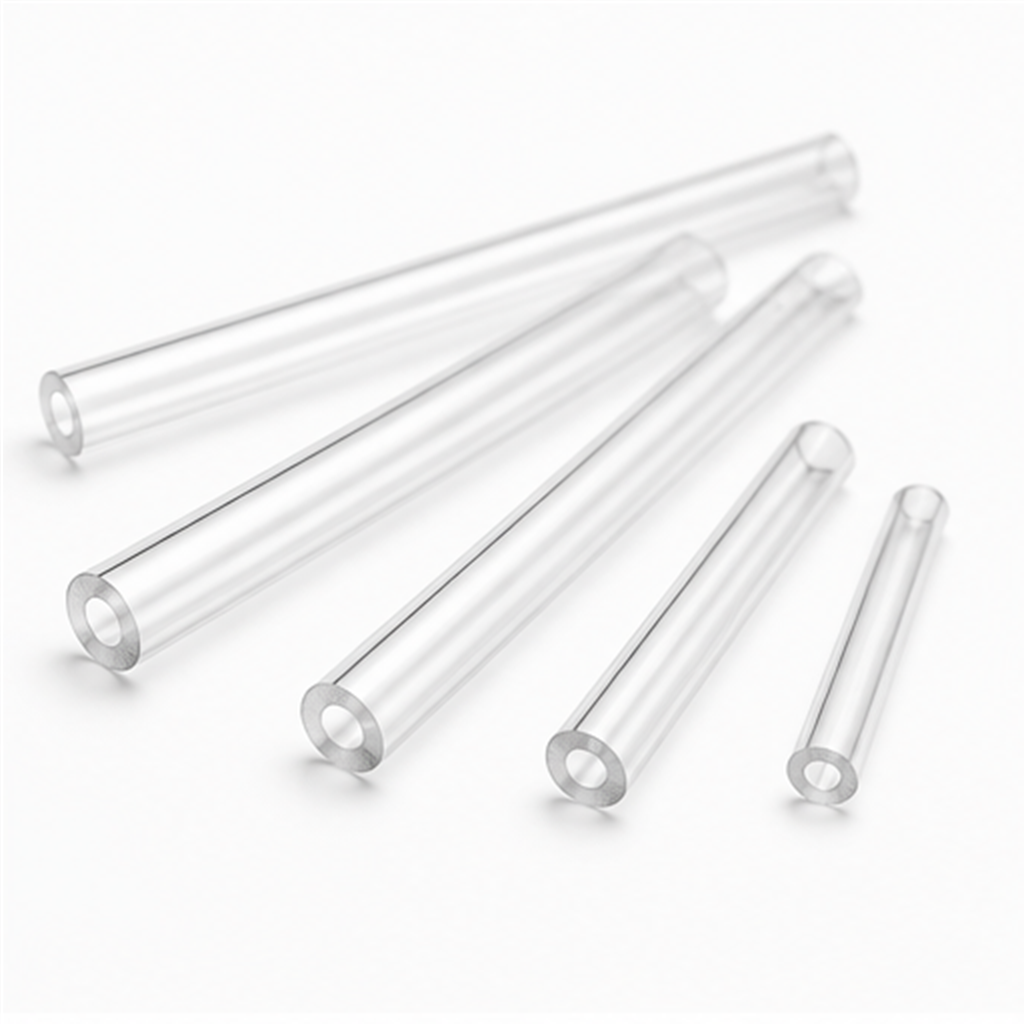
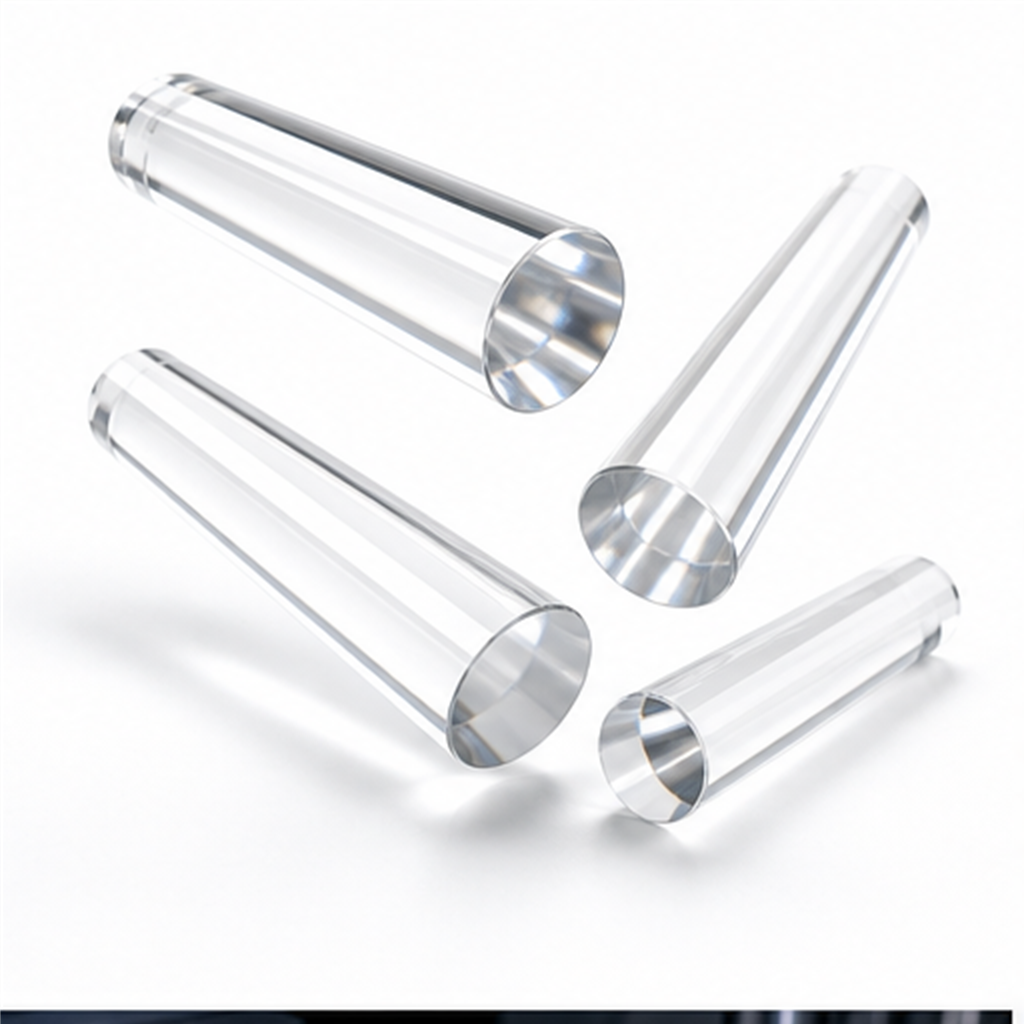
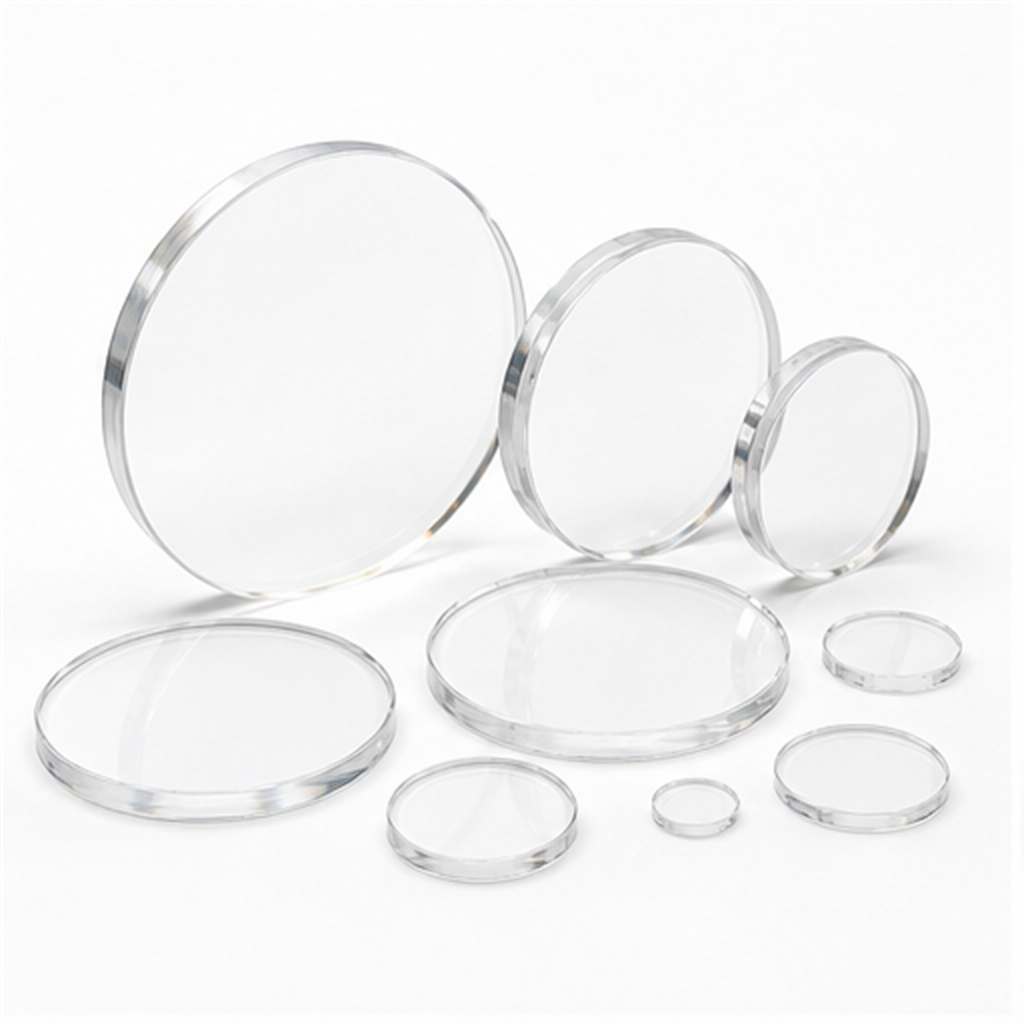
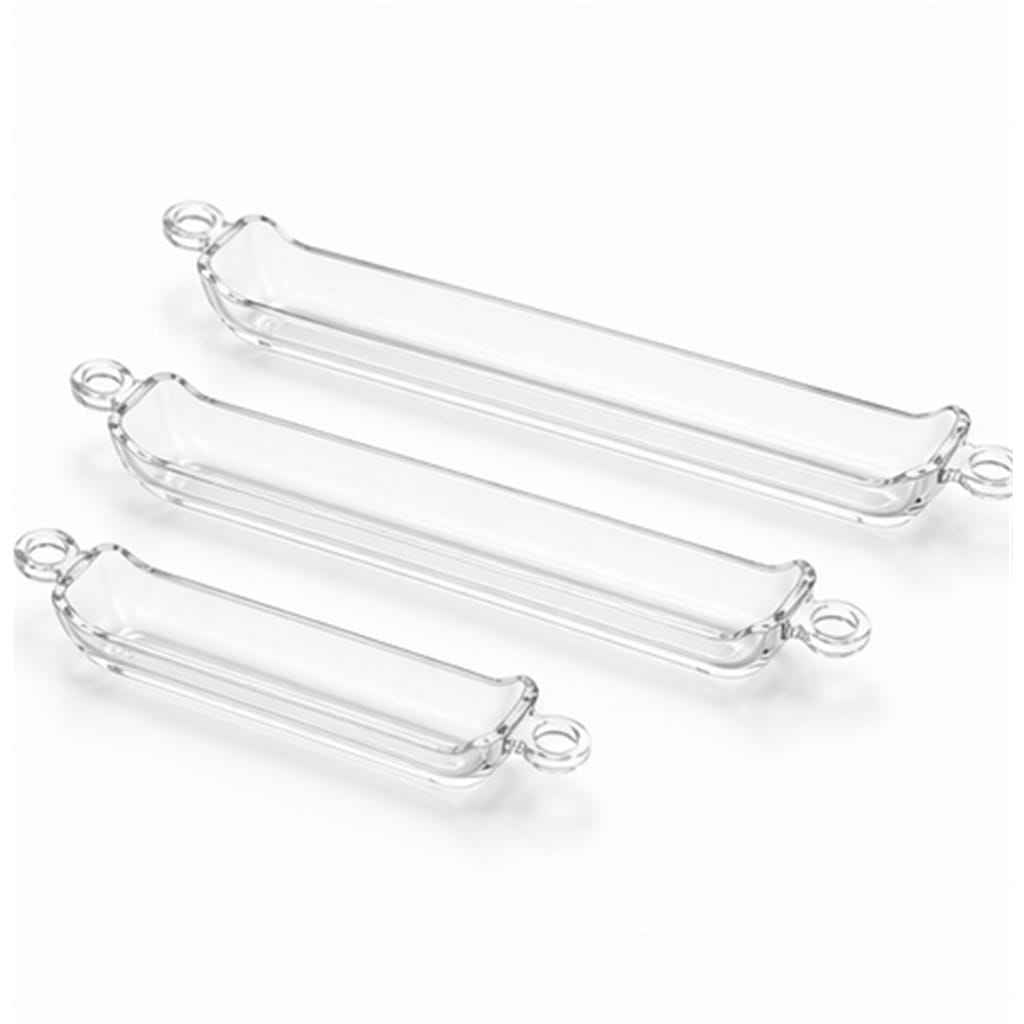
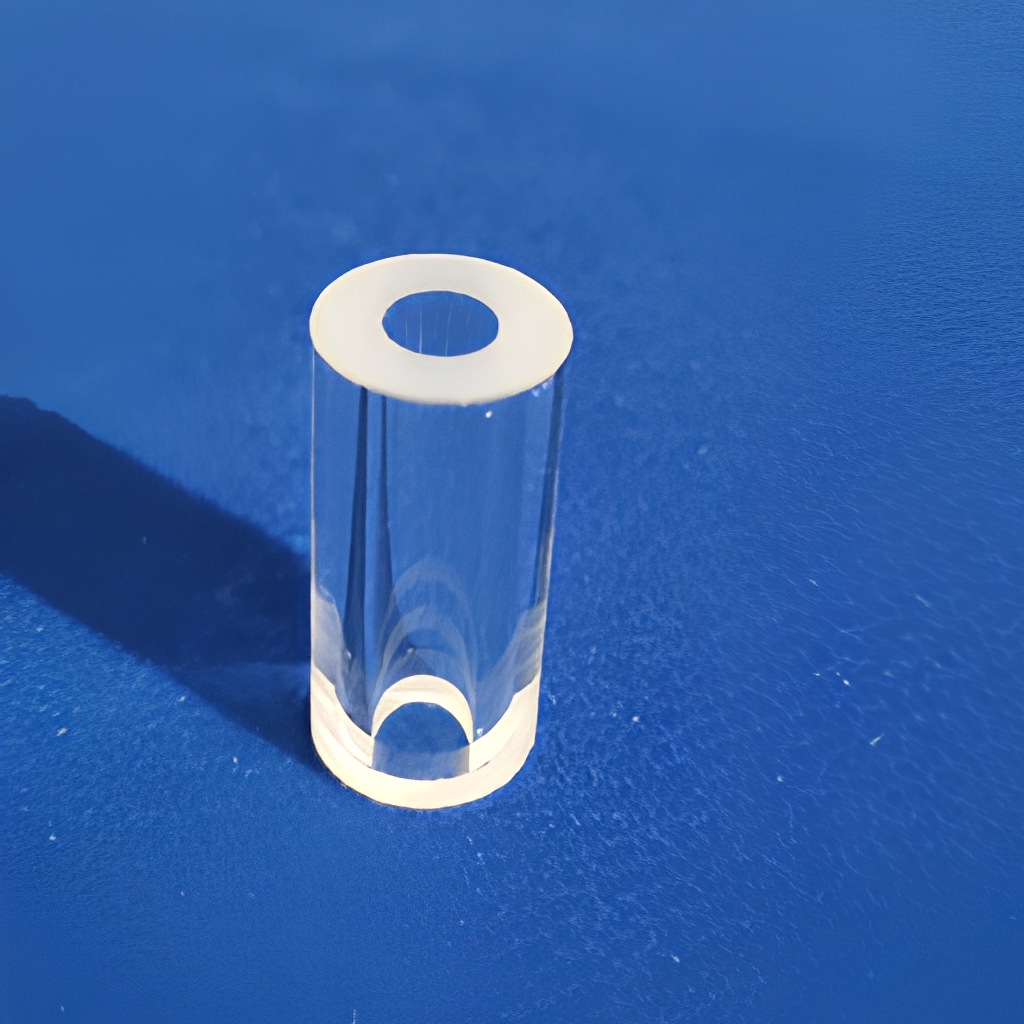
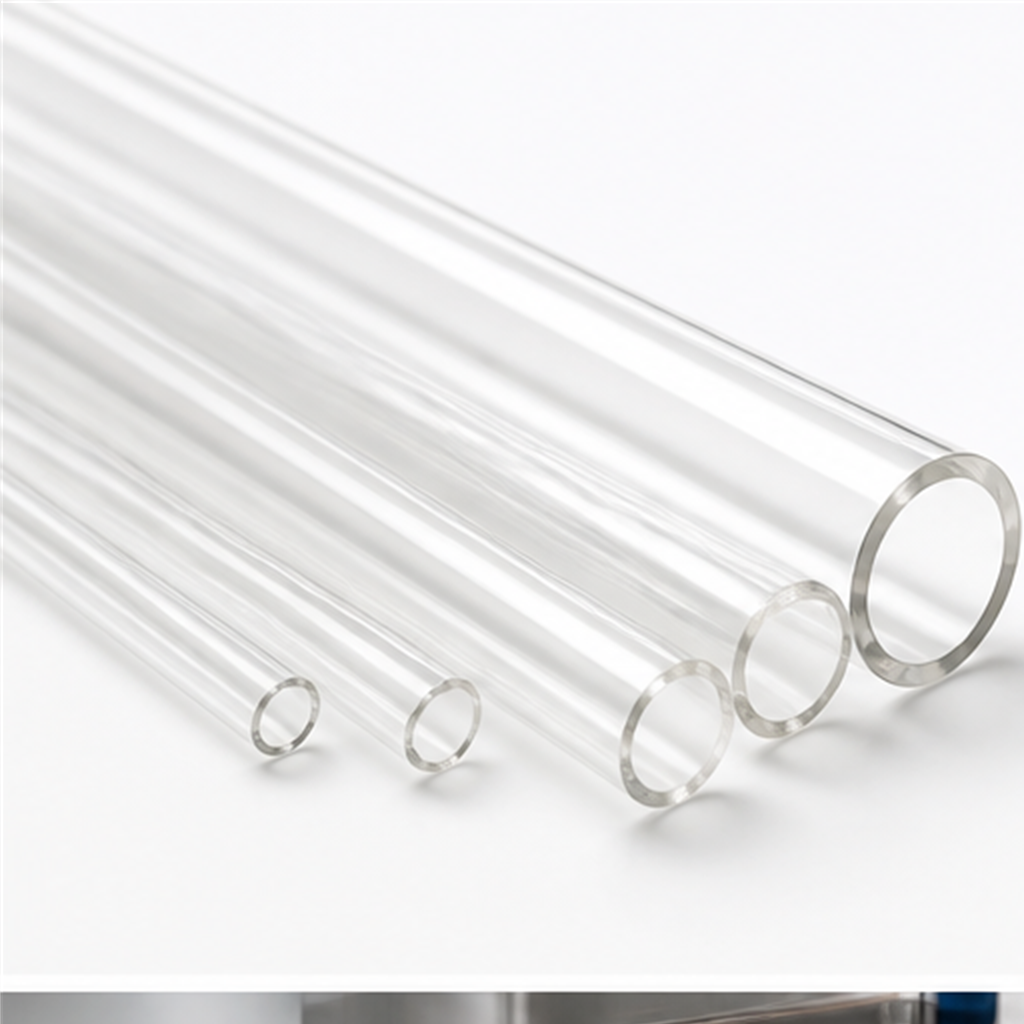
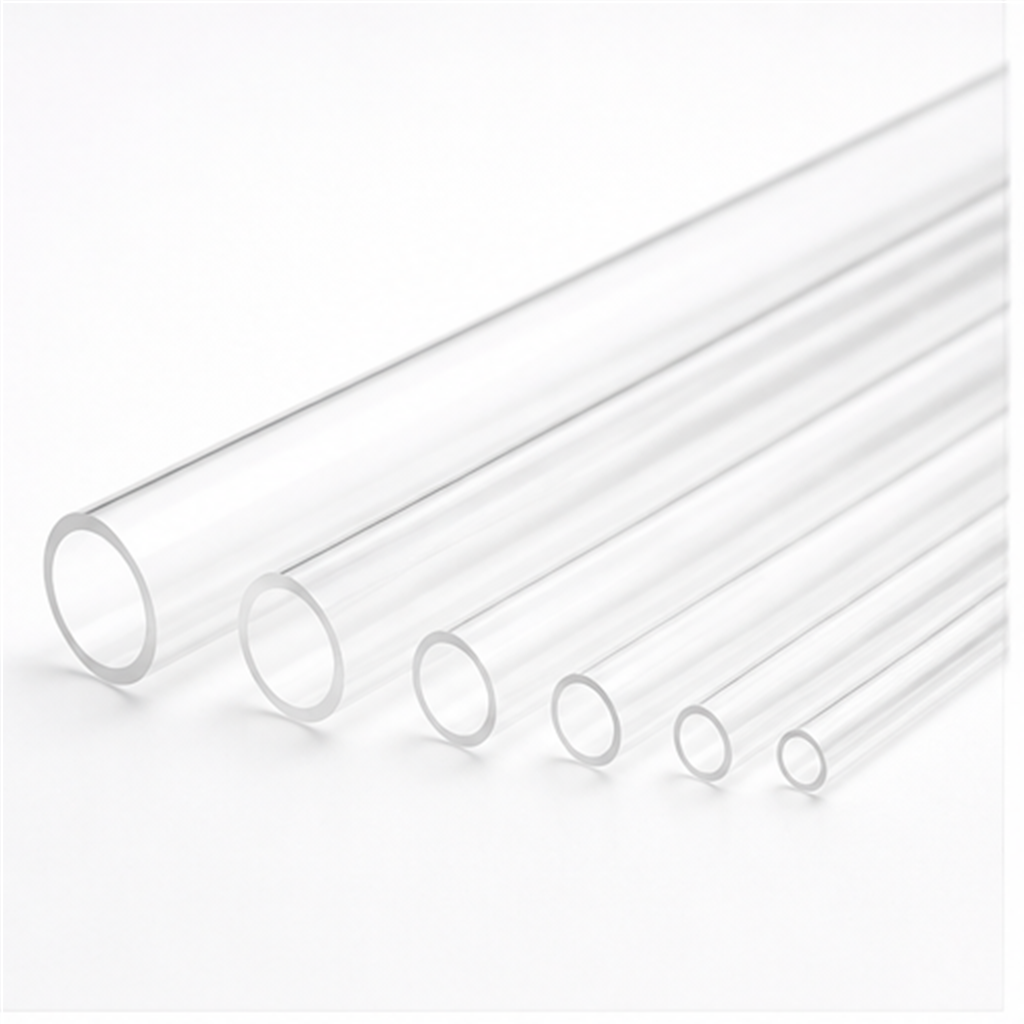
Industrial Whitepaper: Optical Metrology & Engineering Criteria for Quartz Pyrometer Windows
In high-temperature thermal processing—including semiconductor wafer processing (rapid thermal annealing, MOCVD, epitaxial silicon deposition), vacuum induction melting, gasification furnaces, and aerospace hypersonic simulation—accurate non-contact temperature metrology is essential. Infrared pyrometers and thermal imaging systems depend strictly on the optical integrity of the viewport separating the instrument from the harsh reactor atmosphere.
1. Spectral Transmittance Physics Across Optical Quartz Grades
Optical pyrometry typically operates across distinct spectral bands: near-infrared (NIR: 0.78 to 1.1 μm), short-wavelength infrared (SWIR: 1.4 to 1.7 μm and 2.0 to 2.5 μm), and mid-wavelength infrared (MWIR: 3.5 to 5.0 μm). Standard technical glasses fail at temperatures exceeding 450°C and display heavy transmission cutoffs. Synthetic fused silica (JGS1), optical fused quartz (JGS2), and low-OH infrared quartz (JGS3) provide the ultimate material baseline.
Crucially, fused quartz manufactured from electric fusion of natural quartz crystal differs from chemical vapor deposition synthetic silica in its hydroxyl (OH⁻) absorption profile. At the fundamental absorption wavelength of 2.73 μm, as well as its overtones at 2.2 μm and 1.38 μm, free OH radicals cause sharp transmission dips. For single-band or two-color ratio pyrometers measuring within the 2.0–2.8 μm spectral region, specifying water-free electrically fused quartz (OH⁻ < 5 ppm) is mandatory to eliminate calibration drift.
| Substrate Material | Spectral Range (T ≥ 80%) | Hydroxyl (OH) Content | Max Service Temp (Continuous) | Thermal Expansion Coeff. (20–300°C) | Thermal Shock Resistance (ΔT) | Refractive Index (nd @ 589 nm) |
|---|---|---|---|---|---|---|
| JGS1 Synthetic Fused Silica | 185 nm – 2,500 nm | < 1,200 ppm (High OH) | 1,050 °C | 5.5 × 10⁻⁷ / °C | > 1,000 °C Quench | 1.4584 |
| JGS2 Optical Fused Quartz | 220 nm – 2,700 nm | < 150 – 200 ppm | 1,150 °C | 5.5 × 10⁻⁷ / °C | > 1,000 °C Quench | 1.4585 |
| JGS3 Low-OH Infrared Quartz | 260 nm – 3,500 nm | < 5 ppm (Water-Free) | 1,200 °C | 5.4 × 10⁻⁷ / °C | > 1,050 °C Quench | 1.4586 |
| Sapphire (Al₂O₃) Optical Crystal | 170 nm – 5,500 nm | 0 ppm | 1,800 °C | 6.8 × 10⁻⁶ / °C | ≈ 150 – 200 °C Quench | 1.7680 |
| Borosilicate (Borofloat 33) | 350 nm – 2,000 nm | N/A | 450 °C | 3.25 × 10⁻⁶ / °C | ≈ 175 °C Quench | 1.4714 |
2. Thermal Shock Dynamics & Dimensional Stability at Extreme Temperatures
A premier engineering advantage of fused quartz pyrometer windows manufactured by Donghai Kemzo Quartz is an extraordinarily low linear coefficient of thermal expansion (CTE) of approximately 5.5 × 10⁻⁷ / °C. In practical terms, this expansion is roughly 1/6th that of borosilicate glass and less than 1/10th that of crystalline sapphire along its C-axis.
In real-world furnace viewports, severe temperature differentials exist between the hot interior surface exposed to 1100°C furnace radiation and the cold exterior face exposed to ambient ambient or water-cooled flange jackets. High-CTE materials such as standard glass or sapphire generate severe internal tensile hoop stresses across this radial gradient, leading to catastrophic brittle fracture. Fused quartz viewports reliably endure abrupt temperature plunges from 1100°C into ice water without microfracturing or structural failure.
3. Wavefront Distortion, Surface Roughness, and Emissivity Compensation
When selecting a quartz pyrometer window, optical precision directly dictates infrared radiance path distortion. Under SEMI and ISO 10110 standards, viewport specifications must encompass:
- Surface Figure (Flatness): Maintained between λ/4 and λ/10 per 25 mm diameter at 632.8 nm to avoid lensing distortion that shifts pyrometer focal depth.
- Surface Quality (Scratch-Dig): 20/10 or 40/20 per MIL-PRF-13830B to prevent scattered light halos that cause background radiance contamination.
- Surface Roughness (Ra): Precision CMP processing reaching Ra < 0.5 nm, preserving specular transmission and blocking unwanted diffuse scattering.
- Parallelism / Wedge Angle: Maintained under 10 arcseconds to prevent angular beam steering when using narrow-field pyrometers.
Why Leading Global OEMs Choose Donghai Kemzo Quartz
Backed by the world-class natural crystal reserves of Donghai County, Jiangsu, China, and over a decade of precision quartz glass fabrication.
Crystal Capital Raw Materials
Situated in Donghai County, China's crystal capital. Direct access to ultra-high-purity silica sand (SiO₂ ≥ 99.99%) ensures minimal metallic inclusions (Fe < 0.2 ppm, Al < 12 ppm) and exceptional raw material pricing stability.
Certified Manufacturing System
ISO 9001 certified manufacturing facility recognized as a Jiangsu High Technology Enterprise. Over 10 automated drawing and continuous fusion lines covering crucibles, precision tubes, rods, and optical window substrates.
Custom OEM / ODM Engineering
11+ years of bespoke OEM/ODM fabrication to CAD drawings. Full in-house CNC milling, ultrasonic drilling, precision double-side polishing, high-temperature annealing for internal stress relief, and custom flange brazing.
Future Procurement Trends in Quartz Pyrometer Windows
Market forces and technical paradigm shifts reshaping how thermal engineers and supply chain directors procure optical furnace viewports.
1. Transition to Ultra-Low OH Synthetic Quartz for SWIR Metrology
As semiconductor fabrication shifts toward smaller process nodes, multi-wavelength and ratio pyrometers in MOCVD reactors increasingly operate around 2.0–2.5 μm. Standard natural quartz exhibits minor OH absorption blips in this zone; procurement managers are shifting specifications toward zero-OH electrically fused or dry synthetic quartz to ensure linear transmittance across the entire detector response curve.
2. Pre-Mounted & Metal-Brazed Flange Assemblies (UHV Ready)
Procurement teams are shifting away from buying raw quartz discs and assembling them with elastomer O-rings in-house. High-temperature outgassing and thermal degradation of Viton/Kalrez seals risk chamber contamination. Demand is surging for factory-brazed or direct solder-glass sealed CF (ConFlat), ISO, and KF flanges that withstand bakeout temperatures up to 400°C with helium leak rates < 1 × 10⁻⁹ mbar·l/s.
3. Deposition-Resistant Hard Coatings and Heated Windows
In epitaxial reactors and chemical vapor deposition (CVD), process precursors frequently condense onto the optical window, reducing transmissivity over time and causing severe pyrometer drift (reading artificially cold temperatures). Procurement trends indicate rising adoption of integrated heating rings and specialized DLC (Diamond-Like Carbon) or dielectric barrier coatings to minimize process deposit accumulation.
4. Supply Chain Consolidation with Direct Source Refiners
Due to geopolitical constraints on high-purity quartz raw materials, global procurement managers are actively trimming trading middlemen and contracting directly with vertically integrated Chinese manufacturers situated directly in the Donghai mining and refining hub. This guarantees supply security, batch-to-batch chemical traceability, and a 30–50% total cost of acquisition reduction.
Technological Innovation Trends: The Evolution of Pyrometric Quartz
Over the next decade, industrial thermal processing will demand higher operating pressures, more aggressive chemical environments, and wider measurement spectra. Three focal innovations represent the forefront of fused quartz viewport engineering:
A. Multi-Layer Broadband Anti-Reflective (BBAR) Coatings for High Temperatures
Uncoated quartz reflects approximately 3.5% of incident light per surface (Fresnel reflection loss based on n=1.46), yielding a maximum net transmittance of around 93%. Advanced magnetron sputtering techniques now enable refractory metal-oxide BBAR coatings capable of withstanding continuous furnace viewports up to 500°C without peeling, oxidation, or crazing, boosting transmission past 98.5% across specified pyrometry bands.
B. Digital Stress Birefringence Mapping (ISO 10110-2 Verification)
Thermal processing during flame-working creates localized residual stresses within quartz glass. Under polarized pyrometry or laser-assisted thermal inspection, internal stress induces optical birefringence, rotating the polarization angle of emitted light and introducing temperature measurement errors. Next-generation quartz fabrication utilizes computerized polarimeters and extended annealing ramps (soaking at 1215°C followed by controlled cooling to the strain point of 1120°C) to ensure residual optical retardation remains strictly below 5 nm/cm.
C. High-Pressure Sight Glass Engineering (ASME & DIN Standards)
In high-pressure synthesis and petrochemical hydrothermal reactors, quartz sight windows must endure extreme differential pressures. Through precise edge beveling, chemical fire-polishing, and advanced mechanical thickness calculations ($t = d \cdot \sqrt{(1.1 \cdot p \cdot K) / (4 \cdot \sigma_a)}$), custom quartz pyrometer discs are engineered to withstand working pressures up to 100 bar while maintaining optical clarity.
Frequently Asked Questions (Procurement & Engineering FAQ)
Detailed technical answers addressing optical specifications, integration mechanics, and international sourcing logistics.
How does the OH (hydroxyl) content in fused quartz impact pyrometer calibration?
What is the key difference between JGS1, JGS2, and JGS3 quartz substrates for pyrometer windows?
JGS2 is high-purity optical fused quartz melted from purified natural quartz crystals, delivering excellent performance across the UV-VIS-NIR range (220 nm to 2700 nm) at an economical cost.
JGS3 is infrared optical fused quartz manufactured under vacuum electric fusion; it possesses low OH⁻ (< 5 ppm) and transmits deeply into the short- and mid-infrared spectrum (up to 3.5 μm), making it the gold standard for wide-spectrum pyrometry.
What surface flatness and scratch-dig specifications are recommended for pyrometer viewports?
What maximum continuous operating temperature can Kemzo quartz pyrometer windows sustain?
How can engineers prevent precursor condensation and window coating inside CVD/furnace chambers?
1. Inert Gas Purging: Installing an annular gas knife or shroud that blows high-purity argon or nitrogen across the quartz face.
2. Window Heating: Maintaining the quartz window at an elevated temperature (above the condensation dew point of the chemical vapor) using an external band heater.
3. Sacrificial Quartz Discs: Installing an ultra-thin (1 mm) precision quartz shield in front of the main structural pyrometer window that can be periodically swapped out during scheduled maintenance.
Can you manufacture custom dimensions and provide pre-assembled metal flanges?
What packaging and export standards are implemented to avoid transit damage?
How does Donghai Kemzo Quartz maintain quality control across volume production?
Need Engineering Guidance on Your Pyrometer Window Design?
Send your CAD drawings, required spectral range, operational temperatures, and dimensional tolerances. Our senior optical engineers review every inquiry and deliver formal quotations and feasibility analysis within 1 hour.