Precision Fused Silica Windows & Specialized Quartz Components
Direct OEM/ODM catalog manufactured from premium natural quartz crystals and high-purity synthetic precursor ingots in Donghai, China. Available in custom dimensions, CNC geometries, and specialized surface finishes.
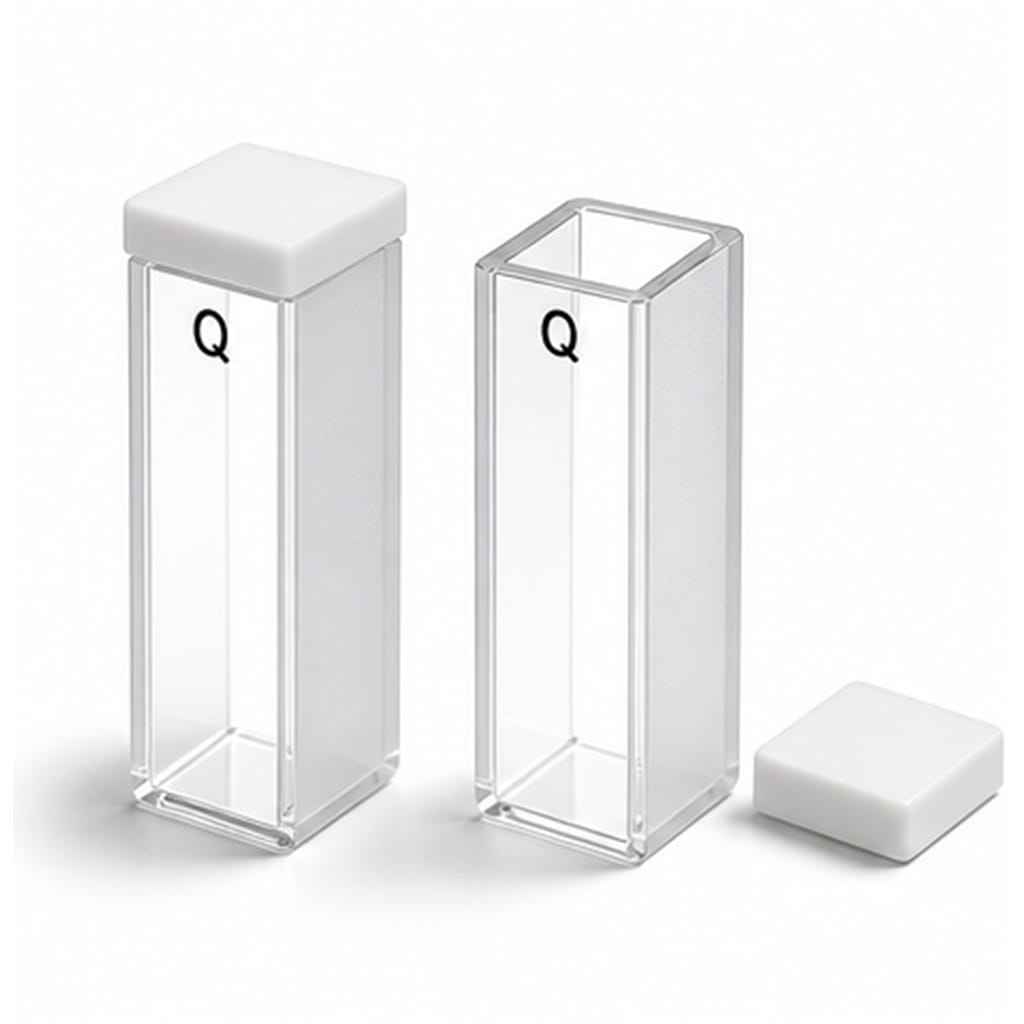
Optical Fused-Quartz Spectrophotometer Cuvettes with PTFE Lids for UV-Vis Precision Absorbance Analysis
- Spectral Range: 190 nm – 2500 nm
- Transmission: > 83% at 200 nm
- Acid & Solvent Resistant PTFE Stopper
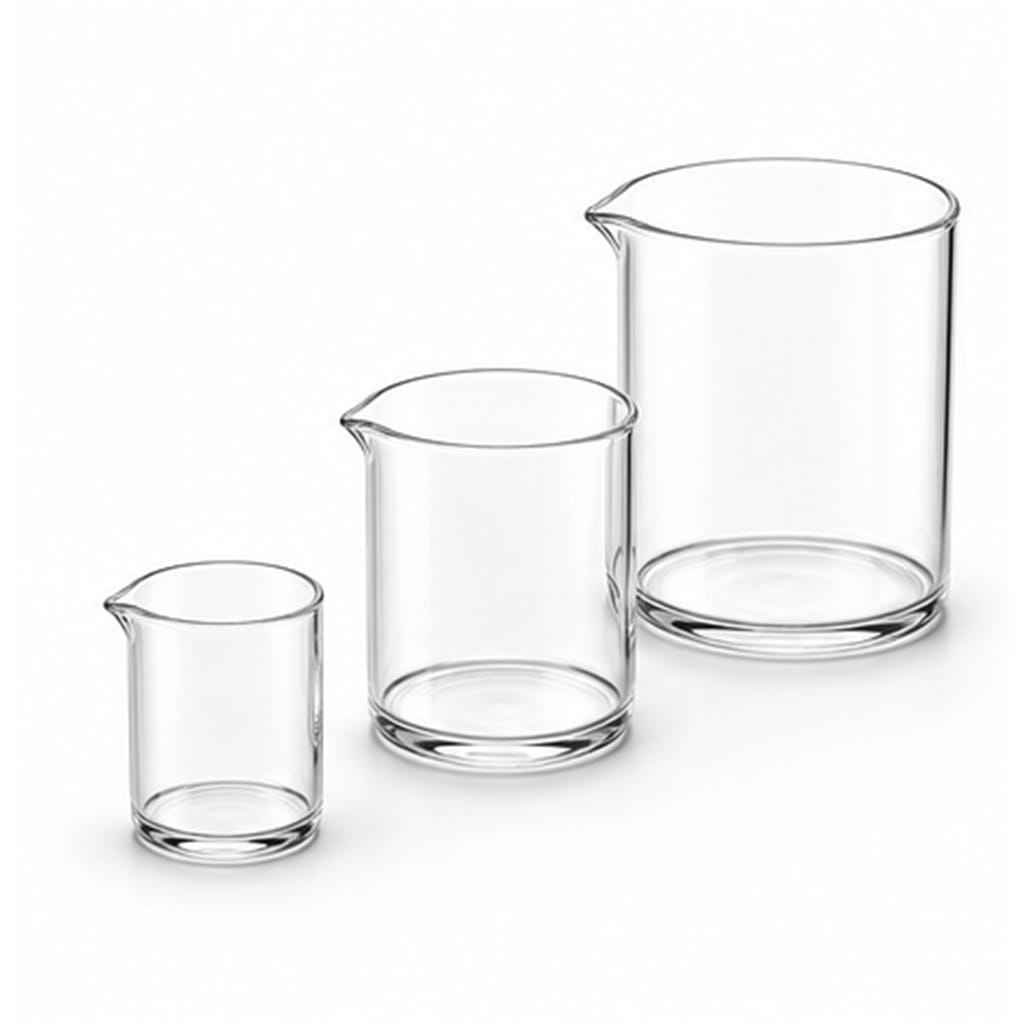
Clear Fused-Quartz Laboratory Beakers with Molded Pouring Spout for Acid-Resistant Chemical Heating
- Continuous Working Temp: 1100°C
- Ultra-Low Thermal Expansion Coefficient
- Exceptional Hydrochloric/Nitric Resistance
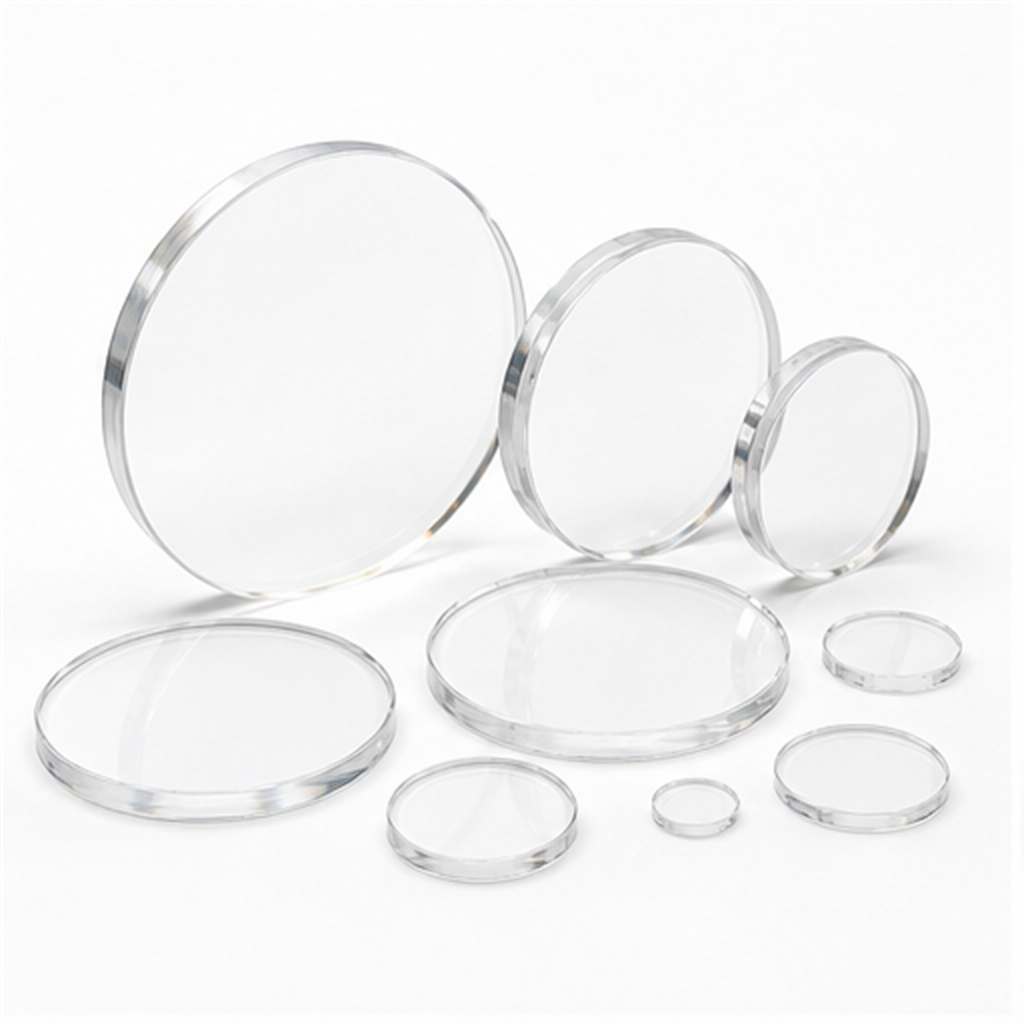
High Purity Optical Clear Fused Quartz Disc Circular Glass Window Substrate
- Surface Quality: 40/20 or 20/10 Scratch-Dig
- Parallelism: < 30 arcsec | Flatness: λ/4
- Custom Diameters & AR Coating Ready
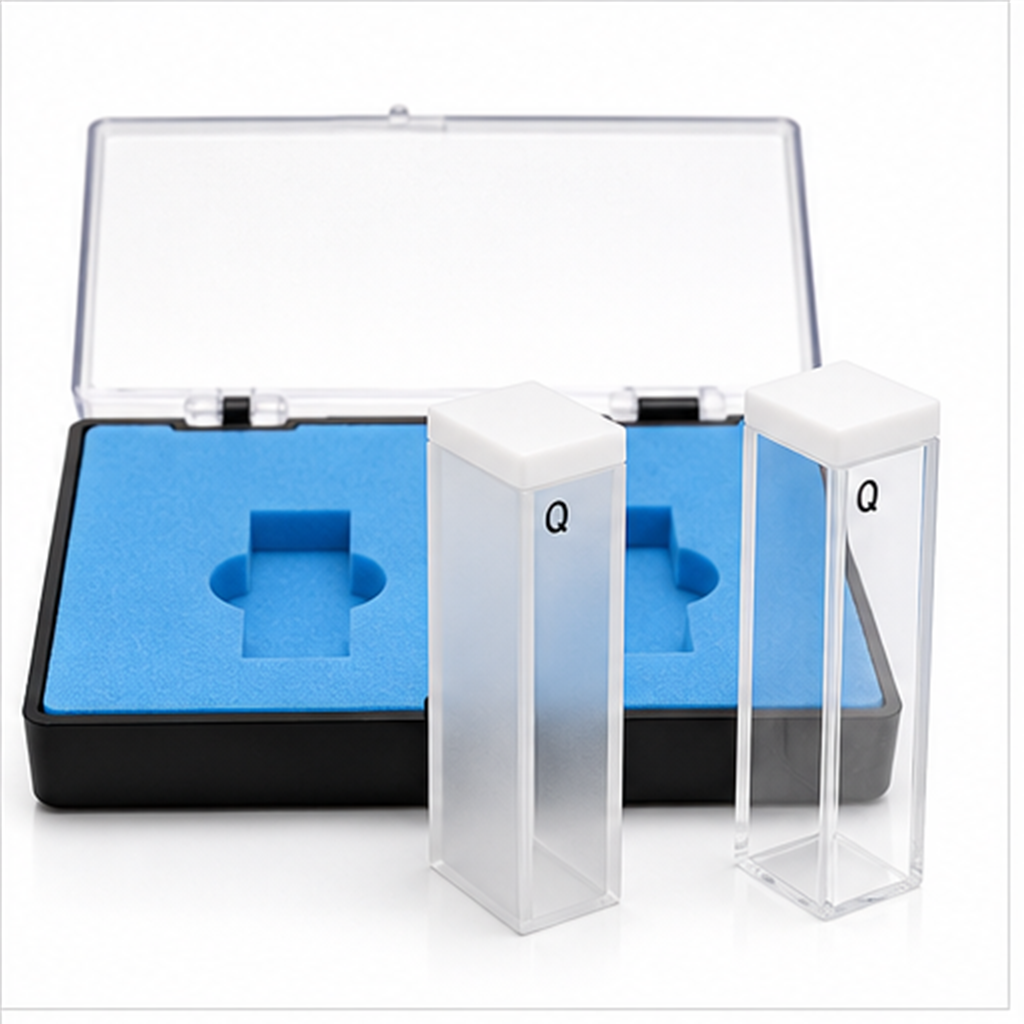
Standard 2-Window and 4-Window UV Quartz Cuvettes with Black Q Mark in Blue Foam Case
- 10mm Standard Optical Path Length
- Fluorescence (4-Window) & Absorption (2-Window)
- Zero Thermal Stress Annealed Fusion
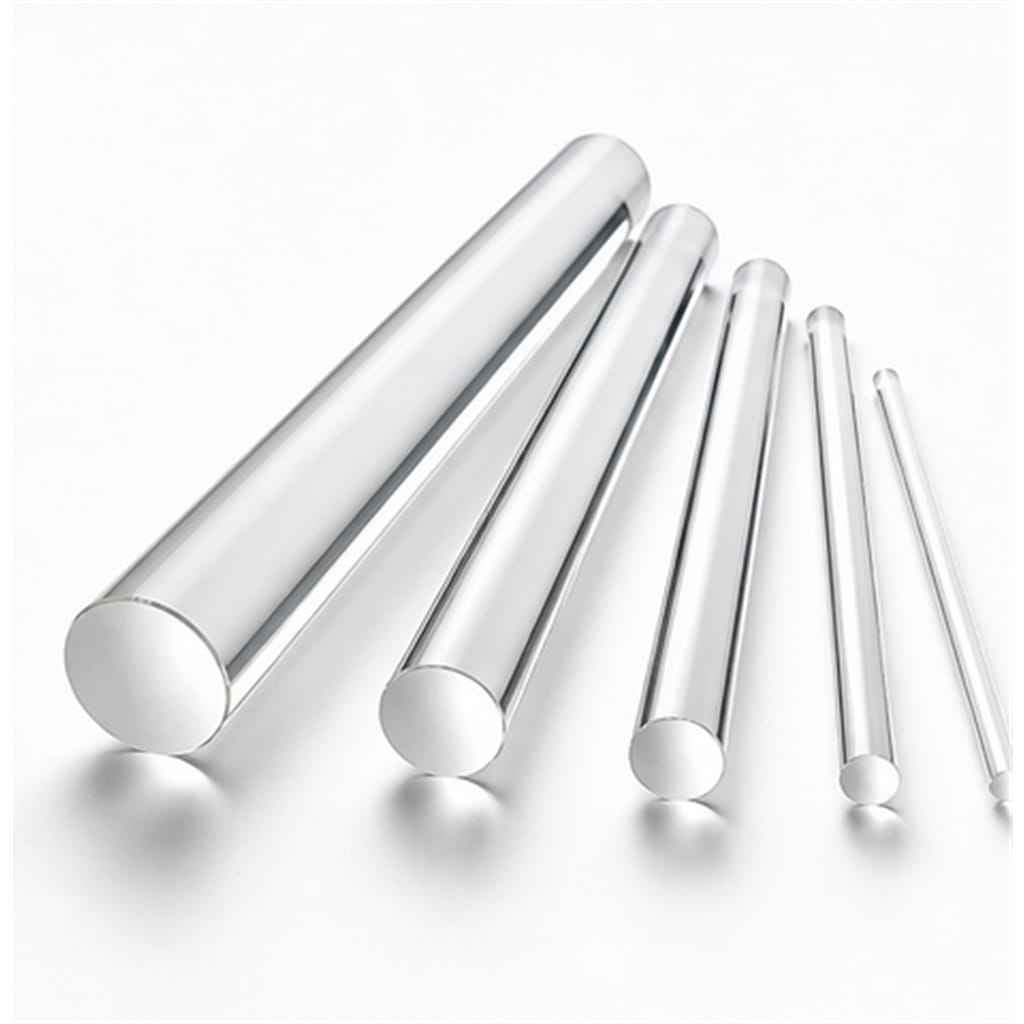
Solid Fused-Quartz Cylindrical Rods with Precision 90-Degree Flat-Cut Ends for Optical Laser Light Guides
- Total Internal Reflection Optimization
- Precision End-Face Fire or Optical Polish
- High Laser Damage Threshold (LIDT)
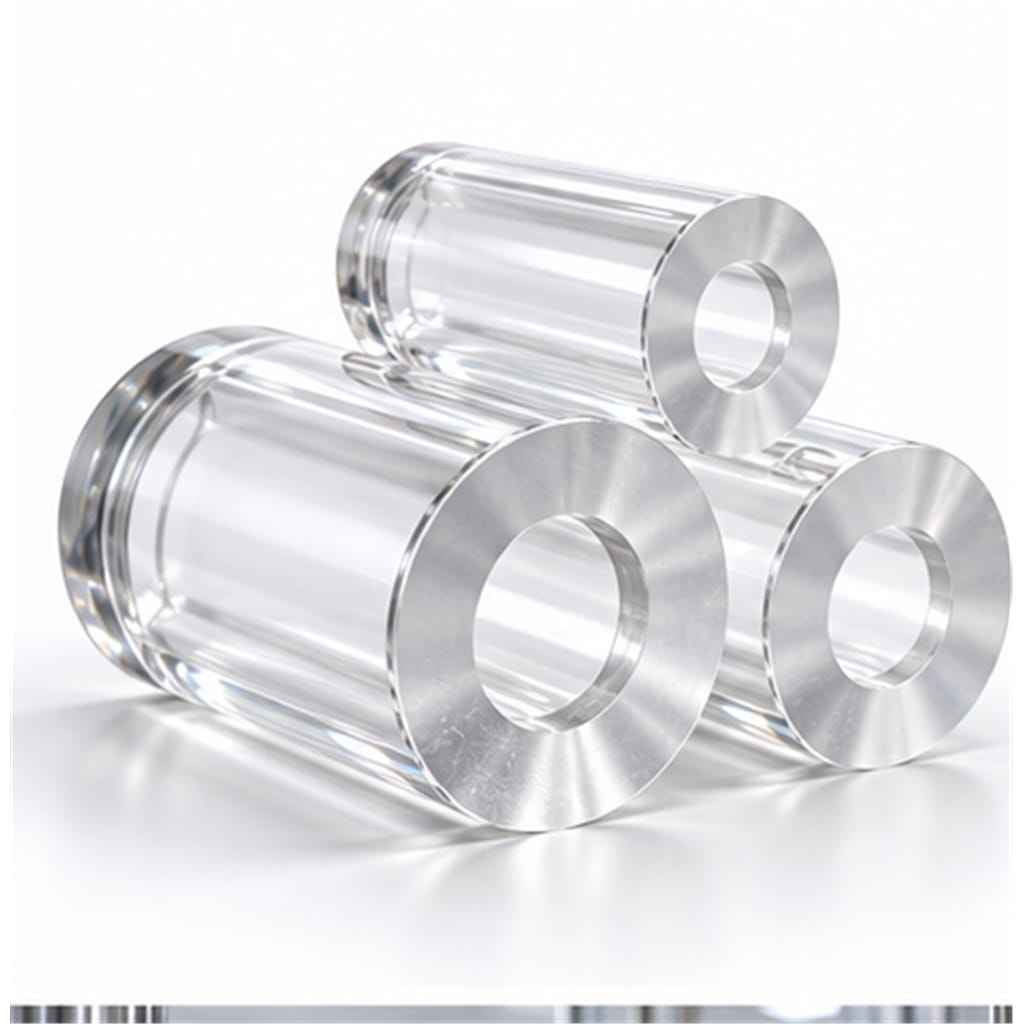
Heavy-Wall Fused-Quartz Cylindrical Pressure Tubes with Squared Ends for High-Pressure Autoclave Sight Glass
- Hydraulic Burst Rating > 5 MPa (Customizable)
- Precision Ground & Flame-Polished Ends
- Non-Destructive Ultrasonic Wall Verified
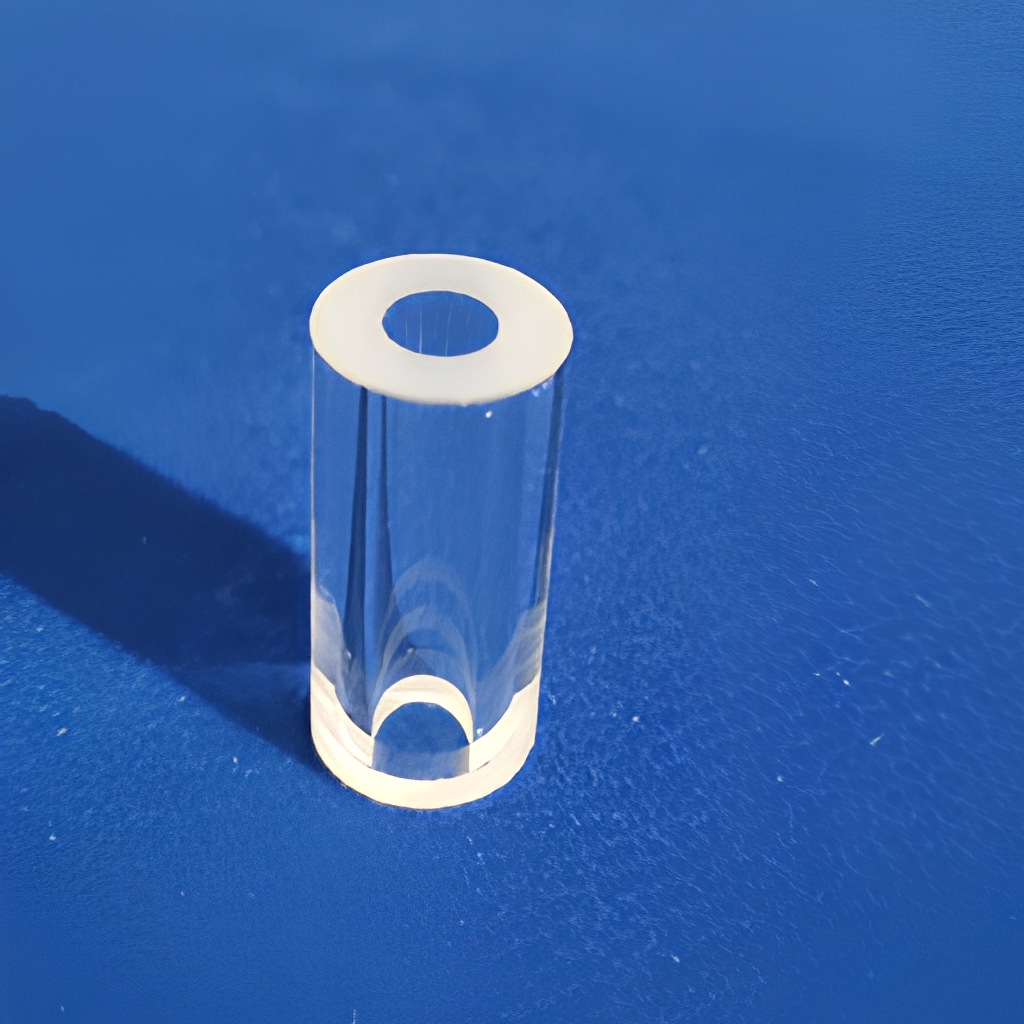
99.99% Pure Clear Quartz Twin Tube Polished Ozone Free Customized Bending Welding Cutting for Chemical Industry
- Purity: 99.99% SiO&sub2; Trace-Metal Controlled
- Dual-Chamber Infrared Heating & Purge
- Custom Flange Welding & Bending
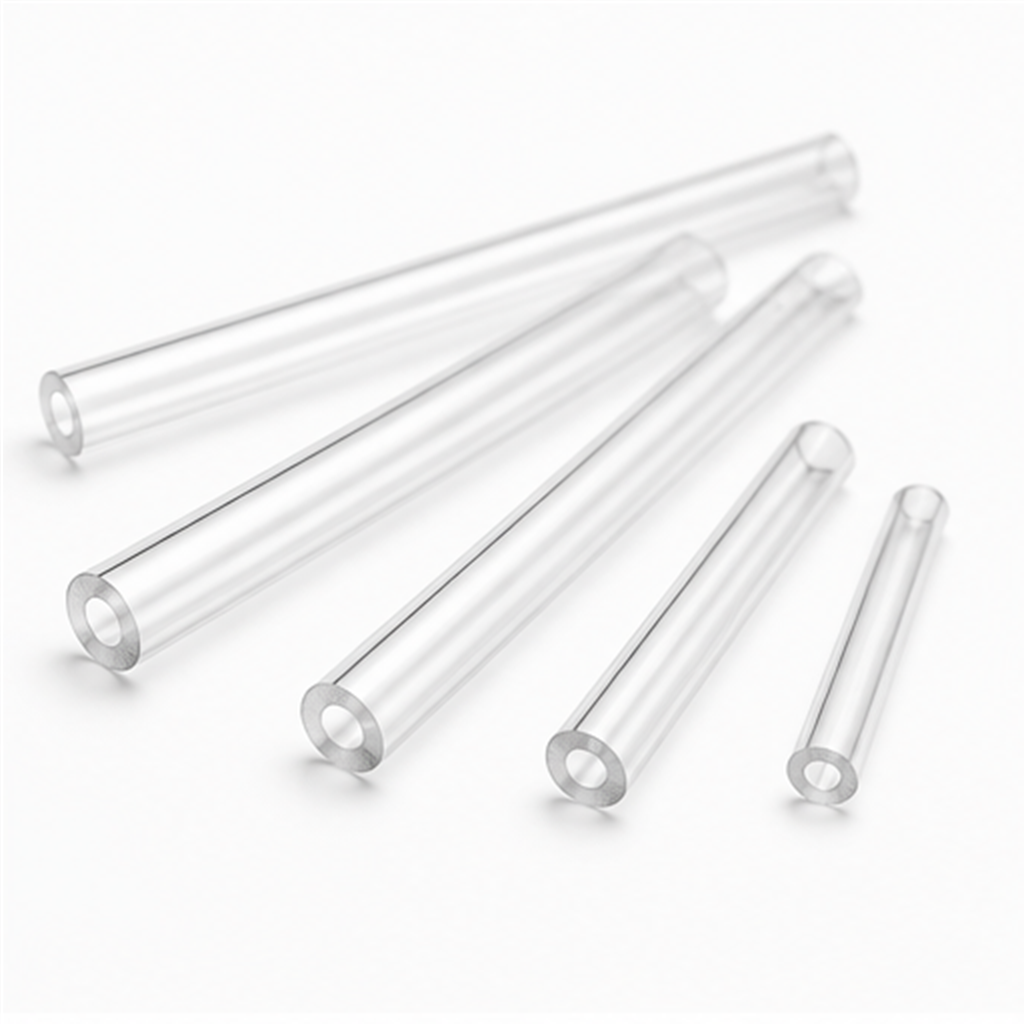
Small Bore Clear Fused Quartz Glass Tube with Flat Cut Unpolished Ends for Chromatography
- Capillary Tolerances: ±0.02 mm
- Extreme Smooth Bore Roughness
- Custom Lengths & Direct Packaging
Engineering White Paper: Material Grading & Optical Transmittance Dynamics
Navigating the fundamental material distinctions between Natural Fused Quartz (JGS2), Synthetic Fused Silica (JGS1), and Infrared Grade Anhydrous Silica (JGS3) for mission-critical industrial procurement.
In optical engineering and high-temperature manufacturing, specifying a fused silica window requires balancing optical homogeneity, hydroxyl ($OH^-$) radical content, thermal endurance, and trace metallic impurities. While commercial parlance often conflates fused quartz and fused silica, optical designers and procurement managers must treat them as distinct technical material classes.
Natural Fused Quartz (JGS2 Equivalent): Manufactured by melting naturally occurring, highly refined quartz crystal vein sand (such as the geological deposits mined and processed in Donghai County, China). This material features superior mechanical strength, high softening points (~1683°C), and exceptional economy for furnace viewports, semiconductor CVD process tubes, and industrial sight glasses operating from 260 nm to 2500 nm.
Synthetic Fused Silica (JGS1 Equivalent): Synthesized via the vapor-phase hydrolysis of silicon chemical precursors (predominantly high-purity silicon tetrachloride, $SiCl_4$, reacted in an oxygen-hydrogen flame). Because it does not rely on natural minerals, synthetic silica achieves zero visible inclusions, near-zero bubble classifications, and high transmission in the deep ultraviolet (DUV) band down to 185 nm. It is the gold standard for high-power laser protection windows, UV photolithography masks, and spectrophotometric analytical cuvettes.
Infrared Grade Fused Silica (JGS3 Equivalent): Produced through vacuum electrofusion or plasma-chemical oxidation designed to strip moisture content. With hydroxyl levels suppressed below 5 ppm, JGS3 eliminates the deep water absorption dip at 2730 nm (2.73 μm), unlocking clean transmission across the near-to-mid infrared band up to 3500 nm.
| Material Grade | Primary Feedstock | Transmission Band | OH Content | Bubble Class (ISO 10110) | Key Applications |
|---|---|---|---|---|---|
| JGS1 (Synthetic Silica) | Chemical $SiCl_4$ Gas Hydrolysis | 185 nm – 2500 nm (DUV to NIR) | 800 – 1200 ppm (High-OH) | Class 0 (Bubble-free / Laser grade) | Fiber laser protective windows, DUV stepper viewports, optical cuvettes |
| JGS2 (Optical Fused Quartz) | Purified Donghai Natural Quartz | 220 nm – 2600 nm (Standard Optical) | 100 – 250 ppm | Class 1 – 2 (Micro-striations allowed) | High-temp autoclave sight glasses, vacuum viewports, heating element shields |
| JGS3 (Infrared Fused Quartz) | Electric Vacuum Melted Quartz | 260 nm – 3500 nm (Broadband IR) | < 5 ppm (Water-free) | Class 1 – 2 (Trace micro-bubbles) | Gas chromatography IR cells, pyrometer viewports, thermal imaging optics |
| Corning 7980 / Suprasil Eq. | Vapor Metal-Organic Deposition | 190 nm – 2100 nm (Excimer Grade) | ≈ 1000 ppm | Class 0 / DIN 3140 1/0 | High LIDT optics, UV curing mirrors, interferometer flat reference discs |
Why Global Tier-1 Buyers Source From Kemzo Quartz
Located at the epicenter of China's quartz capital, Donghai Kemzo Quartz Products Co., Ltd. combines raw material sovereignty, vertically integrated machining, and strict ISO 9001 certified quality control.
Founded in 2011 in Donghai County, Lianyungang, Jiangsu Province, Donghai Kemzo Quartz Products Co., Ltd. benefits directly from the world's most concentrated quartz processing ecosystem. Controlling high-purity natural silica sand extraction through thermal processing allows us to maintain direct cost controls and strict batch-to-batch chemical repeatability.
Our industrial facility spans specialized cold-processing workshops equipped with multi-axis CNC ultrasonic milling, high-speed double-sided planetary lapping, chemical-mechanical polishing (CMP), and certified hydrogen-oxygen flame welding lines capable of producing sub-micron flat window substrates up to Φ600 mm in diameter.
As a recognized Jiangsu High Technology Enterprise, Kemzo Quartz operates with an average inquiry response window under 60 minutes, comprehensive English technical drawings review, and an annual export ratio exceeding 70% serving leading research labs, semiconductor equipment builders, and instrumentation OEMs across North America, Europe, South Korea, and Japan.

ISO 9001 Certified Fab
Comprehensive process tracing from raw Donghai crystalline sand to final spectral transmission validation using certified UV-Vis-NIR spectrophotometers.
OEM / ODM to CAD Drawing
Custom beveling, stepped viewports, high-aspect ratio borings, laser drilling, and precision slotting tailored to customer STP, DXF, or PDF engineering prints.
Extreme Thermal Stability
Annealed internal stress relief yielding an ultra-low expansion coefficient of 5.5 × 10⁻⁷/°C. Sustains continuous 1100°C thermal cycles and ice-water quenching.
Direct Export Packaging
Zero-movement custom shock-absorbent foam enclosures, vacuum-sealed cleanroom bags, and ISPM-15 compliant timber cases ensuring zero defect arrivals via sea or air freight.
Technological Development Trends in Fused Silica Fabrication
How Chinese precision glass manufacturing is transitioning toward sub-angstrom surface finishes, high-power laser durability, and automated optical metrology.
Magnetorheological Finishing (MRF) & IBF
To support next-generation semiconductor lithography and high-energy physics, factories are adopting Magnetorheological Finishing (MRF) and Ion Beam Figuring (IBF). These deterministic cold-polishing processes eliminate subsurface micro-cracks and achieve surface roughness figures below $Ra < 0.2\text{ nm}$ ($2\text{ \AA}$) while retaining transmitted wavefront distortion at $\lambda/20$.
Ultra-High LIDT for 20kW+ Fiber Lasers
Industrial multi-kilowatt fiber sheet-cutting and additive manufacturing heads demand Laser-Induced Damage Threshold (LIDT) ratings surpassing $15\text{ J/cm}^2$ at $1064\text{ nm}$ ($10\text{ ns}$ pulse). Chinese factories are pairing ultra-pure synthetic silica with plasma-assisted reactive magnetron sputtering (PARMS) for multi-layer dielectric anti-reflective (AR) coatings that prevent thermal lensing.
AI Automated Interferometric Metrology
Inspection lines are shifting away from manual scratch-dig visual estimates under green lamps to automated Zygo phase-shifting laser interferometers and robotic confocal microscopy. This automation provides buyers with complete 3D digital topology maps, bubble spatial distribution profiles, and serialized digital inspection records for aerospace traceability.
Future Procurement Trends for Global Wholesale Sourcing
Critical insights for procurement directors, distributors, and instrument builders navigating global supply chain resilience, carbon compliance, and total cost of ownership.
Over the next five to ten years, purchasing fused silica windows from China will undergo significant structural changes driven by geopolitical realignments, quality standardization, and sustainability mandates across major Western and Asian markets.
1. Direct Source-Cluster Engagement (Disintermediation)
International OEMs are moving away from regional third-party trading agencies in favor of direct relationships with integrated manufacturer-exporters based in regional quartz hubs like Donghai. Direct access to manufacturer engineering benches reduces drawing conversion cycles from weeks to hours, slashes middleman markups by 25–40%, and enables rapid prototype sample iteration before mass tooling release.
2. Total Cost of Ownership (TCO) vs. Piece-Part Price
Sophisticated buyers recognize that the lowest nominal unit price for optical windows can quickly become the costliest decision if thermal lensing, optical birefringence, or inclusion bubbles cause field failures in analytical tools or laser cutter heads. Leading procurement departments now evaluate suppliers on comprehensive TCO metrics: guaranteed scratch-dig yield rates, certified bubble free grades, automated beveling consistency, and vacuum-sealed packaging that eliminates incoming cleanroom cleaning costs.
3. Supply Chain Hedging & Dual-Track Ingot Sourcing
With unpredictable fluctuations in energy costs and international raw material logistics, leading Chinese factories have established dual-sourcing pipelines: maintaining steady access to local ultra-high purity Donghai natural quartz sand for industrial thermal applications, alongside partnerships with domestic and international synthetic silica chemical precursor producers. This hybrid model protects overseas buyers against severe raw material bottlenecks.
4. Decarbonization & Green Manufacturing Alignment
High-temperature electric arc melting and oxy-hydrogen flame polishing are energy-intensive. Tier-1 Chinese manufacturers are rapidly investing in waste-heat recovery systems, closed-loop water filtration for grinding slurry, and rooftop photovoltaic arrays to lower the embodied carbon per optical substrate. This sustainability alignment makes it easier for Western enterprise buyers to fulfill mandatory Scope 3 supply chain ESG disclosures.
Frequently Asked Questions by International Buyers
In-depth technical, commercial, and logistics answers addressing real-world procurement pain points for precision fused silica windows.
What is the practical optical difference between JGS1, JGS2, and JGS3 fused silica windows?
How do you calculate the pressure rating and burst strength of a quartz sight glass tube or disc?
What dimensional tolerances and surface scratch-dig ratings can your factory achieve?
What are the minimum order quantities (MOQ) and production lead times for custom drawings?
How does fused silica withstand rapid thermal shock compared to standard borosilicate glass?
How do you protect fragile optical surfaces against scratching and chipping during export shipping?
Request an Engineering Review & Direct Factory Quotation
Send your 2D/3D drawings (PDF, DWG, STP), dimensional specs, or target operating wavelengths. Our optical fabrication engineers will review tolerances, recommend the optimal quartz/silica grade, and return a competitive quote within 1 hour.