Engineered Quartz Products & Optical Assemblies
Direct-from-factory optical quartz components engineered for extreme thermal shock resistance (up to 1450°C), vacuum purity, high DUV-to-NIR transmittance, and precision dimensional tolerances (±0.01mm).
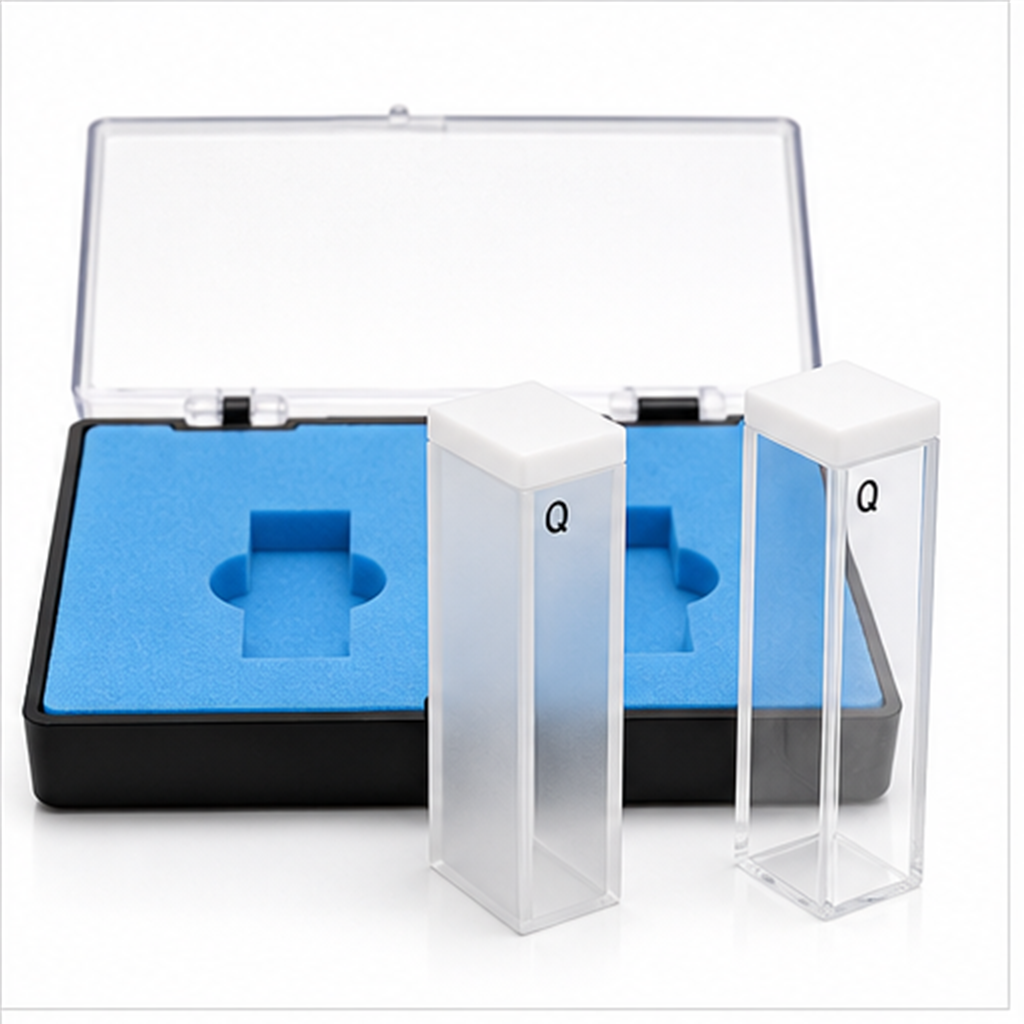
Standard 2-Window & 4-Window UV Quartz Cuvettes with Black Q Mark
- Spectral range: 190 nm – 2500 nm
- Optical pathlength: 10 mm ±0.01 mm
- Direct flame-fused, non-adhesive matrix
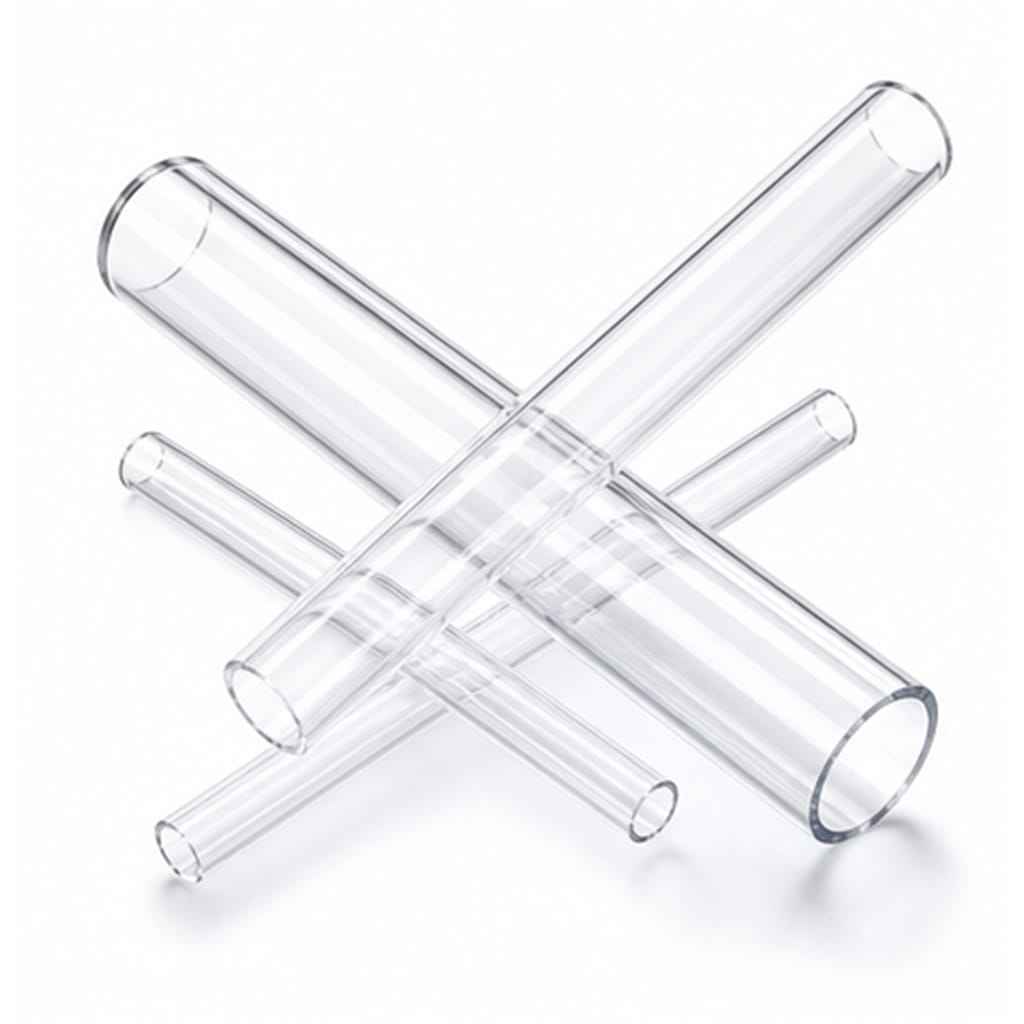
Precision Flat-Cut Fused-Quartz CVD Straight Process Tubes
- 90° squared ends for high-vacuum sealing
- Purity: ≥99.99% SiO₂ with ultra-low OH
- Thermal tolerance: 1100°C continuous
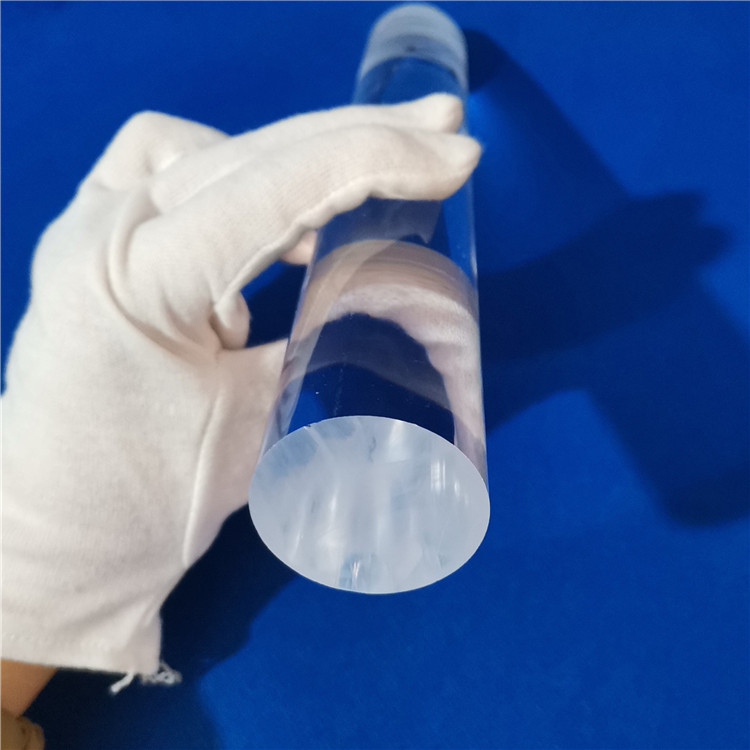
Clear Transparent Optical Fused Silica Quartz Rod Ø4–42mm
- Laser homogenization & TIR waveguiding
- Surface roughness: Ra < 0.5 nm polished
- Bubble grade: Class 0/A certified
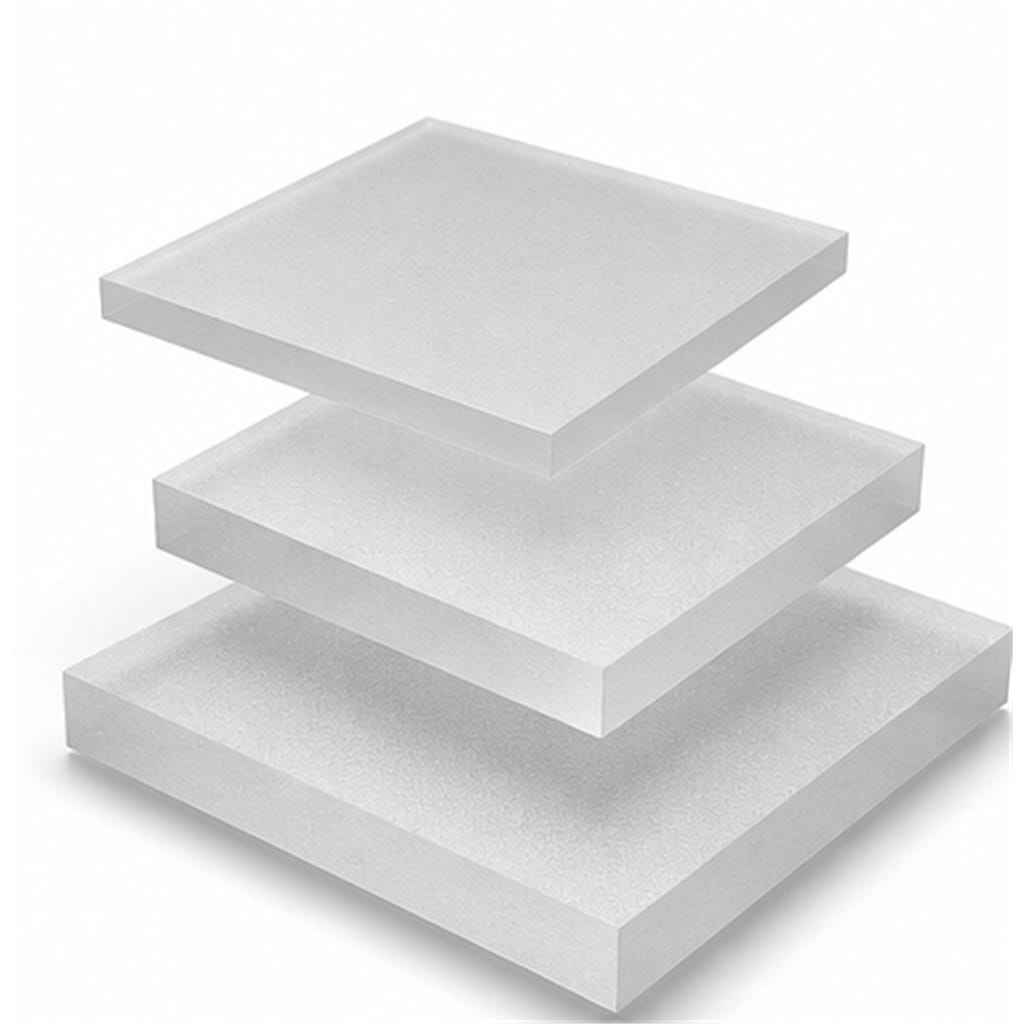
Rough-Ground Fused-Quartz Blank Plates for Wafer Lapping
- Flatness: <1 μm across large apertures
- Controlled Ra 0.8–1.6 μm matte finish
- High dimensional stability for CMP processes
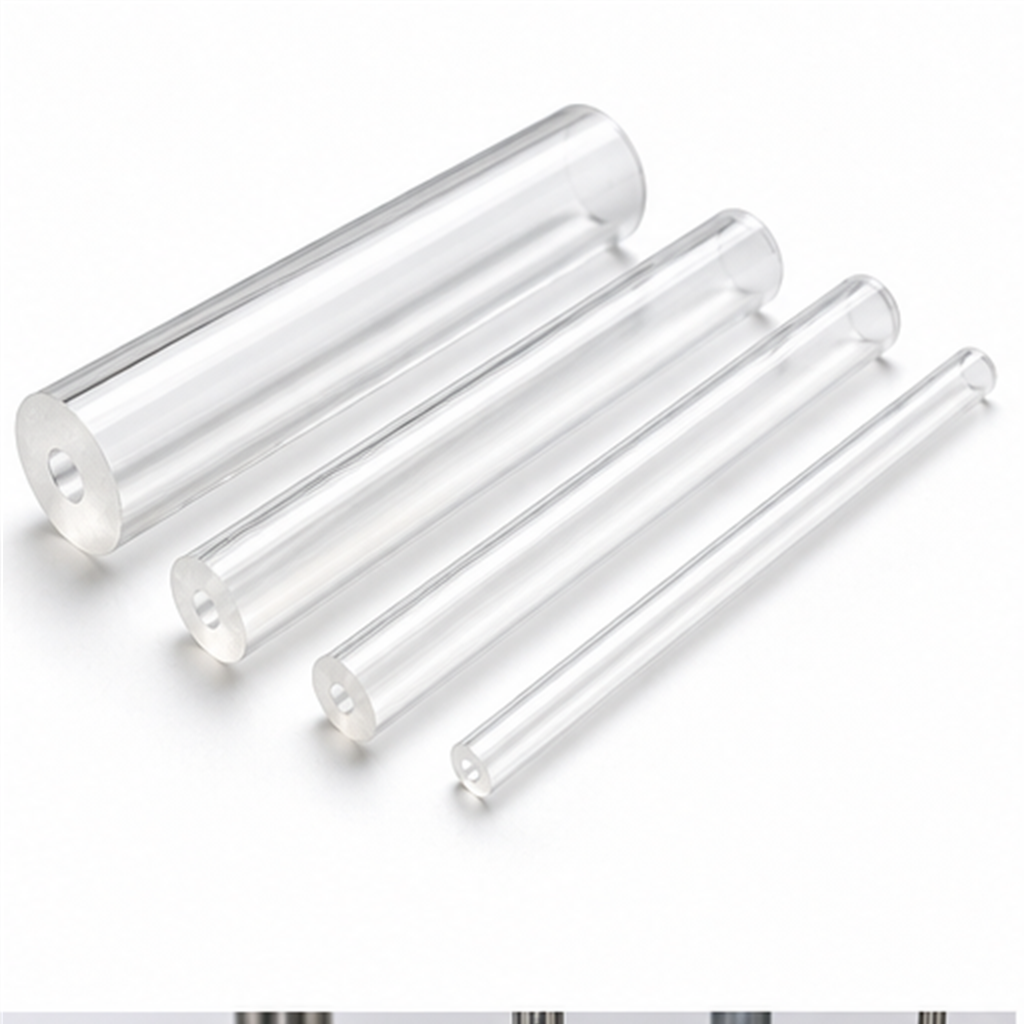
High Purity Heavy Wall Small Bore Capillary Quartz Tube
- High burst pressure rating >5.0 MPa
- ID/OD tolerance within ±0.03 mm
- DUV discharge & microfluidic channels
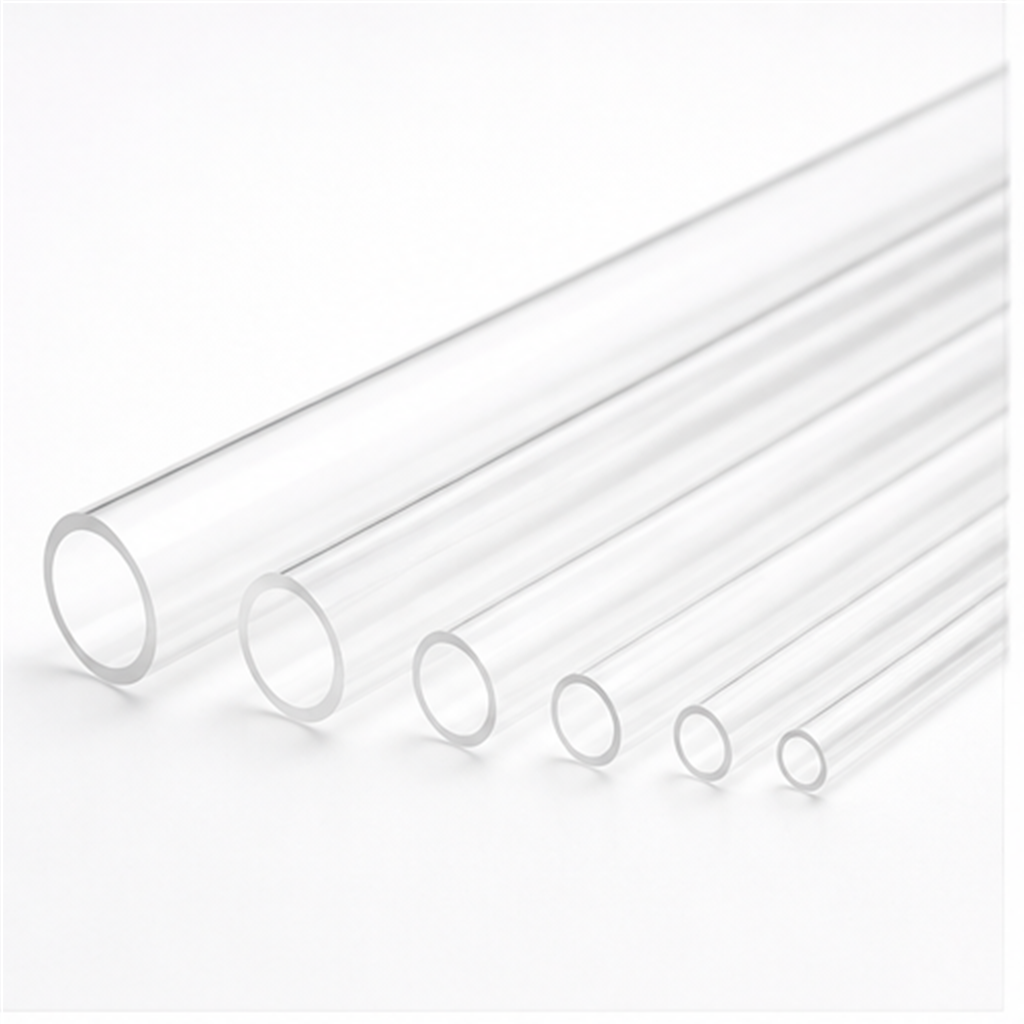
High Purity Clear Fused Quartz Glass Tube Flat Cut
- Zero striation, optical-grade transparency
- Thermal expansion: 5.5 × 10⁻⁷ / °C
- Standard & custom metric/imperial diameters
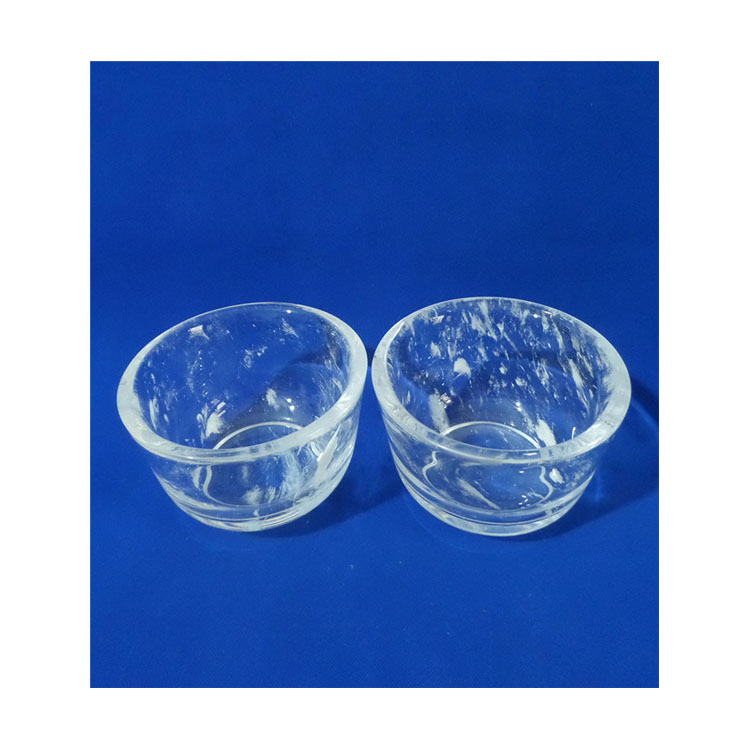
High Temperature Resistant Circular Quartz Glass Silica Plate
- Fire-polished chamfered circular geometry
- Acid resistance: Class 1 (ISO 1776)
- Non-reactive inert surface for pure sintering
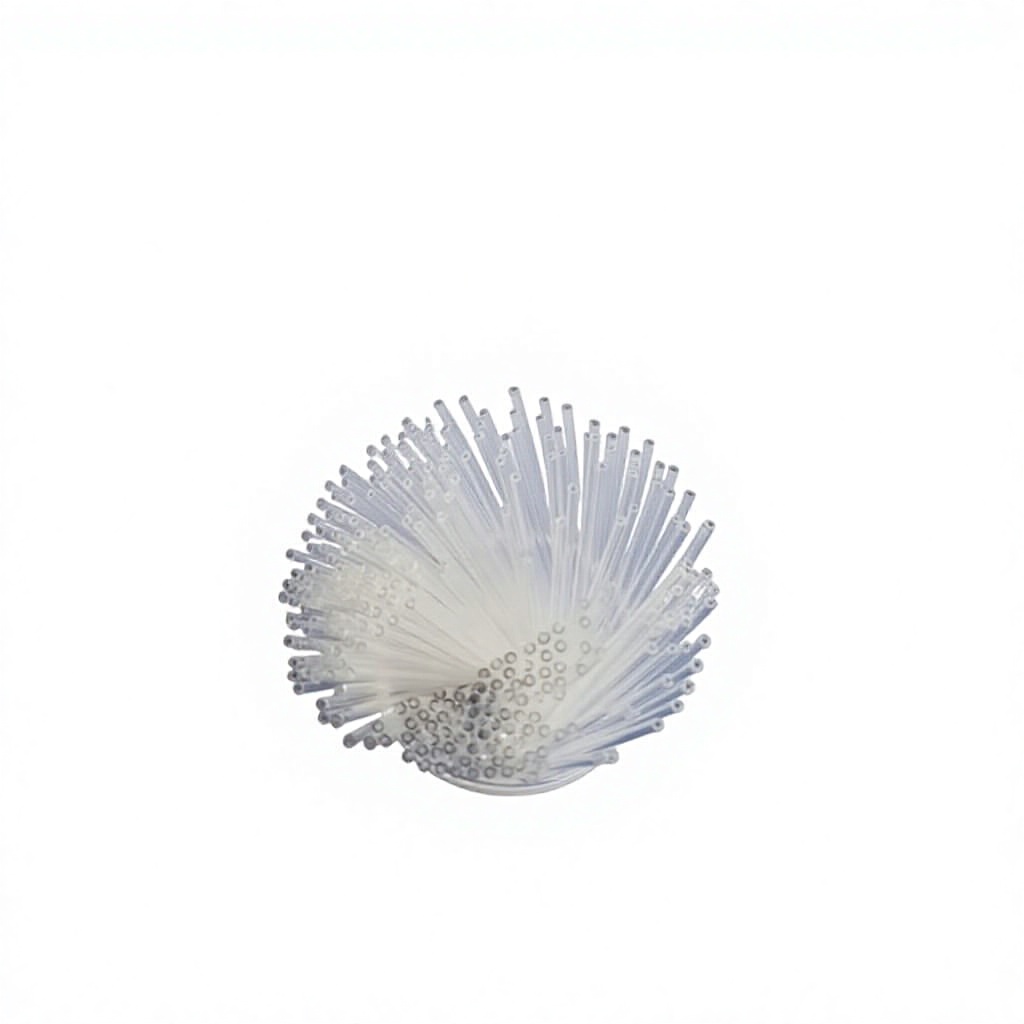
Custom Translucent Capillary Quartz Polished Twin Pipe
- Dual-channel parallel fluidic delivery
- Ozone-free deep UV radiation compatibility
- Flame-welded and stress-relieved joints
The Mechanics of Quartz Light Guide Waveguides: Physics, Purity, and Performance
A quartz light guide (also referred to as a fused silica light pipe, homogenizing rod, or optical mixing stick) functions via Total Internal Reflection (TIR). When light enters the input aperture within a defined acceptance cone determined by the Numerical Aperture (NA), it undergoes multiple lossless internal reflections along the boundary between the high-refractive-index quartz core ($n \approx 1.458$ at 589 nm) and the lower-index ambient cladding (typically air with $n = 1.0$, or a low-index polymer/doped fluorine layer). For global optical systems engineers, specifying a quartz light guide from an authentic Chinese quartz manufacturer requires deep scrutiny of material grade, hydroxyl ($\text{OH}^-$) radical content, structural bubble class, and surface microroughness.
Core Physical Requirement: For total internal reflection to occur without scattering losses, the critical angle must satisfy $\theta_c = \arcsin(n_2 / n_1)$. In fused silica rods with polished air cladding, the internal surface must maintain an optical polish with scratch-dig standards of 20/10 or better, and a surface roughness $Ra \le 0.5\text{ nm}$. Micro-scratches or particulate inclusions directly degrade boundary conditions, transforming total internal reflection into uncontrolled radiative leakage.
Optical Fused Quartz vs. Synthetic Fused Silica: Selecting JGS1, JGS2, and JGS3
When sourcing wholesale quartz light guides and optical rods from Donghai factories, engineering departments must choose between natural crystalline quartz fusion and synthetic chemical vapor deposition (CVD). Chinese manufacturing standards classify optical quartz into three foundational grades, each tailored to distinct spectral and thermal operating parameters:
| Optical Grade | Raw Material Precursor | Spectral Window | Hydroxyl (OH) Content | Primary Industrial Application |
|---|---|---|---|---|
| JGS1 (Synthetic Fused Silica) | High-purity $\text{SiCl}_4$ via chemical synthetic vapor deposition | 185 nm – 2500 nm (Deep UV to VIS) | ≤ 2 ppm (Low OH) or ≥ 1200 ppm (High OH) | Excimer laser delivery, DUV photolithography, UV-C curing, fluorescence spectroscopy cuvettes |
| JGS2 (Optical Fused Quartz) | Refined natural Donghai quartz crystal gravel | 220 nm – 2500 nm (Near UV to NIR) | 30 ppm – 150 ppm | Industrial sight glasses, laser homogenizing rods, analytical instrumentation, furnace process tubes |
| JGS3 (Infrared Optical Quartz) | Natural quartz refined under vacuum electric melting | 260 nm – 3500 nm (Full NIR & SWIR) | ≤ 5 ppm (Water-free) | Infrared heating elements, CO₂ laser optic supports, pyrometric viewports, high-temperature shields |
The hydroxyl ($\text{OH}^-$) concentration within the vitreous matrix is the dominant factor determining spectral absorption. High-OH synthetic fused silica (JGS1) exhibits virtually zero absorption bands in the Deep Ultraviolet spectrum down to 185 nm, rendering it impervious to UV solarization and color-center formation under excimer laser exposure (such as 193 nm ArF or 248 nm KrF lasers). Conversely, for near-infrared telecommunication and IR laser transmission (1064 nm Nd:YAG or 980 nm diode lasers), low-OH quartz (JGS3) is mandatory to eliminate the severe molecular vibration absorption band located precisely at $2.73\ \mu\text{m}$.
Geometric Engineering: Cylindrical Light Pipes vs. Polygonal Homogenizers
A standard cylindrical optical rod acts primarily as a beam director, transferring flux along its axial path while preserving the rotational symmetry of the source. However, modern photonics systems increasingly demand **homogenization**—transforming a Gaussian or non-uniform laser diode distribution into a flat-top ("top-hat") spatial intensity profile. Donghai Kemzo Quartz specializes in CNC grinding and polishing cross-sectional polygonal geometries that enforce spatial integration through asymmetrical foldings of the optical wave front:
1. Hexagonal Light Guides: The industry standard for aesthetic intense pulsed light (IPL) dermatological handpieces and solar simulators. The six-fold symmetric internal reflection produces exceptional spatial uniformity (uniformity index >95%) while minimizing optical insertion loss across circular delivery targets.
2. Square and Rectangular Light Pipes: Engineered for digital projection systems, machine vision illumination, and lithographic step-and-scan slit masks. They convert round diode beams into uniform rectangular profiles that match sensor aspect ratios precisely without edge clipping.
3. Tapered (Concentrator) Light Guides: By tapering the cross section from entrance to exit ($A_{\text{in}} > A_{\text{out}}$), the light guide serves as an optical condenser, increasing flux density at the expense of an expanded output numerical aperture, obeying the conservation of étendue: $A_1 \cdot \Omega_1 = A_2 \cdot \Omega_2$.
Why Global Tier-1 Buyers Source From Donghai Kemzo Quartz
Combining natural crystal cluster proximity, 14 years of ISO 9001 certified precision glass processing, and rigorous German-standard optical metrology.
Crystal Capital Cluster
SiO₂ Purity ≥99.99%Located in Donghai County (China's renowned quartz hub), we select pristine high-purity natural silica sand directly at source, drastically lowering raw material logistics costs and assuring zero batch-to-batch chemical deviation.
ISO 9001 & High-Tech Facility
Certified State EnterpriseAccredited as a Jiangsu High Technology Enterprise operating under an ISO 9001 audited management framework. Every optical rod, CVD tube, and cuvette undergoes polariscopic stress relief verification and interferometric flatness inspection.
OEM/ODM Custom Drawing
±0.01 mm Tolerance RangeFull in-house secondary fabrication: CNC ultrasonic milling, core drilling, double-sided planetary lapping, chemical fire-polishing, and precision vacuum taper ground joints matching technical CAD/STEP specifications.
Global Export Infrastructure
7 Incoterms · 70%+ ExportsDecades of fragile glassware sea/air crating expertise: custom molded EPE cushioning, vacuum-sealed nitrogen barrier packaging, multi-currency settlement (USD/EUR/AUD), and responsive engineering support within one hour.
Future Procurement Trends in the Global Quartz Light Guide Market
Key strategic insights for supply chain managers, precision optics buyers, and system integrators navigating the next half-decade of industrial photonics demand.
Transition to Core-Clad Cladded Fused Silica Structures
While unclad quartz light guides rely on clean ambient air interfaces for TIR, harsh operating conditions (high humidity, oil vapor in laser cutting, dental autoclave sterilization) contaminate the unclad surface, triggering catastrophic optical breakdown. Buyers are transitioning toward fluorine-doped silica cladding ($NA = 0.22 \text{ to } 0.37$) or low-index polymer claddings that seal the internal reflection interface, making the guide impervious to finger grease and external mechanical mounting clips.
Industrial Laser & MedicalSurge in DUV & UV-C Solid-State Disinfection Demand
With the phasing out of toxic mercury vapor lamps under the Minamata Convention, UV-C LEDs (265 nm – 280 nm) are dominating water, air, and surface sterilization. Because LEDs emit divergent beams, high-transmittance JGS1 UV quartz light pipes are indispensable for collimating, mixing, and channeling deep UV radiation into high-flow fluidic reactor conduits without solarization degradation over 20,000+ operating hours.
CleanTech & PhotochemistryNear-Shoring Rationalization vs. Direct China OEM Contracting
While geopolitical dialogues encourage localized assembly in North America and Europe, quartz melting remains heavily power- and capital-intensive, anchored to mineral refinement clusters. Smart Western optics OEMs are abandoning intermediary Western glass distributors and establishing direct OEM relationships with verified Donghai manufacturing facilities—leveraging drawing-to-part rapid prototyping, mill-test certifications, and direct factory pricing.
Supply Chain EconomicsEmerging Manufacturing Innovations in Optical Silica Processing
How advanced glass fabrication technologies are overcoming physical limitations in laser damage thresholds, multi-leg bundle coupling, and complex geometries.
Laser Damage Threshold (LDT) Optimization
With industrial fiber lasers reaching multi-kilowatt CW outputs and picosecond/femtosecond pulsed regimes, subsurface mechanical damage (micro-cracks left by grinding slurries) causes thermal runaway and catastrophic bulk fracture. Factories are implementing Magnetorheological Finishing (MRF) and CO₂ laser fire-polishing to melt and anneal surface micro-cracks, lifting the LDT beyond $15\ \text{J/cm}^2$ at 1064 nm (10 ns pulse).
Kilowatt Laser DeliveryFree-Form & Curved Fused Silica Waveguides
Traditional light guides were strictly restricted to linear rods. Recent developments in precision 5-axis hot-bending and robotic glass lathe torch manipulation allow Donghai Kemzo Quartz to fabricate multi-axis bent quartz light guides, curved homogenizers, and bifurcated ("Y" and "W" configuration) light pipes for minimally invasive endoscopic surgical robotics.
Surgical & EndoscopyAnti-Reflective Sol-Gel & Dielectric Coatings
Fresnel reflections account for approximately a 3.5% insertion loss per quartz-air interface at normal incidence ($R = [(n-1)/(n+1)]^2$). Advancements in vacuum ion-assisted deposition (IAD) permit high-adhesion fluoride and metal oxide thin-film AR coatings applied directly to high-temperature quartz light guide end-faces, elevating cumulative optical throughput above 98.5% across target wavelengths.
Thin-Film MetrologyFrequently Asked Questions: Wholesale Quartz Sourcing
Clear, engineering-grounded responses to the practical questions posed by international technical buyers and optical engineers.
Fused quartz is refined by melting natural high-purity quartz crystal rock in electric or flame vacuum furnaces; it provides exceptional thermal and mechanical endurance at an economical price point, optimal for furnaces, viewports, and general lighting. Synthetic fused silica (JGS1) is synthesized via chemical gas vapor synthesis ($\text{SiCl}_4$). It contains negligible metallic impurities (<0.1 ppm total metals), delivering superior UV transmission down to 185 nm and complete freedom from bubbles, striations, and laser-induced solarization.
Transparent fused quartz tubes and rods maintain continuous operation at 1100°C, and can withstand intermittent short-term excursions up to 1450°C. The softening point is 1683°C, with an annealing point at 1215°C and strain point at 1120°C. Because the coefficient of thermal expansion (CTE) is exceptionally low (approximately $5.5 \times 10^{-7}\text{ / °C}$ between 20°C and 300°C), a red-hot quartz light guide or tube can be plunged directly into cold water without structural thermal fracture.
When metallic or rubber mounting hardware contacts the polished barrel of an unclad quartz light guide, the refractive index mismatch breaks the TIR condition, absorbing photons and creating localized hotspots. To prevent this, our engineers recommend: (1) utilizing recessed mounting steps where light does not strike the boundary, (2) applying an engineered low-index fluoropolymer sleeve or thin-film dielectric cladding at clamped points, or (3) using precision O-rings seated in polished outer grooves engineered outside the ray path.
Our CNC double-sided planetary polishing and optical finishing shop reliably produces end-face surface finishes of $Ra \le 0.5\text{ nm}$ ($RMS \le 1.0\text{ nm}$), with optical surface quality compliant with MIL-PRF-13830B at 20/10 or 40/20 scratch-dig. End-face parallelism is held to $\le 30\text{ arcseconds}$, and perpendicularity to the optical axis is held within $\pm 0.05\text{ mm}$ across diameters ranging from 2 mm to 100 mm.
Yes. With over 14 years of OEM/ODM glass processing, Kemzo quartz engineers directly review PDF, DWG, DXF, STEP, and IGES file formats. We provide Design for Manufacturability (DFM) feedback, confirming geometric tolerances, thermal annealing regimens, flame-working radii, and recommended bevel dimensions to prevent transit chipping. Prototype runs can typically ship within 7 to 10 working days.
We offer flexible commercial arrangements under Incoterms 2020: FOB (Lianyungang / Qingdao / Shanghai), CFR, CIF, EXW, DDU, and DDP (door-to-door customs cleared). Settlement currencies include USD, EUR, AUD, HKD, and CNY via Wire Transfer (T/T), Letter of Credit (L/C at sight), PayPal, or secure escrow channels. Production status is updated weekly with photographic dimension check sheets.
Every optical component is individually inspected, ultrasonically cleaned in ethanol, and sealed in cleanroom polyethylene bags. Tubes and rods are isolated inside individual custom-cut EPE foam channels, nested within double-fluted shockproof cartons, and crated inside fumigated export plywood boxes reinforced with internal corner battens and moisture desiccant bags, guaranteeing zero transit breakage.
Every commercial export batch includes a formal Certificate of Conformance (CoC), spectral transmission curves measured by PerkinElmer Lambda UV/Vis/NIR spectrophotometers (upon specification), optical bubble/inclusion test reports compliant with DIN 58927, and dimensional CMM inspection reports verifying wall thickness, straightness, and diameter tolerances.
Request an Engineering Review & Factory Quotation
Provide your technical drawing, operating wavelength, dimensions, and estimated annual batch volume. Our technical sales engineers in Donghai will analyze feasibility, recommend the most cost-effective quartz grade (JGS1/JGS2/JGS3), and respond within 60 minutes.