Featured OEM/ODM Quartz Discs, Tubes & Substrates
From single-side polished quartz wafer substrates to optical spectrophotometer viewports and high-temperature furnace vessels, our production facility delivers certified precision across eight specialized manufacturing categories.
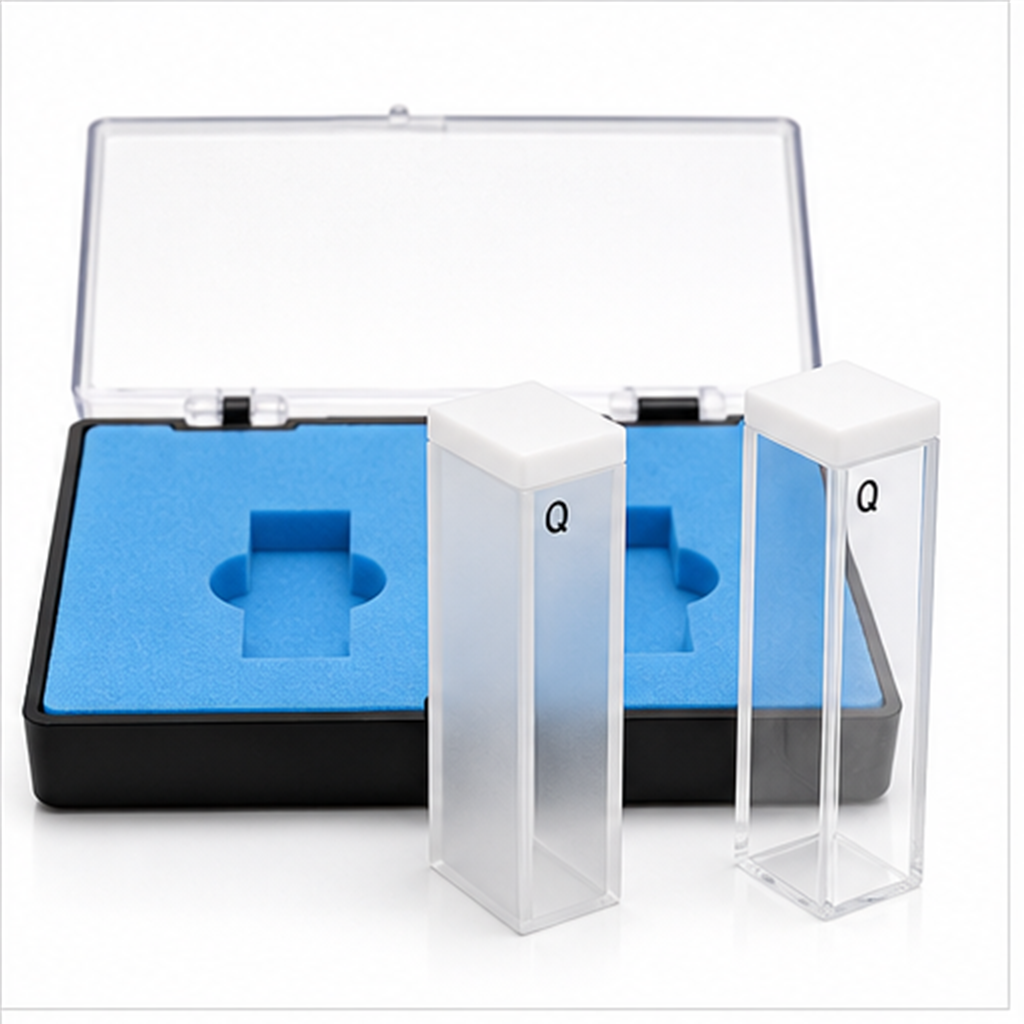
Standard 2-Window & 4-Window UV Quartz Cuvettes with Black Q Mark
- Spectral range: 190 nm – 2500 nm
- Optical path length: 10 mm standard
- Fused body without adhesive contamination
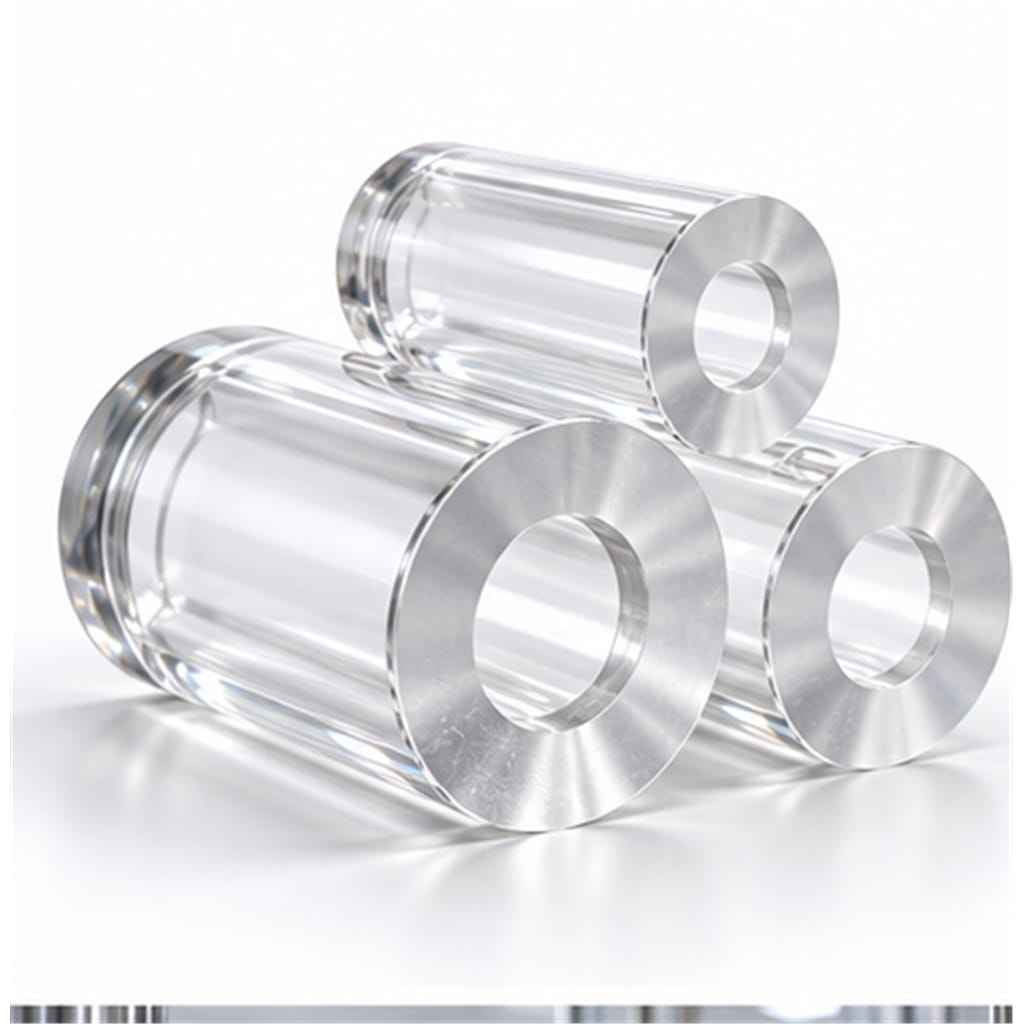
Heavy-Wall Fused-Quartz Cylindrical Pressure Tubes with Squared Ends
- Engineered for high-pressure autoclaves
- Thermal shock threshold ΔT = 1100 °C
- Precision squared and ground end faces
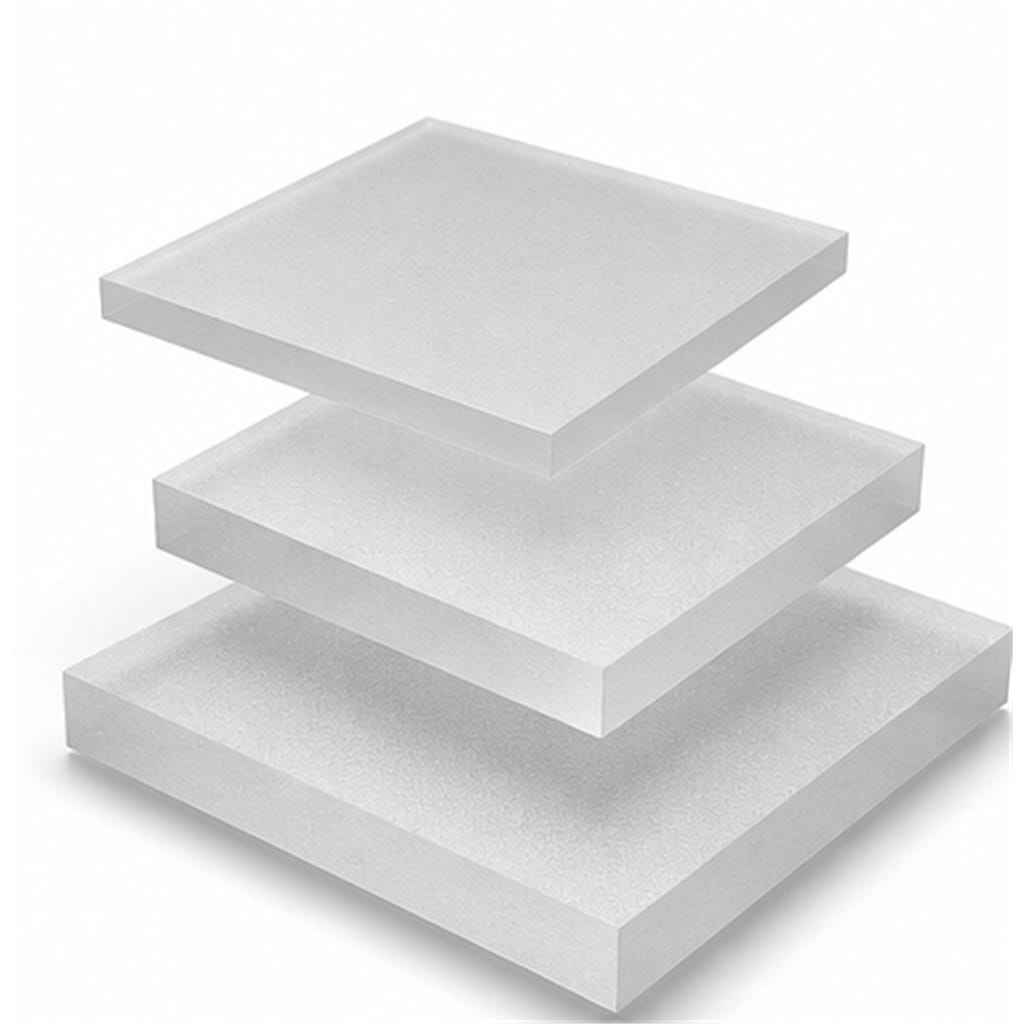
Raw Rough-Ground Fused-Quartz Blank Plates for Substrate Lapping
- Custom diameter discs: 50 mm – 300 mm
- Parallelism controlled within ≤ 0.01 mm
- Ideal carrier substrate for CMP processing
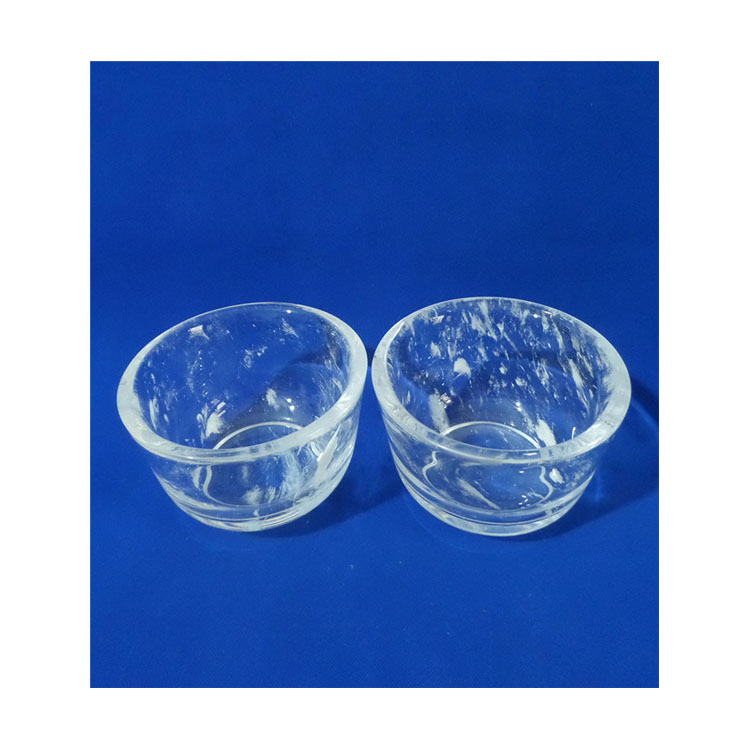
High Temperature Resistant Quartz Glass Circular Silica Custom Size Cutlery
- Low coefficient of thermal expansion: 5.5×10⁻⁷/°C
- Polished edge chamfering prevents chipping
- High chemical purity against acid leaching
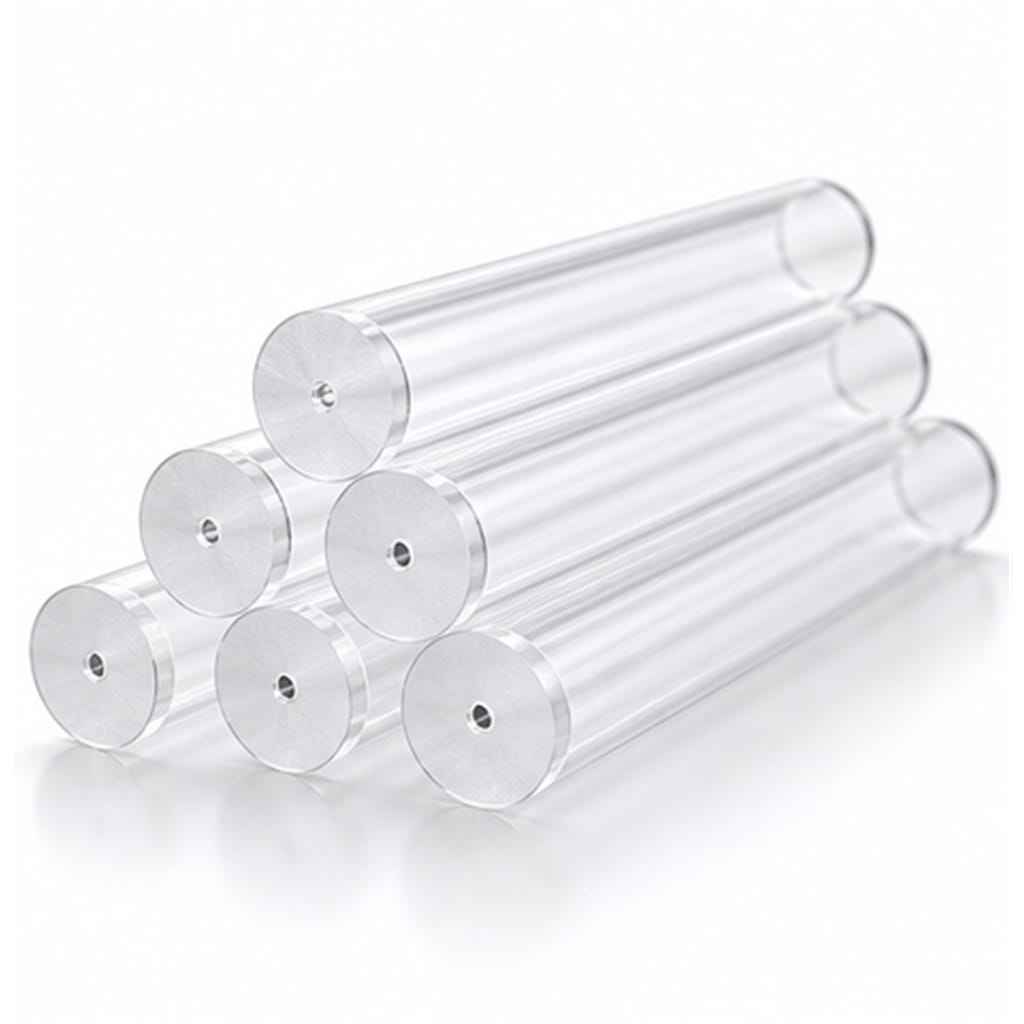
Capillary Micro-Bore Fused-Quartz Tubes with Small Aperture for GC
- Inner diameter tolerance down to ±0.002 mm
- Uniform bore geometry for chromatography
- Superb chemical stability in micro-channels
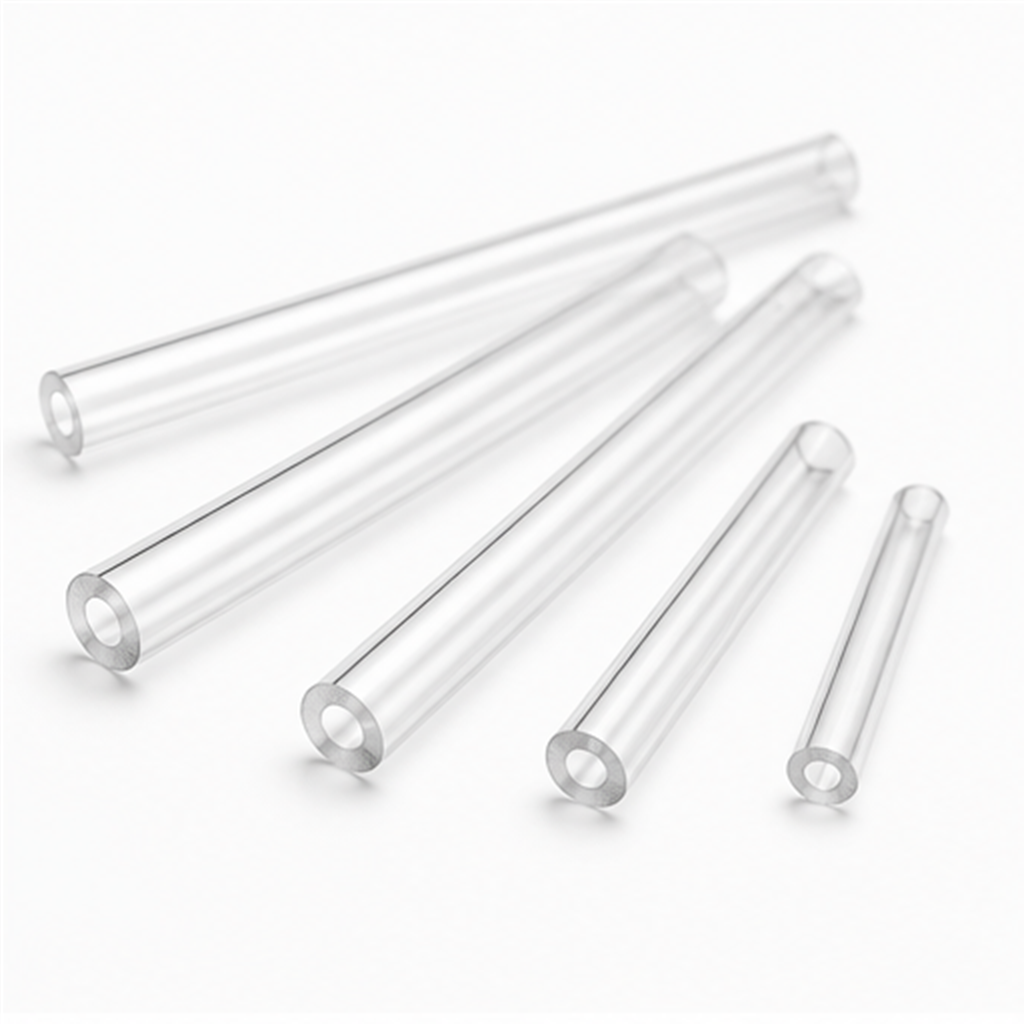
Small Bore Clear Fused Quartz Glass Tube with Flat Cut Ends
- Optical clarity through visible and UV spectrum
- Precise wall thickness concentricity
- Ideal for analytical column manufacturing
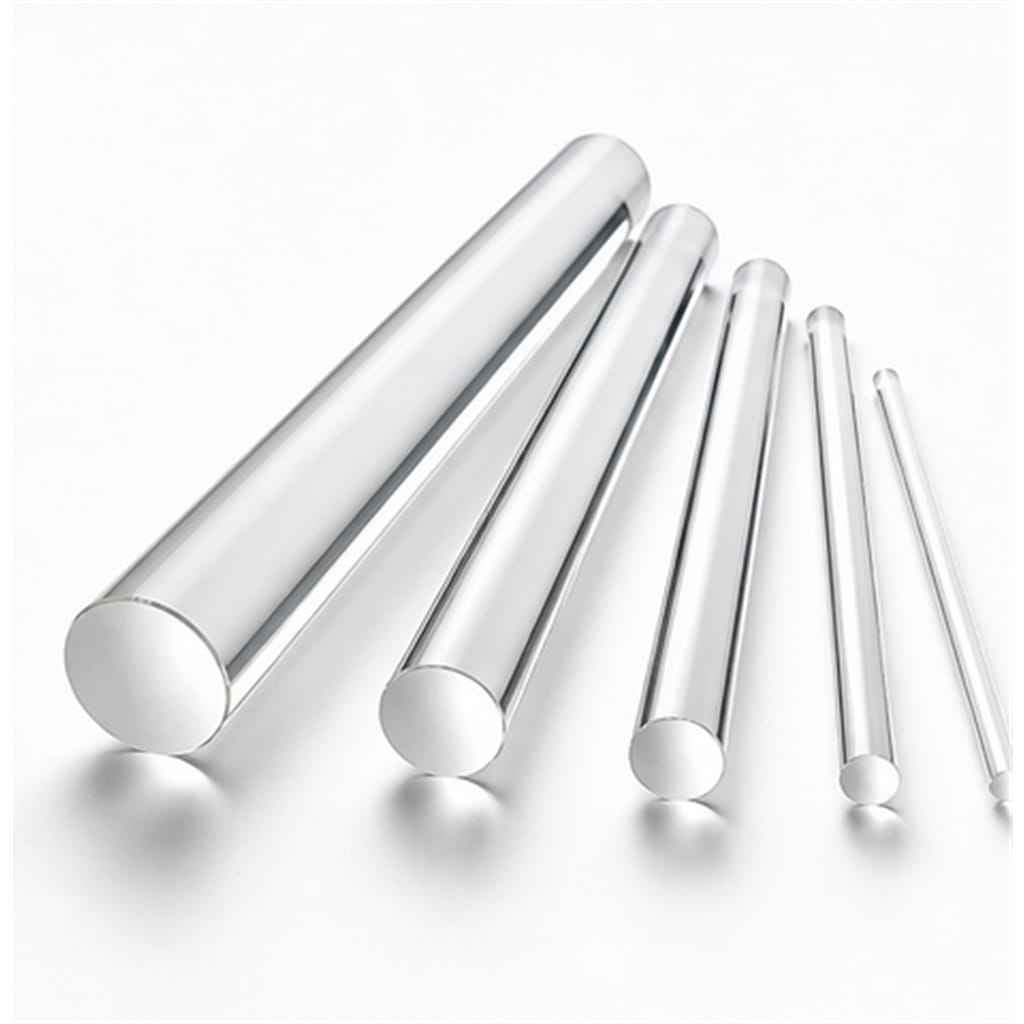
Solid Fused-Quartz Cylindrical Rods with 90-Degree Flat-Cut Ends
- Low internal bubble count (Class 0 optical)
- Total internal reflection optimization
- High laser-induced damage threshold (LIDT)
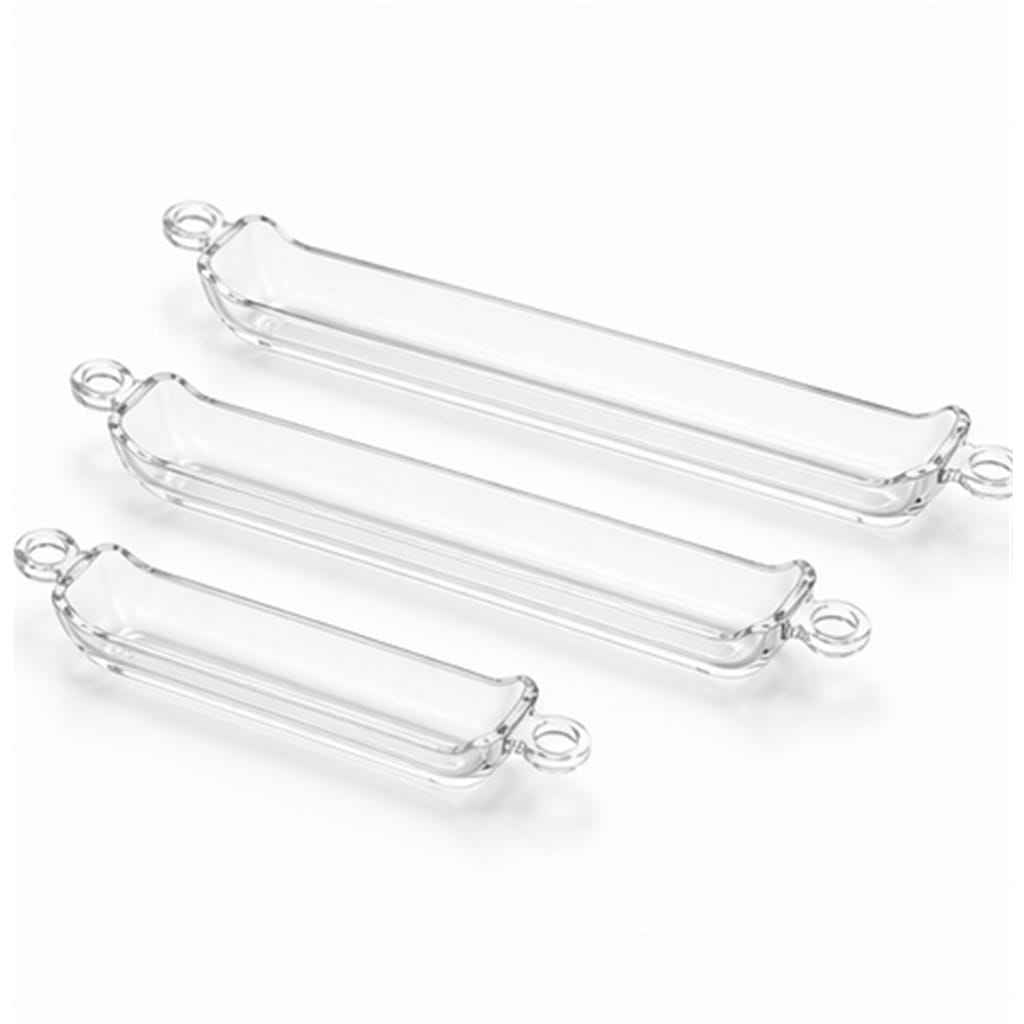
Clear Fused-Quartz Combustion Vessels with Pull Rings for Furnaces
- Continuous thermal endurance at 1100 °C
- Integral fused pull rings for safe sample retaking
- Zero outgassing in vacuum or reducing atmospheres
Optical Classification & Metallurgical Performance of Quartz Discs
When procuring custom OEM quartz discs, selecting between synthetic fused silica (JGS1), optical-grade natural quartz (JGS2), and infrared quartz (JGS3) dictates the optical throughput, structural longevity, and cost efficiency of your sub-system.
Fused Quartz vs. Fused Silica: The Core Differentiation
Industrial quartz discs are divided into two fundamental metallurgical origins. Fused quartz is manufactured by electric-arc or gas-oxygen melting of ultra-pure natural crystal sands mined in geologic deposits such as those in Donghai County. It possesses an exceptionally low hydroxyl (OH) content (<30 ppm), resulting in zero absorption dips in the infrared spectrum up to 3500 nm, making it the preferred choice for thermal process windows, heater sight glasses, and semiconductor RTP (Rapid Thermal Processing) chamber plates.
In contrast, synthetic fused silica (JGS1) is synthesized chemically via the vapor-phase hydrolysis of silicon tetrachloride (SiCl₄) inside a high-temperature flame. This synthesis method yields virtually zero metallic trace impurities (Fe, Al, Ti, Na < 0.1 ppm). While it contains higher OH content (typically 800 to 1200 ppm), it provides pristine optical transmission down to 185 nm deep ultraviolet (DUV). For semiconductor photomask blanks, excimer laser windows, and UV curing sight discs, JGS1 eliminates color center degradation caused by high-energy photon bombardment.
Thermo-Mechanical Stability Under Vacuum & Extreme Pressure
The near-zero coefficient of thermal expansion (α = 5.5 × 10⁻⁷ K⁻¹ between 20 °C and 320 °C) enables quartz discs to endure extreme thermal shock gradients without brittle mechanical fracture. A typical 100 mm diameter by 5 mm thick quartz disc can be heated to 1100 °C and plunged directly into cold water without structural failure. This resilience stems from the strong, isotropic three-dimensional network of covalent silicon-oxygen tetrahedra.
When calculating the burst pressure threshold of clamped circular sight discs in autoclaves, engineers utilize the modified Timoshenko circular flat plate formula with clamped boundary conditions:
P_allowable = (4 × S_t × t²) / (3 × r² × SF)
Where S_t represents the tensile bending strength (approx. 48 MPa for flame-polished fused quartz), t is the plate thickness in mm, r is the unsupported clear aperture radius, and SF is a recommended safety factor of at least 8 to 10 for pressure containment vessels.
| Property Parameter | Synthetic Fused Silica (JGS1) | Optical Fused Quartz (JGS2) | Infrared Fused Quartz (JGS3) | Engineering Significance |
|---|---|---|---|---|
| Primary Transmission Band | 185 nm – 2500 nm (DUV/UV) | 220 nm – 2500 nm (Vis/NIR) | 260 nm – 3500 nm (Vis/IR) | Governs sensor sensitivity and laser absorption |
| Total Metallic Impurities | < 0.5 ppm wt | < 15 ppm wt | < 20 ppm wt | Critical for zero cross-contamination in wafer fabs |
| Hydroxyl (OH⁻) Content | 800 – 1200 ppm | 30 – 150 ppm | < 5 ppm | Determines absorption dip depth at 2.73 μm |
| Thermal Expansion (20–300°C) | 5.4 × 10⁻⁷ / °C | 5.5 × 10⁻⁷ / °C | 5.5 × 10⁻⁷ / °C | 1/6th the expansion rate of borosilicate glass 3.3 |
| Annealing Point | 1140 °C | 1215 °C | 1215 °C | Maximum stress-relaxation treatment point |
| Surface Roughness (Ra) | < 0.3 nm (Super-polished) | < 0.8 nm (Commercial polish) | < 1.0 nm (Precision lapped) | Minimizes photon scattering in laser viewports |
| Bubble Class (DIN 3140) | Class 0 (Zero bubble aperture) | Class 1 – 2 | Class 1 – 2 | Prevents optical wavefront distortion |
Future Procurement Trends in the Global Quartz Disc Market
Technological shifts across advanced node semiconductors, next-generation photovoltaic cells (TOPCon & HJT), and high-energy directed photonics are rewriting procurement criteria for international supply chain managers.
Sub-Angstrom Surface Roughness
With semiconductor fabs migrating to 3 nm and 2 nm process nodes, carrier discs used in temporary wafer bonding and Chemical Mechanical Planarization (CMP) demand atomic-level surface smoothness. Standard commercial polishing (Ra < 1 nm) is rapidly being displaced by Magnetorheological Finishing (MRF) and Pitch-lapping down to Ra < 0.2 nm (2 Ångströms) to prevent sub-micron wafer warp and debonding voids.
Integration of Mineral Clusters
Geopolitical uncertainty and freight volatility are accelerating vendor consolidation toward vertically integrated manufacturing hubs. Fabs and tier-1 OEM equipment makers are shifting contracts directly to factories situated inside raw material epicenters—such as China's crystal capital Donghai—eliminating intermediate trading markups and securing raw silica sand quota stability.
Stringent Trace Metal Audits
Third-generation power semiconductors (Silicon Carbide - SiC, Gallium Nitride - GaN) processed at temperatures above 1350 °C suffer from catastrophic carrier degradation if copper, iron, or alkali metals outgas from adjacent quartz chamber components. Procurement specifications now mandate Glow Discharge Mass Spectrometry (GDMS) certification verifying sub-ppb trace contamination.
Custom CNC Geometric Complexity
The era of standard flat round discs is shifting toward multi-functional monolithic components. Modern drawings specify complex step-index bevels, ultrasonic CNC-machined gas injection micro-orifices, recessed blind pockets, and flame-polished peripheral rims that eliminate stress risers, decreasing thermal fracture risks during high-temperature thermal cycles.
Technological Advancements in Precision Quartz Glass Disc Processing
Traditional mechanical diamond grinding of high-purity quartz induces sub-surface micro-fractures that compromise mechanical fracture toughness under cyclic thermal loads. Donghai Kemzo has adopted a progressive manufacturing paradigm combining multi-axis CNC contour milling, ultrasonic diamond-tool coring, and atmospheric hydrogen-oxygen flame annealing.
Our surface finishing cleanrooms utilize double-sided planetary lapping followed by colloidal cerium oxide chemical-mechanical polishing. This achieves λ/10 peak-to-valley wavefront flatness measured under 632.8 nm HeNe laser interferometry, ensuring that OEM viewport windows transmit laser energy without thermal lensing or wavefront distortion.
Get CatalogWhy Global Tier-1 Buyers Partner with Kemzo Quartz
Donghai Kemzo Quartz Products Co., Ltd. has operated in Donghai, Jiangsu Province—China's renowned quartz hub—since 2011. Here is why procurement engineers across North America, Europe, and Asia maintain Kemzo on their critical AVL (Approved Vendor List).
Direct Source-Region Advantage
Located inside China's primary natural quartz refining cluster in Donghai County, we control the entire material continuum from silica crystal purification to ingot drawing. This geological proximity guarantees consistent raw material availability and insulates buyers from international supply chain bottlenecks.
Precision OEM/ODM to Drawing
With over 11 years of custom OEM manufacturing experience, our engineering team directly analyzes customer 2D/3D CAD drawings (STEP, DWG, DXF, PDF). We advise on thermal stress concentrations, edge chamfer designs, and material grade selection to optimize machinability and lower production costs.
ISO 9001 & High-Tech Enterprise
Kemzo operates certified under ISO 9001 quality management systems and has been recognized as a Jiangsu High Technology Enterprise. Every production lot undergoes dimensional CMM validation, polariscope stress analysis, spectrophotometer transmission testing, and Class 10,000 cleanroom packaging.
Frequently Asked Questions: Quartz Disc Engineering & Sourcing
In-depth technical answers addressing optical clarity, mechanical tolerance verification, thermal limits, and logistics protocols for overseas buyers.
What is the technical distinction between JGS1, JGS2, and JGS3 quartz discs?
The primary distinction lies in raw material source, manufacturing synthesis method, hydroxyl (OH⁻) content, and spectral transmission cutoff:
- JGS1 (Synthetic Fused Silica): Chemical synthesis via SiCl₄ vapor deposition. Has ultra-low metallic content (<0.5 ppm) and higher OH content (800–1200 ppm). High transmission from 185 nm to 2500 nm without UV solarization degradation.
- JGS2 (Optical Fused Quartz): Melted from natural Donghai crystal sands in a hydrogen-oxygen flame. Transmission covers 220 nm to 2500 nm, providing the most economical balance for visible, near-infrared, and furnace viewport applications.
- JGS3 (Infrared Fused Quartz): Vacuum electric-melted natural quartz with minimal OH content (<5 ppm). Completely eliminates the 2730 nm OH absorption band, extending continuous transmission up to 3500 nm.
What maximum operating temperatures and thermal shock gradients can your quartz discs withstand?
Our transparent fused quartz discs can operate continuously at 1100 °C and endure short-term excursion peaks up to 1450 °C. The softening point is approximately 1683 °C, with an annealing point at 1215 °C. Because the thermal expansion coefficient is just 5.5 × 10⁻⁷/°C, a polished quartz disc can be rapidly heated to 1100 °C and quenched directly into 20 °C water without cracking. However, rapid temperature cycling above 1150 °C must avoid devitrification triggered by surface contamination (such as fingerprints or alkali salts).
How do you verify edge quality and prevent peripheral micro-crack propagation?
Peripheral edge defects represent the number one cause of structural failure in clamped quartz sight glasses. Kemzo performs 100% precision CNC beveling, offering options for 45-degree flat ground chamfers, rounded pencil edges (R-edge), or fire-polished peripheries. Fire polishing melts micro-cracks created during mechanical diamond cutting, restoring the theoretical tensile strength of the disc edge to over 70 MPa.
Can you manufacture custom quartz parts and discs directly from engineering drawings?
Yes. Over 80% of Kemzo's production is custom OEM/ODM fabrication to customer CAD prints. Our fabrication capabilities encompass diameters from 2 mm micro-discs up to 800 mm large-diameter furnace observation ports, with thicknesses ranging from 0.15 mm cover slips to 100 mm heavy-duty pressure plates. We accept STEP, IGES, DWG, DXF, and PDF drawings, with engineering feasibility feedback delivered within 1 hour.
What surface quality and flatness standards do you inspect against?
We inspect optical surfaces under MIL-PRF-13830B and ISO 10110 standards. Depending on the optical application, we offer commercial polish (60/40 Scratch-Dig, 1–2λ flatness), precision laser grade (20/10 Scratch-Dig, λ/4 to λ/10 flatness), or ultra-low scatter semiconductor substrate grade (10/5 Scratch-Dig, Ra < 0.3 nm). Every precision batch includes an interferometer wavefront verification report upon request.
What is the chemical resistance of fused quartz against aggressive acids and alkaline solutions?
Fused quartz is chemically inert to virtually all acids, including concentrated nitric, sulfuric, hydrochloric, and aqua regia, even at elevated temperatures. The only chemical exceptions are hydrofluoric acid (HF), which rapidly etches SiO₂, and phosphoric acid at temperatures exceeding 150 °C. Strong alkaline solutions (such as KOH and NaOH) will etch quartz at temperatures above 60 °C, though at significantly lower etch rates than borosilicate glass.
How do you package fragile optical quartz discs to guarantee zero damage during international transit?
Export packaging complies with international fragile freight standards. Each optical disc is individually wrapped in lint-free lens tissue or protective electrostatic PE peel film, vacuum-sealed, and nested into custom die-cut high-density EPE shock absorption foam cavities. External packaging utilizes double-wall corrugated inner cartons secured inside fumigated export plywood crates reinforced with steel banding and shock/tilt indicator sensors.
What are your standard export Incoterms, accepted payment methods, and production lead times?
We export to over 50 countries across North America, Europe, East Asia, and Oceania under FOB, CFR, CIF, EXW, DDU, and DDP express courier terms. Accepted payment options include wire transfer (T/T), Letter of Credit (L/C), PayPal, and cash, with billing in USD, EUR, AUD, HKD, and CNY. Prototype samples typically ship within 5 to 7 working days, while full production batch runs average 2 to 3 weeks based on CNC complexity.
Request Custom Quartz Disc Fabrication & Engineering Quote
Submit your 2D/3D technical drawings, prototype dimensional specifications, or production RFQ requirements. Our materials engineering team will verify manufacturing tolerances, provide chemical grade selection guidance, and return a comprehensive quotation within 60 minutes.
Get Catalog