Featured High-Purity Fused Quartz & Glassware Catalog
Engineered to ISO 9001:2015 Standards for Global Research, Metallurgy, Semiconductor, and Chemical Laboratories
Technical Whitepaper: Chemical Immunity & Thermal Mechanics of Fused Quartz Beakers
A Comprehensive Guide for Industrial B2B Procurement and Chemical Engineers in Bender
In modern industrial synthesis, analytical chemistry, and metallurgy, container degradation introduces severe noise into experimental results and manufacturing workflows. Laboratory glassware subjected to concentrated mineral acids, thermal spiking, and rapid quenching frequently suffers from leaching, micro-fissuring, or catastrophic thermal stress failure. Clear fused quartz laboratory beakers manufactured by Donghai Kemzo Quartz Products Co., Ltd. represent the pinnacle of material science engineering, bridging the structural gap where standard borosilicate 3.3 glass fails.
1. Material Purity & Molecular Structure: The Silica Advantage
Unlike standard borosilicate glass—which contains significant ratios of boron trioxide (B₂O₃), sodium oxide (Na₂O), and aluminum oxide (Al₂O₃)—fused quartz is manufactured by melting naturally occurring high-purity quartz crystals at temperatures exceeding 1700°C (3092°F). This thermal process yields a non-crystalline, amorphous structure consisting almost entirely of pure silicon dioxide (SiO₂ ≥ 99.99%).
Because there are no alkaline fluxing agents added during the melting process, fused quartz exhibit zero ion-exchange leaching. When digesting samples in boiling nitric acid (HNO₃), concentrated hydrochloric acid (HCl), or aqua regia, standard glass containers bleed micro-gram quantities of sodium, boron, and calcium into the solution. Donghai Kemzo’s fused quartz beakers prevent cross-contamination, ensuring absolute purity in Inductively Coupled Plasma Mass Spectrometry (ICP-MS) sample preparation and trace element analysis.
2. Thermal Shock Mechanics & Extreme Temperature Capabilities
Thermal shock resistance is inversely proportional to the coefficient of thermal expansion (CTE). Fused quartz exhibits an extraordinarily low thermal expansion coefficient of approximately 5.5 × 10⁻⁷ /°C between 20°C and 320°C. This rate is nearly 1/6th that of standard borosilicate glass and 1/20th that of soda-lime glass.
Practically, this structural resilience permits extreme thermal gradients. A Kemzo fused quartz beaker can be heated uniformly to 1100°C continuously (or short bursts up to 1450°C) and subsequently plunged into ice-cold water without structural cleavage or fracture. This property renders quartz beakers indispensable for high-temperature acid digestions, molten salt fusions, and rapid chemical evaporations where traditional labware shatters.
Comprehensive Material Benchmarking Matrix
To assist procurement managers and lead scientists in Bender in making informed material choices, the table below compares high-purity fused quartz against alternative laboratory vessel substrates:
| Material Benchmark Parameter | High-Purity Fused Quartz (Kemzo) | Borosilicate 3.3 Glass | PTFE / PFA Fluoropolymer | Platinum / Tantalum Metal |
|---|---|---|---|---|
| SiO₂ Purity / Composition | ≥ 99.99% SiO₂ | ~81% SiO₂, 13% B₂O₃, 4% Na₂O | Fluorocarbon Polymer | 99.9% Pure Precious Metal |
| Max Continuous Temperature | 1100°C (1450°C peak) | 500°C (Softens ~825°C) | 260°C max | > 1600°C |
| Thermal Expansion (CTE) | 5.5 × 10⁻⁷ /°C | 3.3 × 10⁻⁶ /°C | 1.0 × 10⁻⁴ /°C | 8.9 × 10⁻⁶ /°C |
| Acid Resistance (HNO3, HCl, H2SO4) | Immune (Except HF & H3PO4 >300°C) | Good (Leaches cations at high temp) | Excellent | Attacked by Aqua Regia |
| Optical Transparency (UV-Vis-IR) | 200 nm – 2500 nm (High UV) | 350 nm – 2000 nm (Cuts UV) | Opaque / Translucent | Completely Opaque |
| Trace Contamination Risk | Ultra-Low (< 10 ppm total impurities) | Moderate to High (Leaches Na, B, Al) | Low (Risk of organic leaching) | Very Low (Risk of precious metal trace) |
Localized Application Scenarios in Bender & Surrounding Industrial Ecosystems
Custom Quartz Solutions Tailored for Moldovan and Eastern European Processing Requirements
Bender and the broader Dniester River industrial basin host a diverse spectrum of manufacturing, agricultural science, heavy machinery, chemical processing, and metallurgical testing facilities. As regional industries modernize and realign with international export quality benchmarks, the demand for precision laboratory apparatus has surged. Donghai Kemzo Quartz Products Co., Ltd. serves as a primary direct export partner supplying high-grade fused quartz labware directly to facilities operating in Bender.
Heavy Metal & Chemical Testing in Viticulture & Agriculture
The agricultural and wine-making sector surrounding Bender requires rigorous soil and batch analysis to satisfy export standards. Digesting soil samples and organic agricultural residues in concentrated sulfuric (H₂SO₄) and perchloric (HClO₄) acids requires vessels that do not leach micro-nutrients into the test media. Kemzo fused quartz beakers ensure 100% accurate ICP spectrometry testing for heavy metal residue (such as Lead, Cadmium, and Arsenic).
Metallurgical Quality Control & Furnace Ashing
Bender’s manufacturing and metalworking operations regularly conduct furnace gravimetric analysis, alloy melt testing, and slag composition checks. Standard glass cannot survive high muffle-furnace temperatures. Kemzo quartz beakers serve dual roles: acting as acid digestion vessels on hot plates and transitioning directly into ash furnaces at 1000°C without mechanical degradation.
Pharmaceutical & Fine Chemical Synthesis
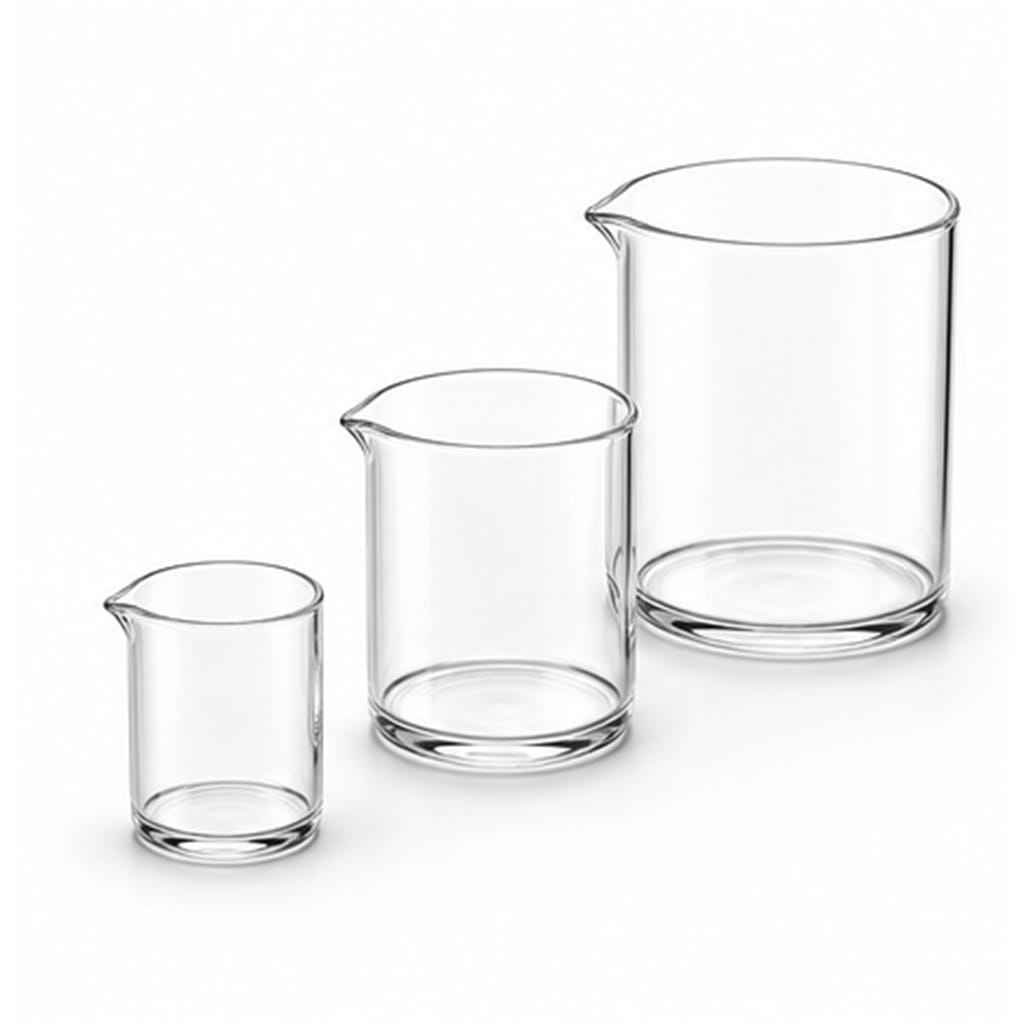
For cleanroom environments and pharmaceutical processing facilities, clarity, smooth flame-polished interiors, and biological inertness are mandatory. Kemzo quartz beakers feature molded, drip-free pouring spouts and fire-polished rims that prevent particulate shedding and allow effortless transferring of sensitive organic reagents.
Regional B2B Procurement Trends & Strategic Insights (2025–2030)
Navigating Supply Chain Efficiency and Direct Manufacturer Sourcing for Moldovan Buyers
Procurement strategies in Bender and the surrounding region have evolved rapidly over recent years. B2B buyers and lab managers are increasingly migrating away from third-party European catalog distributors who mark up prices by 300% to 500%. Instead, enterprise procurement teams are forming direct manufacturer relationships with specialized Chinese producers like Donghai Kemzo Quartz Products Co., Ltd.
Key drivers behind this transition include:
- Direct Customization (OEM/ODM): European stock distributors rarely offer custom dimensional modifications. Kemzo provides custom volumetric graduations, heavy-wall reinforcement, ground-glass joint additions, and tailored tall-form or low-form beaker geometries built directly from client engineering CAD drawings.
- Supply Chain Security & Certified Packaging: Shipping fragile quartz glass to Eastern Europe requires specialized export packaging. Kemzo utilizes custom shock-absorbent foam inserts, vacuum sealing, and fumigated timber crates to guarantee zero-breakage delivery via air or ocean freight directly to Bender.
- Total Cost of Ownership (TCO) Reduction: Due to the raw material advantage of Donghai County—the crystal capital of China—Kemzo delivers factory-direct wholesale pricing without compromising on ISO 9001 quality controls or purity grades.
Why Partner with Donghai Kemzo Quartz Products Co., Ltd.?
Decades of Precision Engineering, State-of-the-Art Production Lines, and Uncompromising Quality Control
Founded in 2011 in Donghai County, Jiangsu, China, Donghai Kemzo Quartz Products Co., Ltd. operates in the geographic heart of the world’s most concentrated quartz processing cluster. Recognized as a official Jiangsu High Technology Enterprise, Kemzo combines raw natural quartz resource dominance with cutting-edge optical and thermal processing technology.
ISO 9001 Quality Management System
Every step of beaker fabrication—from raw sand selection, continuous vacuum drawing, hydro-oxygen torch shaping, to stress-relief annealing—is monitored under strict ISO 9001 protocols. Finished items undergo polariscopic birefringence stress checks to guarantee zero residual structural tension.
Purity Assurance & Chemical Cleanliness
Our fused quartz crucibles and laboratory beakers undergo specialized ultra-pure water ultrasonic bath washing and acid-decontaminating rinses before export packaging, removing surface airborne particulates and trace handling residues.
Rapid Inquiry Response & Dedicated B2B Support
We understand the urgency of industrial procurement. Kemzo maintains a ≤ 1-hour average response time for technical RFQs, custom drawing evaluations, and formal proforma quotes for international buyers.
Frequently Asked Questions by Laboratory Buyers in Bender
Addressing Common Technical, Commercial, and Logistical Queries
Q1: How do fused quartz beakers react when exposed to Hydrofluoric Acid (HF) or Phosphoric Acid?
Fused quartz offers complete resistance to almost all inorganic and organic acids at room and elevated temperatures (including Nitric, Hydrochloric, and Sulfuric acids). However, Hydrofluoric Acid (HF) rapidly attacks silicon dioxide regardless of concentration. Additionally, Phosphoric Acid (H₃PO₄) will cause minor surface etching at temperatures exceeding 300°C. For all other acid matrices, quartz remains completely inert.
Q2: What is the primary operational difference between low-form (Griffin) and tall-form (Berzelius) quartz beakers?
Low-form (Griffin) quartz beakers feature a height roughly 1.4 times their diameter, making them ideal for multi-purpose hot-plate heating, boiling, and general reagent mixing. Tall-form (Berzelius) beakers have a height approximately double their diameter, reducing liquid surface exposure to air, minimizing spattering during aggressive acid digestions, and fitting better into narrow benchtop furnace spaces.
Q3: Can Kemzo supply custom screen-printed or diamond-etched volumetric graduations?
Yes. While standard clear quartz beakers are ungraduated or feature permanent white ceramic enamel volumetric markings, we can supply diamond-etched scale graduations or high-temperature ceramic scale firings according to your specific lab requirements.
Q4: How should fused quartz labware be cleaned to maintain optical clarity and prevent devitrification?
Soak the beaker in a 10% nitric acid solution to remove inorganic metal deposits, followed by rinsing with deionized water. Avoid alkaline detergents with pH > 10 at elevated temperatures, as alkali metal ions (Na⁺, K⁺) accelerate devitrification (cristobalite crystal growth) when the beaker is subsequently heated above 1000°C.
Q5: What shipping terms and delivery lead times are available for orders delivered to Bender?
We support all standard international trade terms including FOB, CIF, CFR, EXW, DDU, and DDP. Express air freight shipments typically arrive in 7 to 10 business days, while bulk sea freight orders take 30 to 40 days. All fragile shipments are 100% insured against transport damage.
Q6: What is the minimum order quantity (MOQ) for custom-sized quartz beakers?
Because we maintain flexible production lines in Donghai, we accommodate both low-volume prototype orders (MOQ 5 to 10 pieces for custom items) and bulk industrial wholesale orders (thousands of units) with competitive tiered pricing.
Accelerate Your Laboratory Efficiency with Custom Quartz Solutions
Direct Factory Wholesale Pricing • ISO 9001 Certified • Rapid Custom Drawing Engineering Review • Fast Export Delivery to Bender and Overseas Markets
Get Catalog & Wholesale Quote