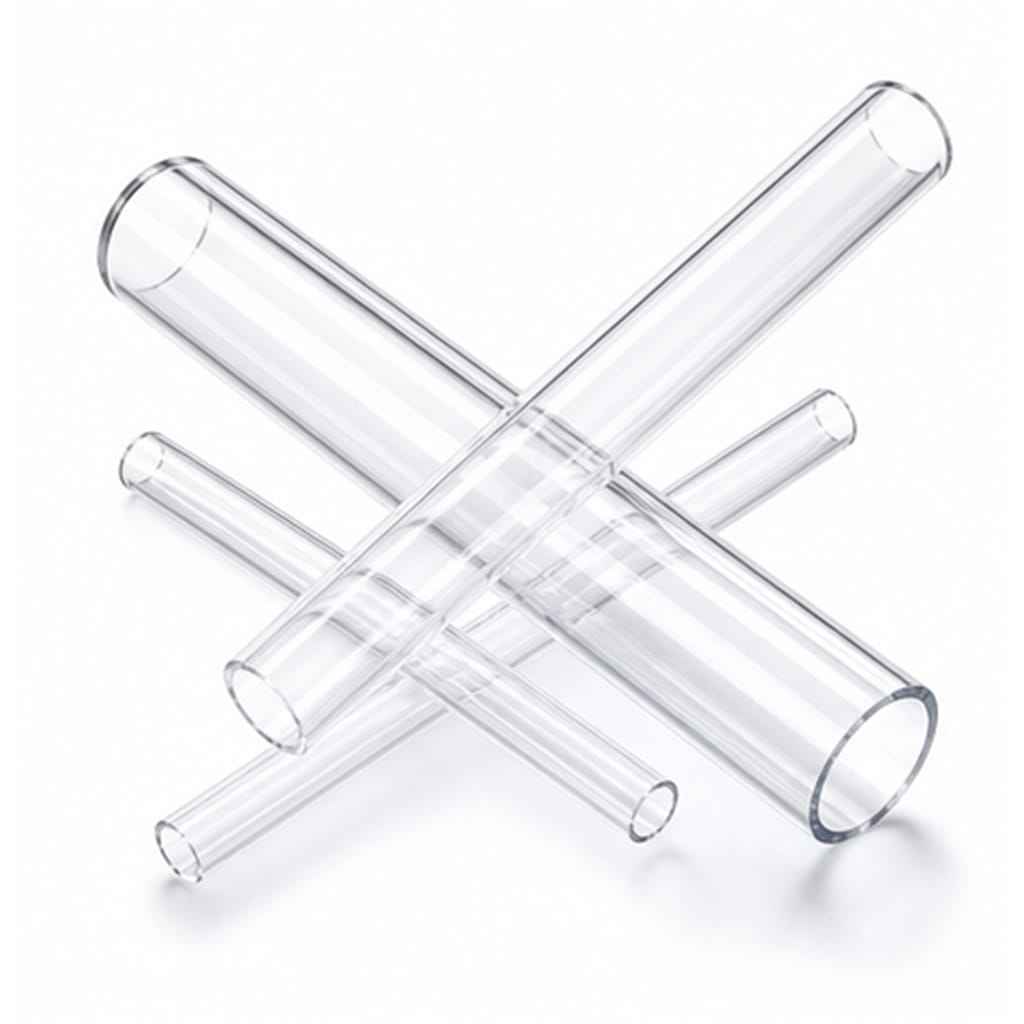
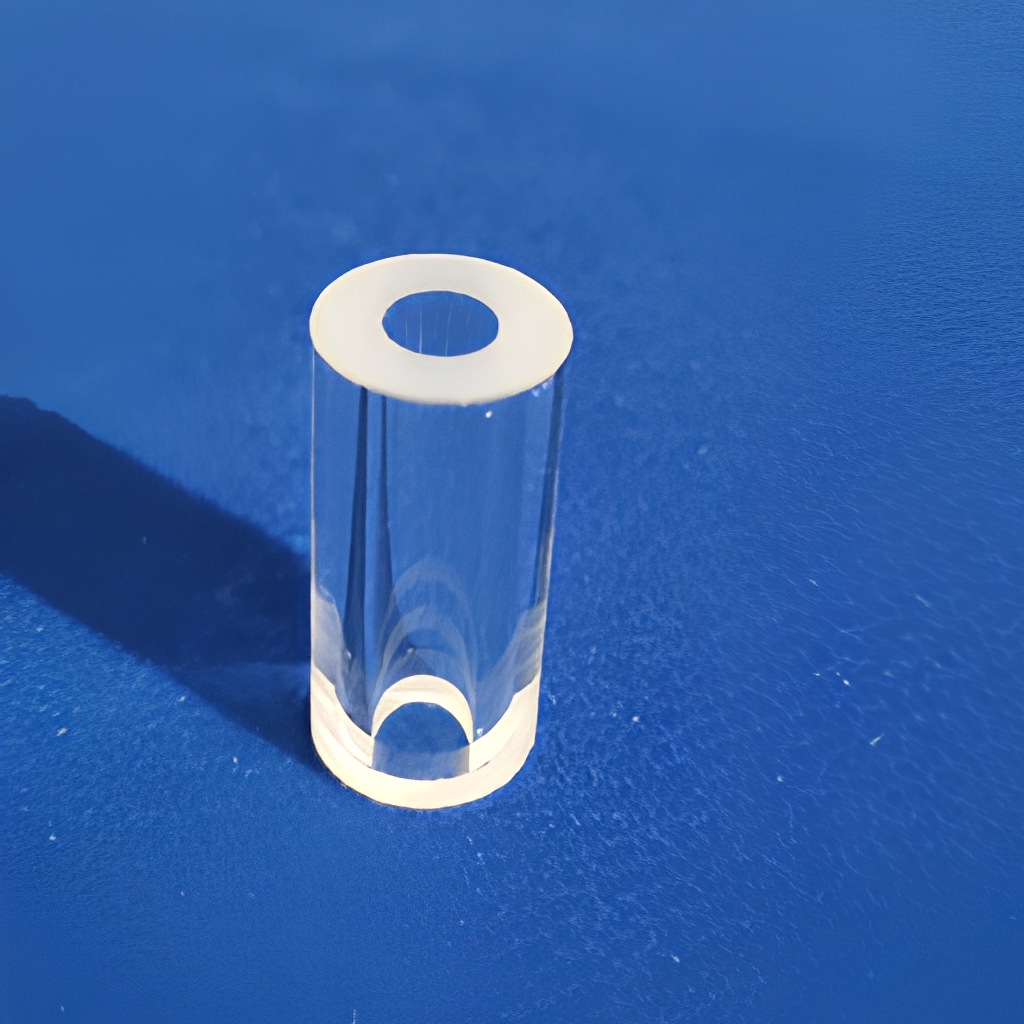
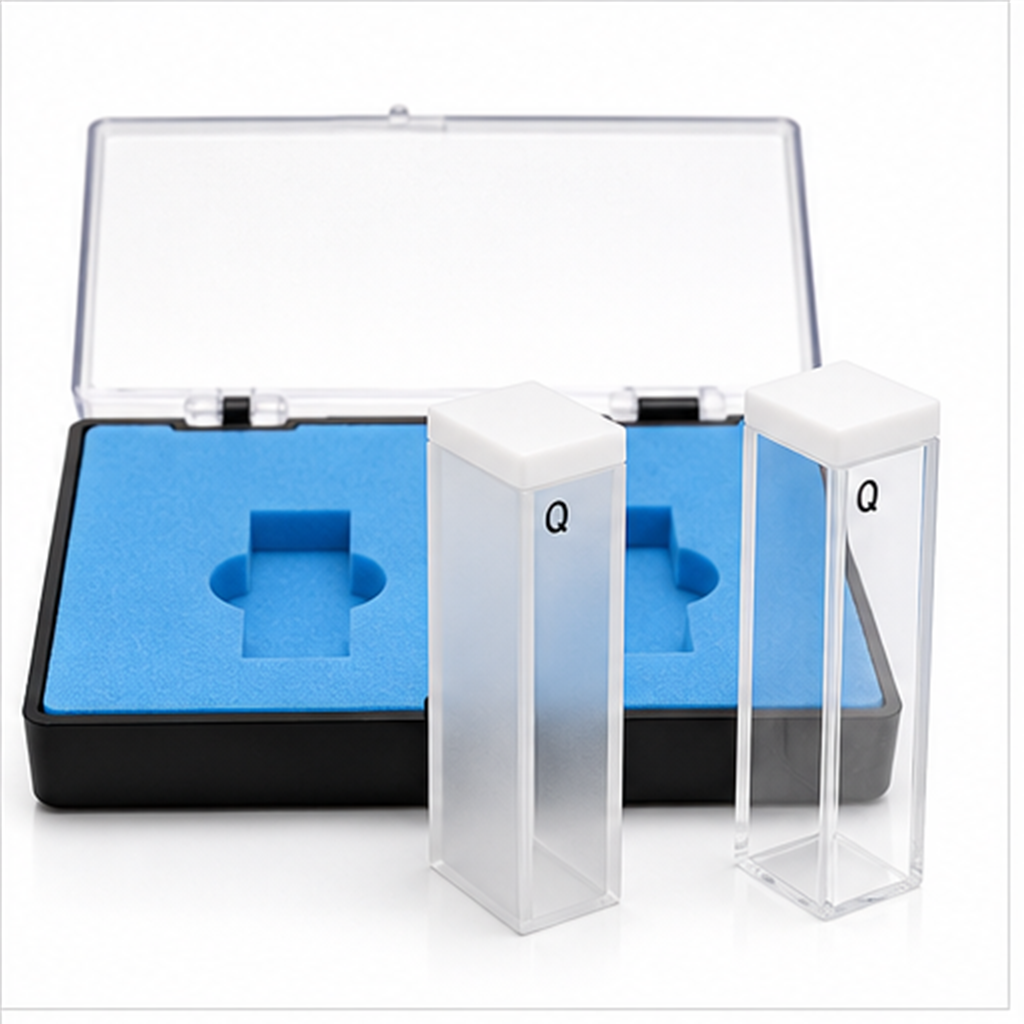
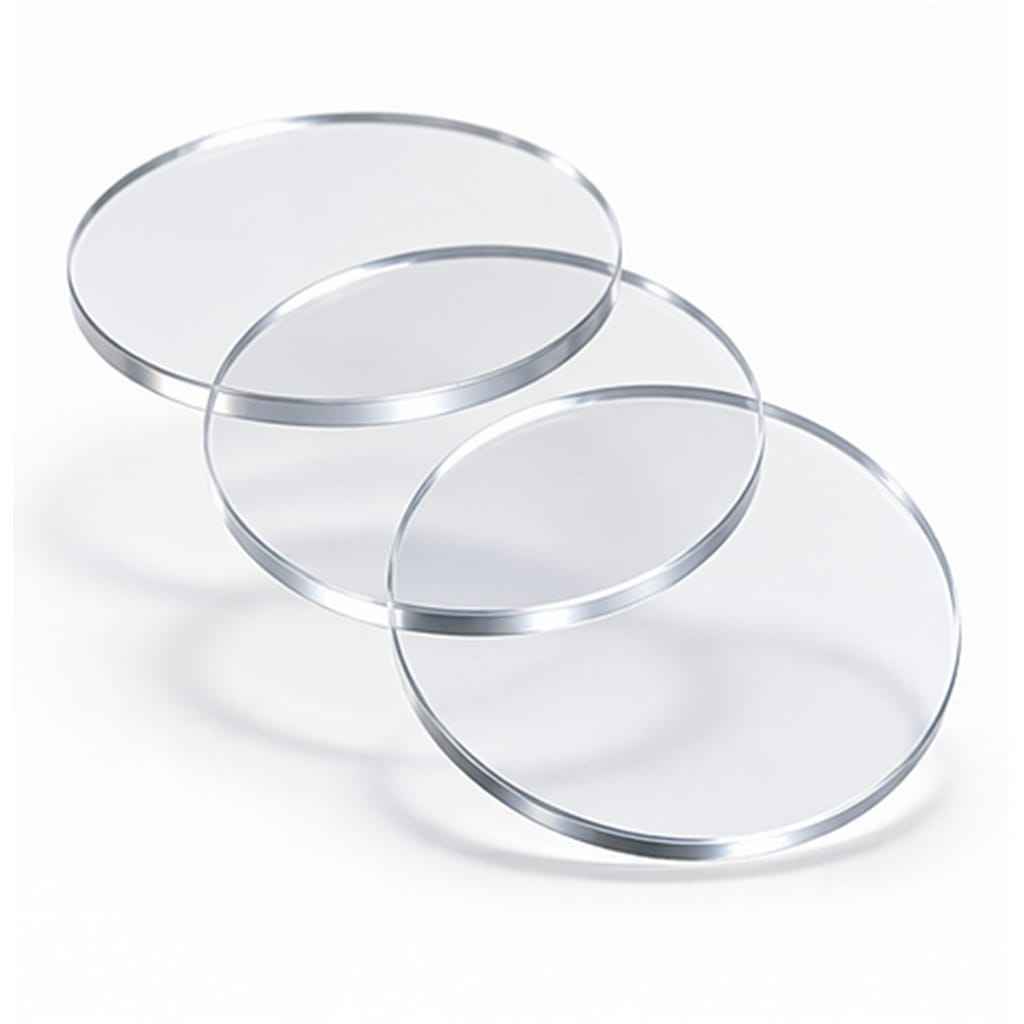
Featured High-Purity Fused Quartz & Silica Product Range
Explore our ISO 9001:2015 certified, custom-manufactured fused quartz laboratory glass, vessels, and optical components supplied directly to analytical facilities in St. John's and worldwide.
Industry White Paper: Acid-Resistant Fused Quartz Laboratory Beakers in St. John’s
An Technical Analysis of Thermal Shock Resistance, Trace Element Contamination Control, and Custom OEM Manufacturing for Atlantic Canada’s Marine, Energy, and Geological Sectors.
1. Technical Introduction & Material Science Advantage
In modern analytical chemistry, oceanography, geochemical assaying, and industrial quality control, the integrity of sample preparation vessels directly dictates the precision of sub-parts-per-billion (ppb) analysis. For laboratories situated in St. John’s, Newfoundland and Labrador, operating at the crossroads of North Atlantic marine research, offshore oil production, and critical minerals metallurgy, standard laboratory glass frequently fails to meet aggressive chemical and thermal requirements.
Standard borosilicate glass 3.3, while adequate for general biology and soft chemical mixing, suffers severe physical and elemental limitations. When exposed to hot concentrated acid mixtures (such as Aqua Regia, 98% Sulfuric Acid $H_2SO_4$, 70% Nitric Acid $HNO_3$, and 70% Perchloric Acid $HClO_4$), borosilicate glass exhibits leaching of alkali ions (sodium $Na^+$, potassium $K^+$, boron $B^{3+}$, and calcium $Ca^{2+}$). Furthermore, borosilicate's thermal expansion coefficient ($3.3 \times 10^{-6}/\text{°C}$) introduces catastrophic thermal shock failure risks when vessels are rapidly transferred between high-temperature hotplates ($>400\text{°C}$) and cold sub-arctic ambient conditions or refrigerated marine stabilization baths.
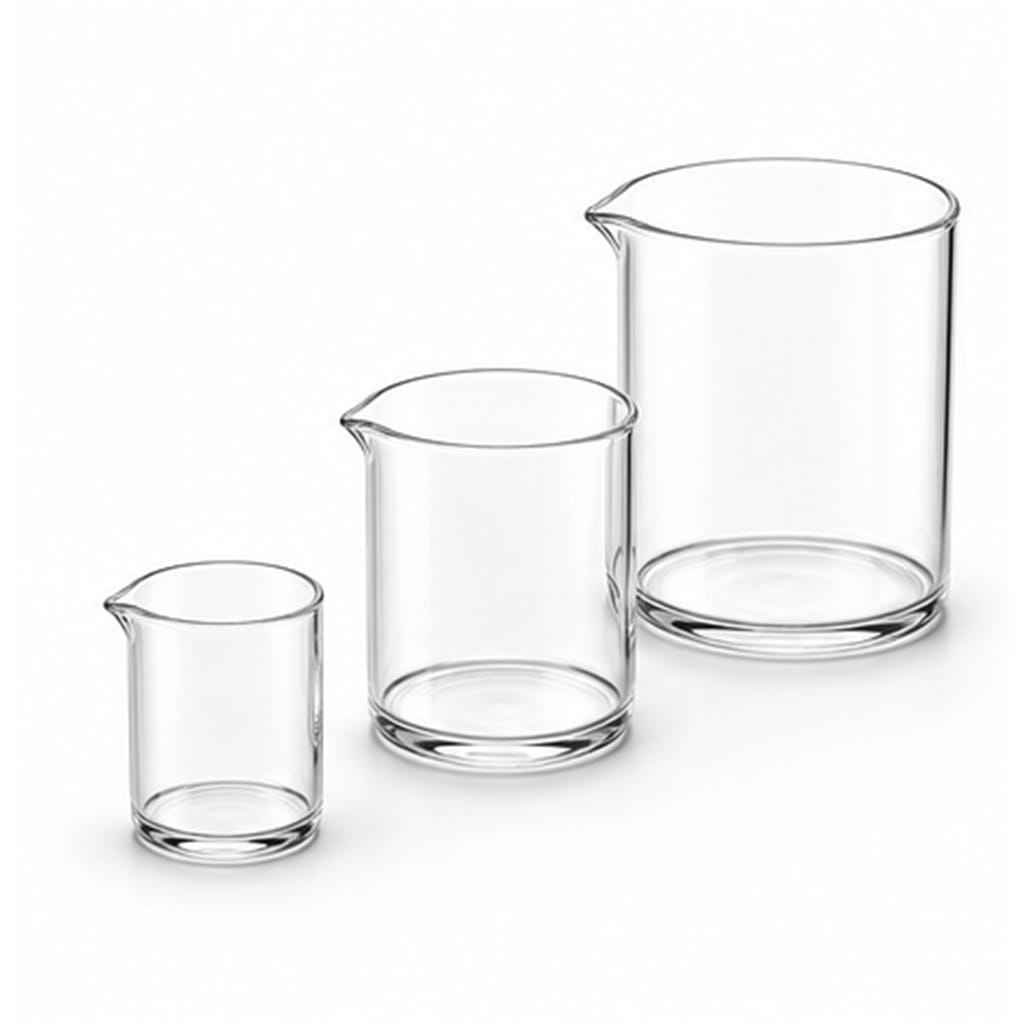
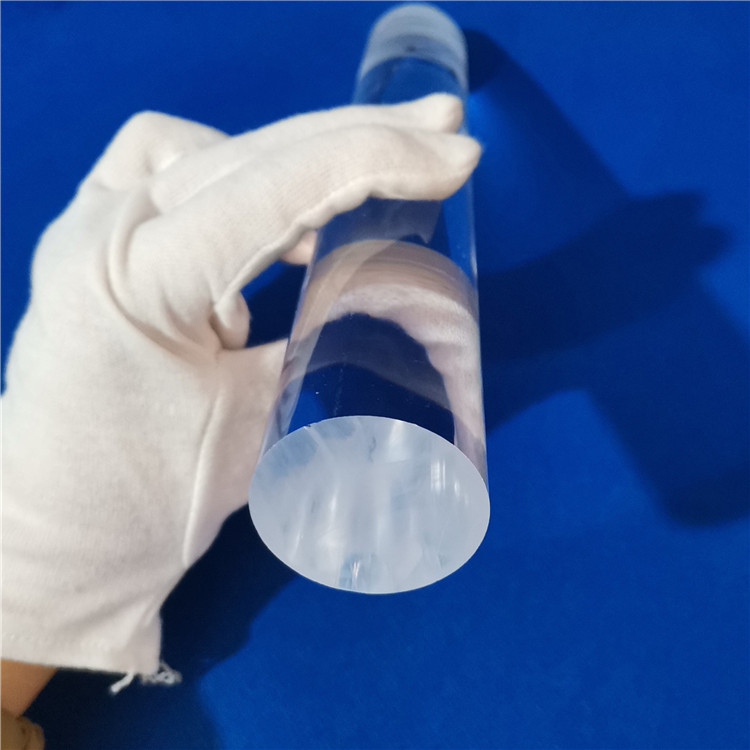
Custom OEM Acid-Resistant Fused Quartz Laboratory Beakers manufactured by Donghai Kemzo Quartz Products Co., Ltd. represent the peak solution. Produced by fusing ultra-high purity natural crystal quartz sand ($>99.99\%\text{ SiO}_2$) at temperatures exceeding $1750\text{°C}$, quartz glass possesses an exceptionally low coefficient of thermal expansion ($5.5 \times 10^{-7}/\text{°C}$ from $20\text{°C}$ to $300\text{°C}$). This gives quartz beakers an unequaled immunity to thermal shock, allowing them to withstand instantaneous temperature differentials exceeding $1000\text{°C}$ without fracturing.
Core Takeaway for St. John’s Technical Buyers: Fused quartz beakers offer non-porous chemical resistance to almost all inorganic acids at boiling temperatures (with the sole exception of hydrofluoric acid $HF$ and hot phosphoric acid $H_3PO_4$ above $250\text{°C}$). They eliminate background elemental contamination in trace metal ICP-MS and ICP-OES analysis.
Trace Contamination Control
Total background impurity levels are kept under 20 ppm across metal elements, preventing $B$, $Na$, and $Al$ contamination during trace chemical digests.
Extreme Thermal Thresholds
Continuous maximum operating temperature of $1100\text{°C}$ and short-term peak resistance up to $1450\text{°C}$, with softening point occurring at $1683\text{°C}$.
Custom OEM Engineering
Molded pouring spouts, reinforced rims, extra-thick base plates, and custom volume capacities from 25 mL to 10,000 mL built directly to CAD drawings.
2. Localized Application Scenarios in St. John’s & Atlantic Canada
St. John's serves as the primary scientific, academic, and industrial engine for Newfoundland and Labrador. The city's research ecosystem demands high-performance chemical apparatuses capable of surviving unique marine and industrial challenges:
A. Marine Chemistry, Biological Oceanography & Deep-Sea Sediments
Institutions such as Memorial University of Newfoundland (MUN), the Fisheries and Marine Institute, and research vessels docked along St. John's harbor regularly perform heavy acid digestions on marine organic samples, coastal plankton, ocean sediments, and benthic fauna. Digesting tough biological matrices requires boiling trace-metal-grade nitric acid ($HNO_3$) and hydrogen peroxide ($H_2O_2$) inside fused quartz beakers to prevent leaching ambient trace elements into micro-gram analytical samples.
B. Offshore Energy & Offshore Oilfield Analytical Testing
With major offshore oil operations (such as Hibernia, Hebron, Terra Nova, and White Rose) operating off the Grand Banks, analytical laboratories in Mount Pearl and St. John’s conduct rigorous oilfield water analysis, petroleum heavy-metal testing ($V$, $Ni$, $Fe$, $Pb$), and corrosion product evaluation. Testing crude oil fractions and scale samples requires high-heat digestion in concentrated sulfuric and perchloric acid mixtures inside custom acid-resistant quartz vessels.
C. Mining, Critical Minerals & Extractive Metallurgy in NL
From nickel, copper, and cobalt processing at Voisey’s Bay to iron ore operations in Labrador and emerging gold and lithium exploratory projects, mineralogical assay labs in St. John’s handle dense mineral matrices. Dissolving tough sulfide and oxide ores requires high-temperature acid baking. Standard glass breaks under hot acid hotplate stress; OEM fused quartz beakers provide stable, repeat-use performance without cracking.
3. Material Comparison: Fused Quartz vs. Borosilicate 3.3 vs. PTFE (Teflon)
Selecting the appropriate laboratory vessel material requires balancing thermal tolerance, structural rigidity, chemical resistance, and visual transparency. Below is a visual comparative data matrix:
| Performance Metric | High-Purity Fused Quartz | Borosilicate Glass 3.3 | PTFE (Teflon) Labware |
|---|---|---|---|
| Purity ($SiO_2$ / Main Compound) | ≥ 99.99% SiO₂ | ~81% SiO₂, 13% B₂O₃, 4% Na₂O | 100% Fluoropolymer |
| Max Continuous Temperature | 1100 °C | 230 °C to 490 °C | 260 °C |
| Thermal Shock Resistance ($\Delta T$) | > 1000 °C Instantaneous | ~160 °C Differential | Moderate (Deforms at heat) |
| Acid Resistance ($HNO_3, H_2SO_4, HCl$) | Superior (Zero Corrosion) | Good (Slight Ion Leaching) | Superior |
| Visual Clarity & UV Transparency | 100% Optical Translucent / Clear | Clear (Cutoff <310 nm) | Opaque / Translucent White |
| Hydrofluoric Acid ($HF$) Stability | Unstable (Attacked by HF) | Unstable | Fully Resistant |
| Structural Rigidity at $500\text{°C}+$ | Rigid Non-Deforming | Melts / Softens | Melts ($327\text{°C}$) |
4. Strategic Procurement Trends in Atlantic Canada’s Laboratory Supply Chain
The procurement landscape in St. John’s is increasingly prioritizing supply chain resilience, custom fabrication agility, and longer operational product lifespans. Laboratory managers are shifting away from disposable low-grade glass toward durable OEM fused quartz labware due to three major regional trends:
- Total Cost of Ownership (TCO) Reduction: While the initial purchase price of fused quartz is higher than borosilicate glass, its extreme durability and thermal shock resistance reduce breakages on automated heating blocks by over 80%, substantially lowering multi-year replacement expenses.
- Customization for Automated Digestion Racks: Modern analytical laboratories in Atlantic Canada utilize robotic digestion blocks and custom heating plates. Standard catalog beaker dimensions often do not fit these units snugly. Kemzo Quartz provides custom OEM manufacturing to exact outer diameter ($OD$), height, rim thickness, and base flatness specifications.
- Sub-Arctic Environmental Compliance: Analytical labs testing coastal water samples, municipal runoff, and offshore discharge must comply with strict Canadian Council of Ministers of the Environment (CCME) trace-metal guidelines. Operating quartz vessels eliminates background blank interference during EPA 200.8 and EPA 6020 trace metal analyses.
5. Custom OEM Engineering Options Provided by Donghai Kemzo Quartz
As a direct source manufacturer based in Donghai, Jiangsu—China’s crystal capital—Donghai Kemzo Quartz Products Co., Ltd. offers extensive OEM, ODM, and buyer-label customization options for laboratory glassware:
- Capacity & Dimensional Form Factors: Standard Griffin tall-form and low-form sizes (25mL, 50mL, 100mL, 250mL, 500mL, 1000mL, 2000mL, up to 10,000mL heavy-duty industrial vessels).
- Pouring Spout Optimization: Molded non-drip spout geometries engineered specifically for precise volumetric transfer of hazardous hot acids.
- Graduation & Branding: Permanent white ceramic or laser-etched volume graduations, batch tracking numbers, and custom institutional logos.
- Base & Wall Reinforcement: Precision flat-ground thick bases for uniform thermal conduction on ceramic hotplates, with fire-polished heavy-duty top rims to resist accidental chipping.
Why Choose Donghai Kemzo Quartz Products Co., Ltd.
Combining direct crystal region raw material access with ISO 9001 certified optical and glassblowing craftsmanship since 2011.
Raw Material Advantage
Located in Donghai, China’s primary quartz hub, we source direct high-purity natural silica sand ($\text{SiO}_2 \ge 99.99\%$) ensuring ultra-low hydroxyl ($\text{OH}^-$) and metal impurity levels.
Strict Quality Assurance
Operated under ISO 9001 quality management systems. Every quartz beaker undergoes optical stress inspection, dimensional verification, and thermal annealing.
Export-Grade Overseas Logistics
Over 70% to 80% of our products are exported globally. We utilize heavy-duty foam cushioning and export wooden crates designed for air and ocean freight to St. John's, NL.
Frequently Asked Questions (FAQ) for St. John’s Procurement
Technical guidance and ordering information for purchasing officers, lab managers, and research scientists in Atlantic Canada.
What is the chemical resistance of fused quartz beakers against aggressive acids?
Fused quartz exhibits extraordinary inertness to practically all inorganic acids, including boiling Nitric Acid ($HNO_3$), Hydrochloric Acid ($HCl$), Aqua Regia ($HNO_3 + 3HCl$), Sulfuric Acid ($H_2SO_4$), and Perchloric Acid ($HClO_4$). It does not suffer from leaching of sodium, boron, or trace metals like borosilicate glass. However, fused quartz is not resistant to Hydrofluoric Acid ($HF$) or hot Phosphoric Acid ($H_3PO_4$) above $250\text{°C}$, as these compounds chemically dissolve silicon dioxide.
Can Kemzo Quartz manufacture custom beakers according to our drawing or heating mantle dimensions?
Yes. With over 11 years of specialized OEM/ODM glassblowing and CNC machining expertise, we manufacture quartz beakers to your precise dimensional drawings, outer diameter tolerances, wall thicknesses, and capacity requirements. Send your technical CAD drawing or hand sketch to [email protected] for engineering review.
How do fused quartz beakers handle rapid temperature changes compared to standard lab glassware?
Because fused quartz has an extremely low coefficient of thermal expansion ($5.5 \times 10^{-7}/\text{°C}$), it possesses superior thermal shock resistance. A clear fused quartz beaker can be heated to $1000\text{°C}$ on a burner or inside a furnace and immediately quenched in ice-cold water without cracking or shattering—a test that would instantly destroy borosilicate glass.
What are the freight options and delivery lead times to St. John’s, Newfoundland and Labrador?
We routinely ship to Canadian destinations via express air freight (DHL, FedEx, UPS) for urgent orders (typical door-to-door transit time of 5-8 business days to St. John's YYT airport region) or standard air/ocean freight for bulk orders. All items are packed with individual multi-layer shock-absorbing foam and reinforced wood cases designed to prevent shock damage in transit.
What payment terms and currencies does Donghai Kemzo Quartz accept?
We accept Wire Transfer (T/T), Letter of Credit (L/C), PayPal, and major credit cards. Transactions can be settled in CAD, USD, EUR, or GBP under standard Incoterms including FOB, CIF, CFR, DDU, and Express Door-to-Door.
Are graduation marks on the quartz beakers resistant to acid washing?
Yes. We offer both high-temperature fired ceramic enamel graduations and laser-etched permanent volume markings. Laser-etched graduations alter the surface geometry of the quartz itself, making them 100% immune to peeling or fading during prolonged immersion in concentrated hot acid baths.
Need Custom OEM Quartz Glassware for Your St. John’s Laboratory?
Contact our engineering sales team today for technical advice, feasibility assessments, and instant price quotes on custom acid-resistant quartz beakers, process tubes, and optical components.