Precision Quartz Fabrication Portfolio
Custom-engineered synthetic fused silica and high-purity natural quartz glass solutions designed for high vacuum, rapid thermal cycling, and advanced optical transmission.
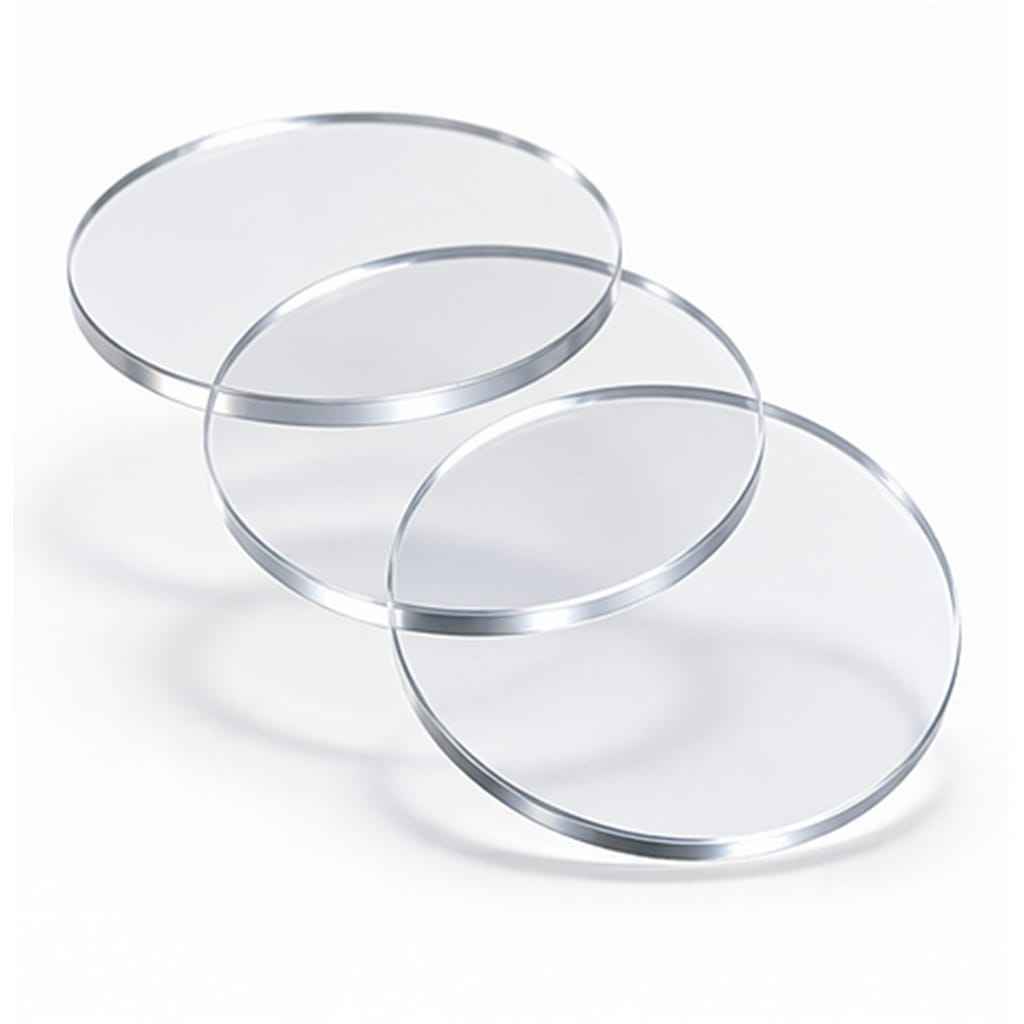
Optically Polished Single-Crystal Quartz Wafers with Chamfered Edges for Piezoelectric QCM Sensors
- Atomic-scale surface roughness (Ra < 0.5 nm)
- Custom AT-cut or SC-cut crystal orientations
- Optimized for microbalance biosensing
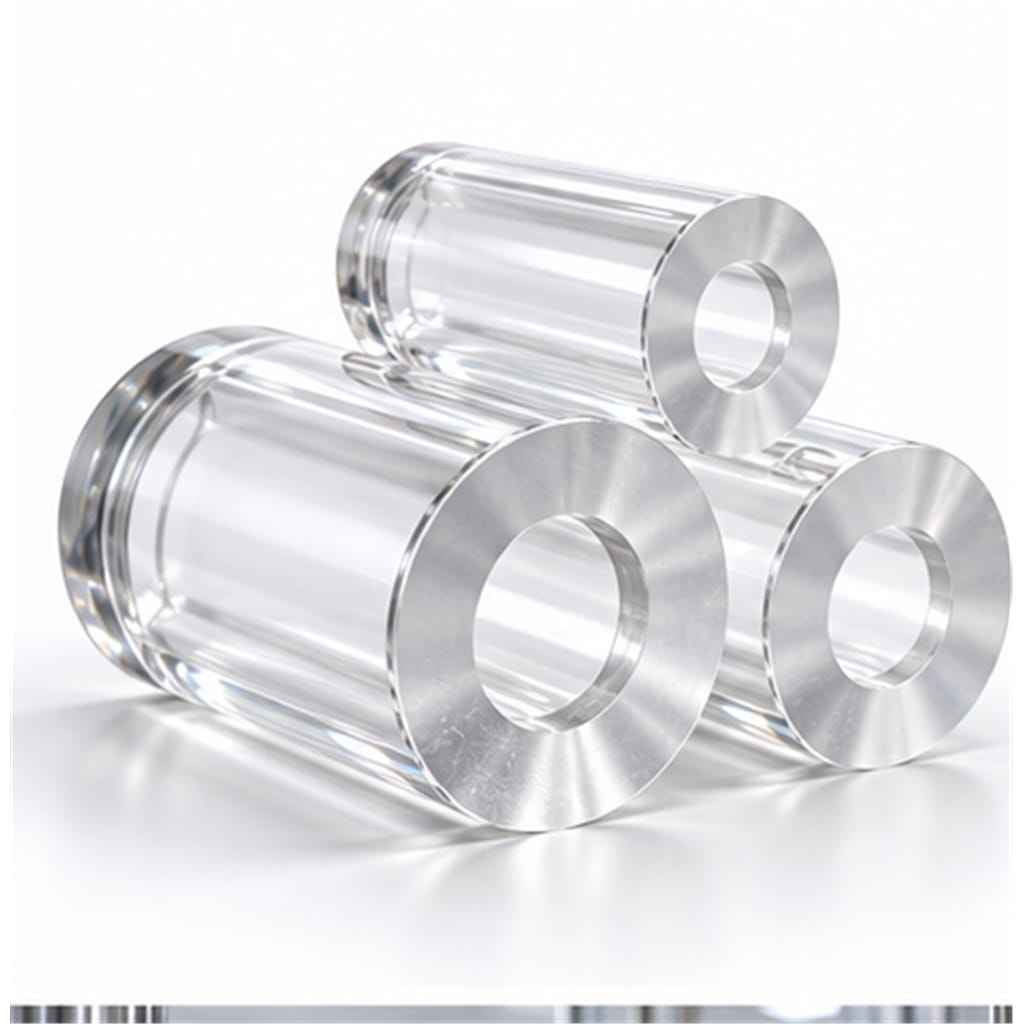
Heavy-Wall Fused-Quartz Cylindrical Pressure Tubes with Squared Ends for High-Pressure Autoclave Sight Glass
- Heavy-wall explosion-proof tolerance
- Precision squared, flame-polished ends
- Ideal for autoclave reactor visual monitoring
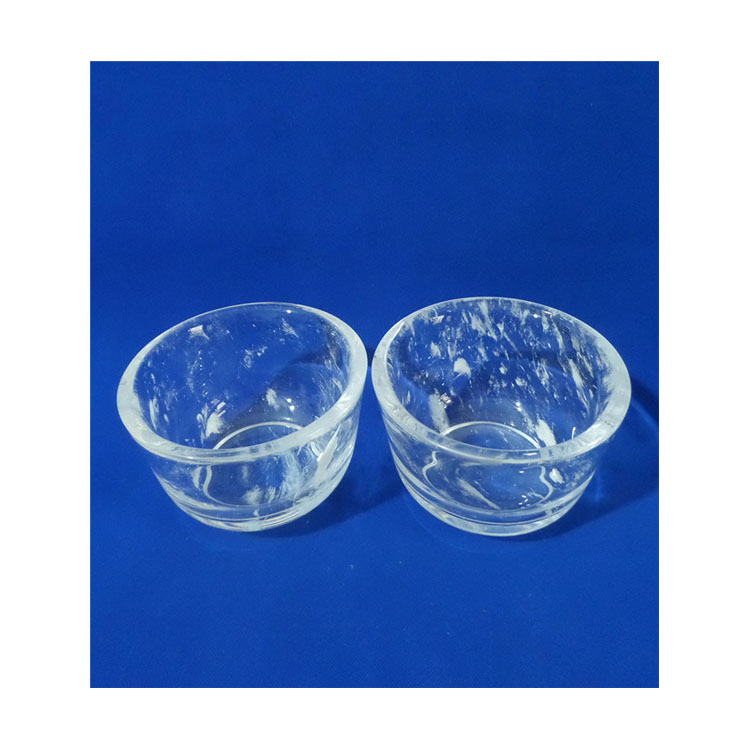
High Temperature Resistant Quartz Glass Circular Silica Custom Size Cutlery Use
- Inert trace element migration under heat
- Extreme thermal shock resistance
- Custom diameter profiles & bevelled edges
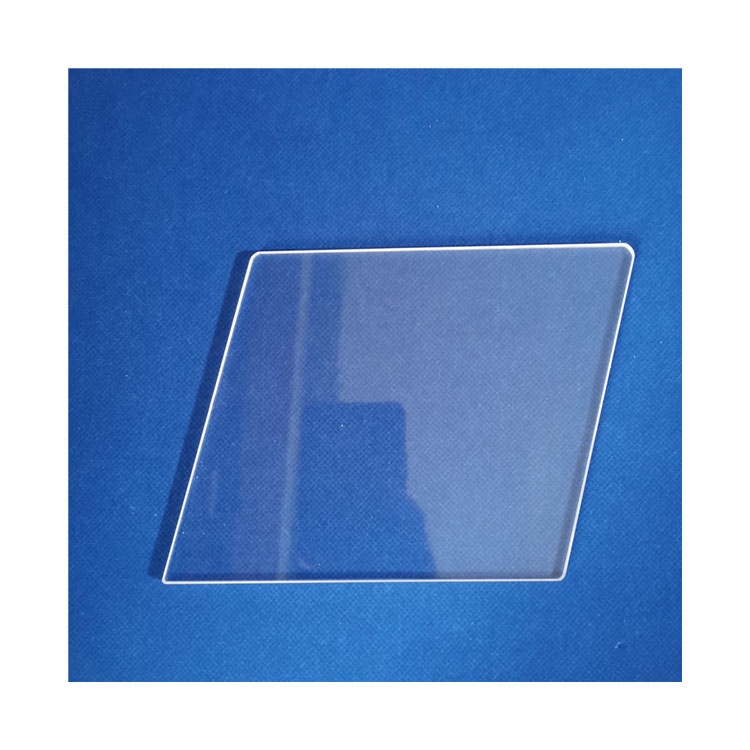
Clear Fused Silica Quartz Glass Plate Transparent Square 0.5-100mm for Optical Semiconductor Industry
- Deep UV-to-NIR spectral transmission (> 92%)
- Thickness range: 0.5 mm up to 100 mm
- Bubbles & inclusion classification Class 0/A
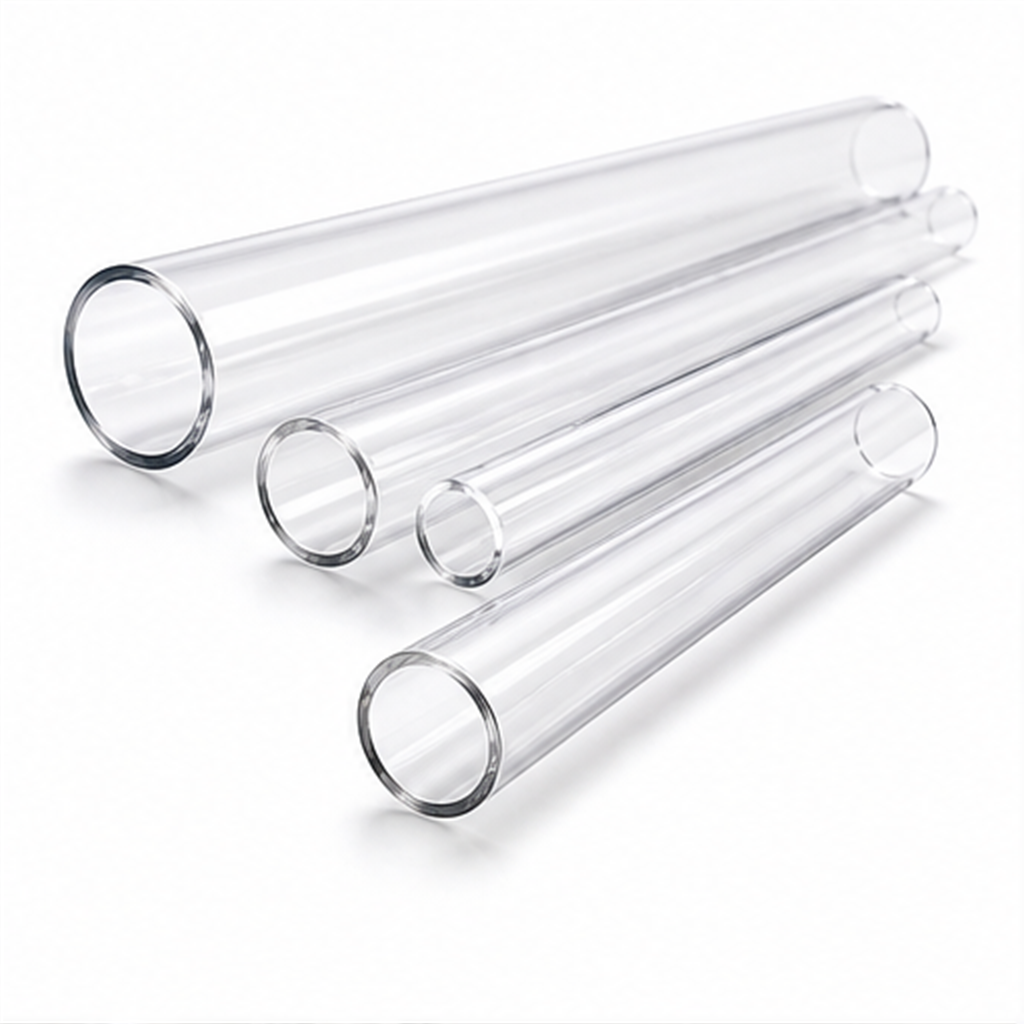
Thermal Shock Resistant Transparent Fused Quartz Furnace Tube for High Temperature Processing
- Low CTE (5.5 × 10⁻⁷ /°C) eliminates cracking
- Annealed stress relief for extended furnace duty
- Available in OD up to 450 mm
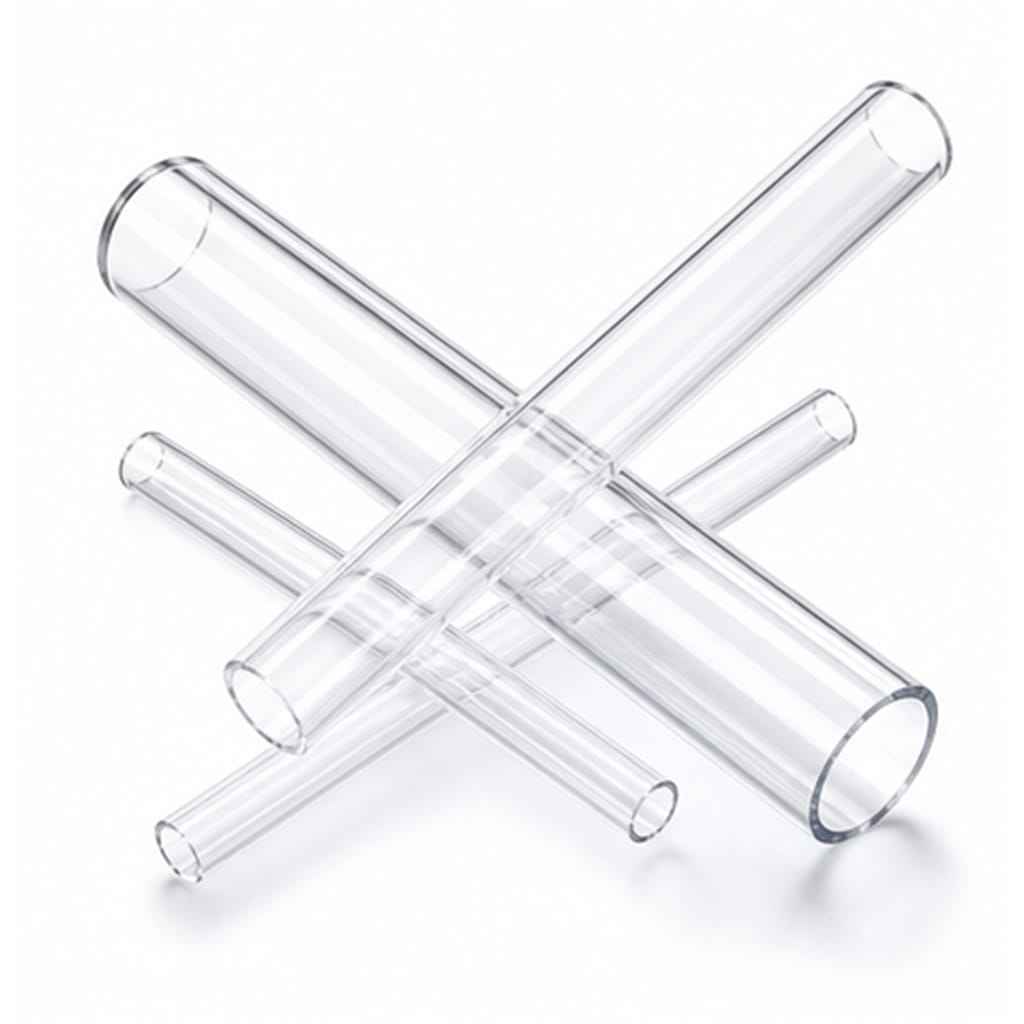
Precision Flat-Cut Fused-Quartz Straight Process Tubes with 90-Degree Squared Ends for Vacuum CVD Chambers
- Ultra-precise 90° face milling and edge polishing
- Hermetic vacuum flange coupling compatibility
- Zero outgassing under ultra-high vacuum (UHV)
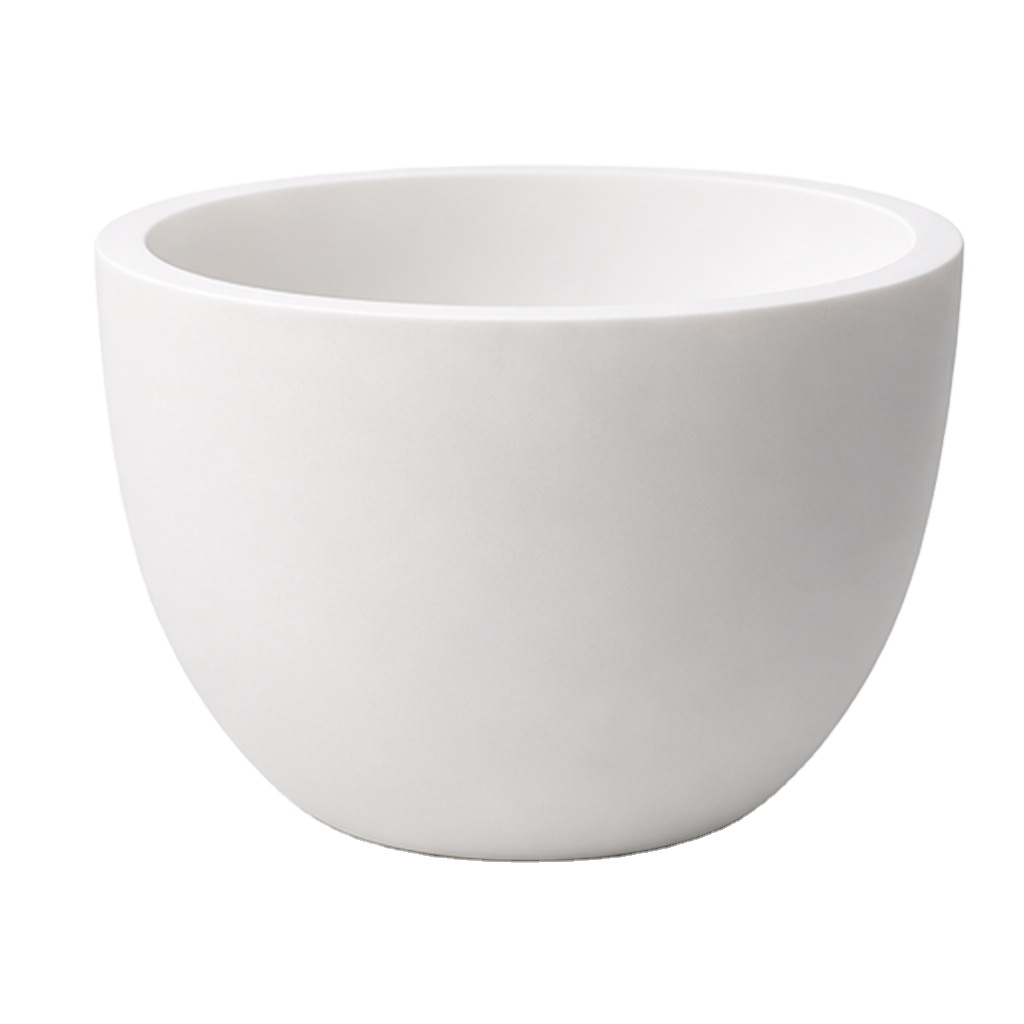
10 Inch High Purity Opaque Milky Fused Quartz Crucible for High Temp Melting Casting
- Micro-bubble structure for diffuse IR radiation
- Withstands metal melt temperatures past 1450°C
- Non-stick surface prevents cross-contamination
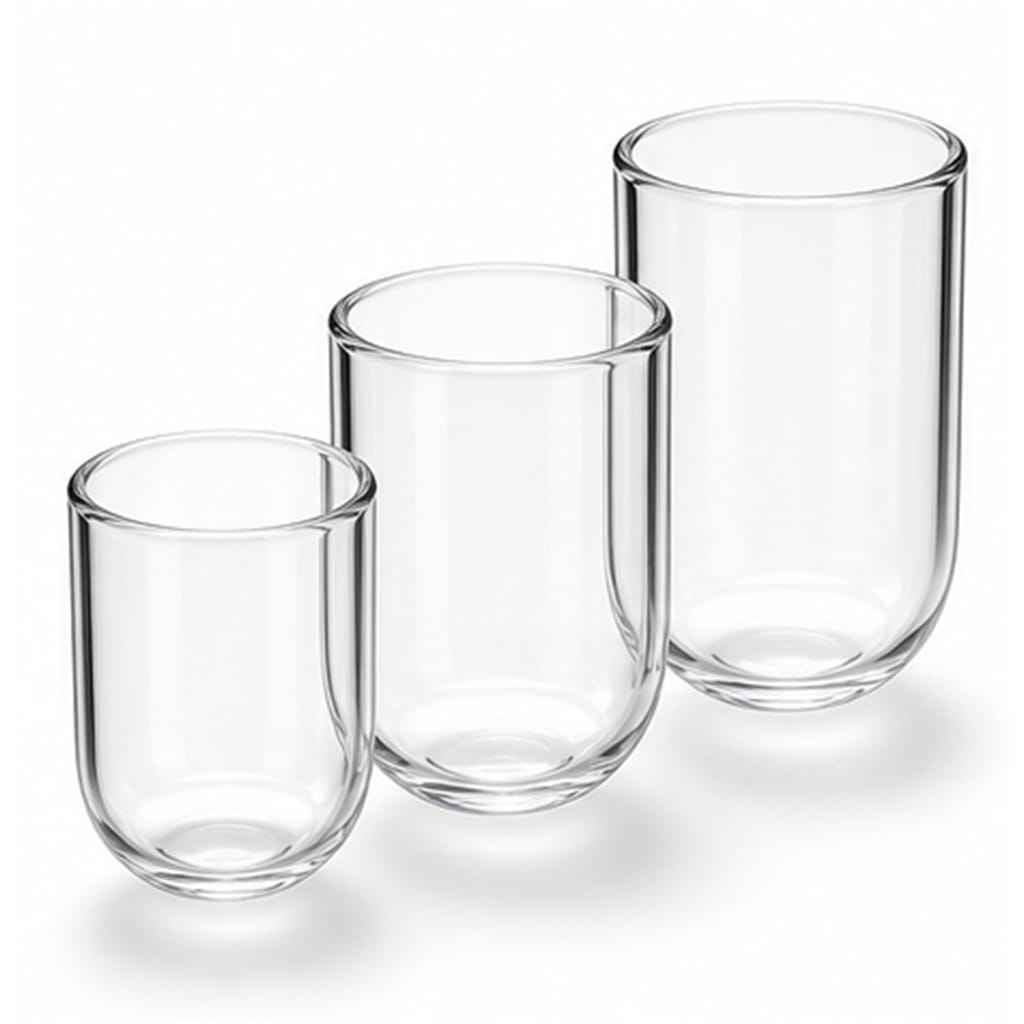
Clear Fused-Quartz Melting Crucibles with Fire-Polished Rims for High-Temperature Laboratory Muffle Furnaces
- Superior acid resistance against nitric and aqua regia
- Smooth fire-polished rim prevents chipping
- Certified for assay and chemical digestion
Engineering Quartz Glass Domes: Structural Resilience Under Canadian Extremes
A comprehensive technical evaluation of fused silica thermodynamics, optical transmission, and environmental integrity in Canadian aerospace, marine, and industrial processing.
In high-specification engineering disciplines across Canada, precision instrumentation envelopes must withstand simultaneous exposure to mechanical pressure differentials, abrasive sub-zero meteorological conditions, aggressive chemical atmospheres, and high-intensity optical radiation. The quartz glass dome represents an pinnacle of geometric and material fabrication: an optically continuous hemispherical or hyper-hemispherical optical barrier capable of isolating sensitive photonic, optoelectronic, and pyrometric systems from violent environments without compromising signal fidelity.
Technical Distinction: Unlike standard borosilicate or soda-lime glass structures that fail catastrophically under sudden thermal swings, fused silica quartz domes feature a virtually negligible coefficient of thermal expansion (5.5 × 10⁻⁷ /°C). This allows them to plunge from +1000°C directly into sub-zero ice water without mechanical failure.
Material Thermodynamics: Fused Silica vs. Standard Technical Glass
Precision quartz components exported to Canadian research hubs—spanning Ontario’s semiconductor corridors, Quebec’s photonics clusters, and Alberta’s remote environmental monitoring stations—rely on pure silicon dioxide (SiO₂) in an amorphous, non-crystalline phase. By eliminating crystalline grain boundaries, our high-temperature synthesis achieves near-zero internal scatter, structural isotropy, and phenomenal chemical inertness.
Fused silica domes retain their dimensional tolerances up to a continuous operating temperature of 1100°C, and maintain structural integrity during brief excursions up to 1450°C. With a strain point established at 1120°C and an annealing threshold at 1215°C, our quartz domes demonstrate negligible mechanical creep even when exposed to sustained thermal gradients across high-vacuum boundary seals. In high-pressure subsea inspection and deep-well autoclave chambers, the hydrostatic yield resistance of the dome's spherical geometry distributes compressive forces uniformly across the quartz matrix, outperforming flat planar sight glasses by factors of up to 4.2x under equivalent wall-thickness parameters.
Spectral Dispersion and Transmittance Dynamics
In optical imaging, solar pyrometry, and deep-UV industrial disinfection systems throughout British Columbia and Ontario, spectral transmission efficiency determines overall system sensitivity. Standard float glass absorbs UV wavelengths below 350 nm due to intrinsic iron and alkali metallic impurities. Kemzo Quartz produces optical-grade fused silica domes that maintain continuous transmission above 90% across a broad spectral envelope ranging from deep ultraviolet (UV-C at 200 nm), across the visible spectrum, through the near-infrared (NIR) spectrum out to 2.5 µm.
The minimal presence of trace hydroxyl (OH⁻) ions or metallic inclusions prevents solarization and laser-induced damage (LIDT), a non-negotiable metric for high-power laser cladding, atmospheric LIDAR profiling in Canadian Arctic monitoring networks, and plasma-enhanced chemical vapor deposition (PECVD) process monitoring.
Localized Application Scenarios Across Canadian Industry
Tailored quartz dome and component implementations engineered to survive the unique physical stressors of Canadian operations.
Sub-Zero Environmental & Arctic LiDAR
Deployed in meteorological and defense observatories in the Northwest Territories and Nunavut. Quartz glass domes protect sensitive optical LiDAR scanning heads from catastrophic thermal shock, gale-force abrasive snowstorms, and ambient temperatures dropping to -55°C without fogging, crystallization, or dimensional warping.
Energy, Oil Sands & Autoclave Sight Systems
In Alberta’s resource extraction plants and bitumen processing facilities, heavy-wall quartz domes and high-pressure sight tubes serve as observation viewports. Resisting harsh hydrocarbons, abrasive tailings, steam extraction chemistry, and high autoclave pressures where mechanical failure is intolerable.
Maritime & Subsea ROV Optical Housings
Operating along the Atlantic and Pacific coastlines, oceanographic exploration probes, submersibles, and commercial remotely operated vehicles (ROVs) require deep-rated viewport domes. High-purity fused quartz handles severe hydrostatic ocean pressures while providing aberration-free 360-degree imaging clarity.
Semiconductor & Photonics Foundries
Supporting cleanroom manufacturing hubs in Ontario and Quebec. Used within inductive plasma etching, rapid thermal annealing (RTP), and chemical vapor deposition chambers. Quartz bells and domes act as vacuum process boundaries, preventing micro-contamination and resisting fluorine/chlorine corrosive gases.
Municipal UV Water Disinfection Infrastructure
Protecting high-intensity amalgam ultraviolet lamps across Ontario, British Columbia, and Alberta municipal water purification stations. The pristine 254 nm germicidal UV transmittance ensures pathogen eradication under steady hydrostatic water line flow.
Aerospace Pyrometry & High-Altitude Instrumentation
Installed on high-altitude airborne research platforms and Canadian aerospace defense monitoring pods. Quartz optical domes isolate multi-spectral infrared sensors and thermal tracking arrays from aerodynamic heating and high-speed particle abrasion at Mach speeds.
Comparative Physical & Thermal Properties
Empirical laboratory metrics validating the performance advantage of fused quartz over alternative engineering glasses.
| Physical Property | Kemzo High-Purity Fused Quartz | Standard Borosilicate 3.3 Glass | Structural Impact for Canadian Operations |
|---|---|---|---|
| SiO₂ Chemical Purity | 99.9% – 99.99% | ~81% (contains B₂O₃, Na₂O, Al₂O₃) | Zero trace metallic contamination; completely chemically non-reactive |
| Coefficient of Thermal Expansion (CTE) | 5.5 × 10⁻⁷ /°C | 33 × 10⁻⁷ /°C | Resists instant transitions from Arctic freezing conditions to intense operational heat |
| Continuous Working Temperature | 1100 °C | 500 °C | Functions reliably in heavy industrial furnaces, flares, and thermal reactors |
| Short-Term Max Operating Temp | 1450 °C | ~550 °C | Thermal safety margin against catastrophic meltdowns and industrial overshoots |
| Softening Point | ≈ 1683 °C | ≈ 820 °C | Structural shape memory maintained at temperatures where standard glass liquifies |
| UV Transmission (200 nm – 300 nm) | > 85% – 92% | < 10% (Significant UV blocking) | Essential for UV germicidal reactors, photolithography, and UV-visible spectroscopy |
| Chemical Resistance | Inert to all acids (except HF / H₃PO₄) | Attacked by alkaline and acidic mixtures | Complete structural stability in sour gas, mining slurry, and acid digestion baths |
Strategic Market Trends Across the Canadian Quartz Sector
Market dynamics driving increased procurement of custom quartz components in Canadian high-tech and resource processing fields.
Canada’s domestic advanced-technology initiatives are placing stringent demands on material purity and supply chain reliability. As semiconductor fabrication and clean technology gain federal investment through the Canadian Critical Minerals Strategy and provincial innovation clusters, several localized shifts have emerged:
1. Strict Trace-Element Auditing in Critical Materials Processing: Canadian analytical testing facilities and lithium/nickel extraction operations are shifting away from traditional refractory metals and standard glassware toward high-purity opaque and clear quartz crucibles. The mandate to reach parts-per-billion (ppb) testing baselines requires materials that exhibit zero leachability of iron, boron, copper, or alkali ions during thermal digestion.
2. Extreme Weather Fortification for Remote Unmanned Systems: Autonomous mining operations in northern Quebec and the Athabasca region increasingly utilize high-precision LiDAR and vision sensor pods that operate unattended through harsh winters. Domestic design engineers specify spherical fused silica domes over flat windows due to reduced thermal stress concentrations at the edges and superior resistance to wind-borne grit abrasion.
3. Clean Energy Photovoltaic and Hydrogen Transition: With Canada expanding clean hydrogen generation and solar PV manufacturing components, high-temperature quartz furnace tubes, carrier boats, and vacuum process vessels have become mission-critical consumables. Procuring components with verified batch consistency reduces unplanned maintenance outages during continuous vapor deposition and pyrolysis cycles.
Why Canadian Buyers Choose Kemzo Quartz
Fully integrated quartz processing capabilities located in Donghai—the world’s crystal capital—delivering engineering-grade solutions to drawing.
Raw Material Proximity
Direct access to world-renowned high-purity natural silica sand reserves in Donghai ensures uniform crystalline clarity, high SiO₂ concentrations, and lower baseline raw material overheads passed onto our clients.
ISO 9001 Certified Quality
Operating under strict ISO 9001 quality management guidelines. Recognized as a Jiangsu High Technology Enterprise with 100% optical inspection, dimensional verification, and internal stress-relief annealing.
Custom OEM / ODM Fabrication
Over 11 years of experience manufacturing to drawing. Our in-house glass blowers, precision CNC mills, flame-polishing lathes, and laser cutting machines accommodate complex profiles, bevelled edges, and tight mechanical tolerances.
Specialized Export Packaging
Exporting over 70% of production worldwide. Fragile quartz components are individually suspended in high-density foam cushioning within export-grade, ISPM-15 compliant shock-resistant wooden crates for secure air and ocean transit across Canada.
Canadian Procurement FAQ
Direct technical answers addressing tariff, logistical, material, and fabrication queries from Canadian engineering teams.
How do you protect fragile quartz glass domes and precision tubes during transit to Canadian ports and inland facilities?
What are the primary differences between natural fused quartz and synthetic fused silica for Canadian optical projects?
Can Kemzo fabricate non-standard dome geometries, flanges, and optical mounting holes to drawing?
What documentation and certifications accompany quartz components arriving in Canada?
Which commercial Incoterms and international currency arrangements do you accommodate for Canadian accounts?
How does fused quartz handle thermal shock compared to standard borosilicate sight glasses?
Need Technical Quotations or Custom Engineering Review?
Send your dimensional drawings, CAD files, or performance requirements directly to our senior quartz fabrication team. We provide rapid technical reviews, dimensional feasibility feedback, and factory direct quotations within one hour.