The Mazowieckie voivodeship, anchored by Warsaw, has rapidly evolved into Central and Eastern Europe's most sophisticated hub for high-temperature material engineering, semiconductor substrate synthesis, and non-ferrous precious metal pyrometallurgy. Historically known for industrial precision and academic research institutes like the Polish Academy of Sciences and Warsaw University of Technology, the region requires an uncompromising supply of ceramic and refractory glassware capable of surviving aggressive thermal shock while maintaining absolute chemical inertness. Within this rigorous context, the quartz melting crucible represents not merely a passive containment vessel, but an active thermal interface whose microstructural integrity directly dictates ingot crystalline purity, grain boundary consistency, and process yield rates.
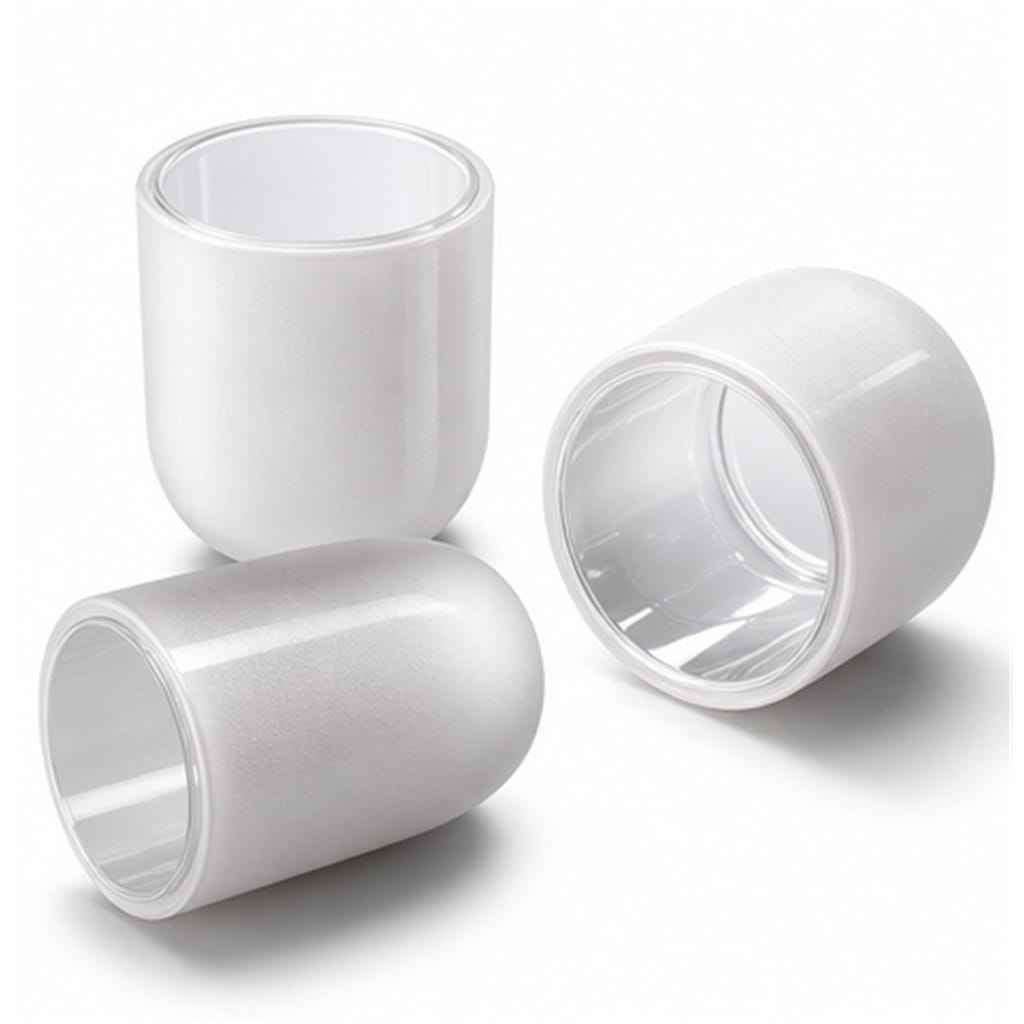
Procuring quartz crucibles and associated fused silica furnaceware in the Warsaw metropolitan territory involves severe structural requirements. Unlike common borosilicate apparatus or mullite refractory vessels, high-grade fused quartz crucibles are fabricated from naturally pure crystalline silica granules processed through continuous electric arc fusion or rotary vacuum thermal fusion. Operating under the chemical classification of >99.99% silicon dioxide (SiO2), these crucibles exhibit a minuscule thermal expansion coefficient of approximately 5.5 × 10⁻⁷ /°C between 20°C and 300°C. This phenomenal dimensional stability allows engineering operators in Warsaw's foundries and vacuum arc remelting facilities to cycle crucibles from room temperature directly to operational melting thresholds above 1200°C without risk of catastrophic spalling, structural delamination, or micro-crack propagation.
Material Science Insight: Devitrification Control at 1100°C–1450°C
For industrial operators in Ożarów Mazowiecki, Piaseczno, and the Warsaw industrial belt, high-temperature devitrification—the phase transformation of amorphous fused quartz into crystalline cristobalite—is the primary failure mode during induction and resistance heating. Our specialized fire-polishing technique and chemical acid-etching rinse minimize surface alkali metals (Na, K, Li ≤ 1.5 ppm), effectively suppressing nucleation points and delaying cristobalite crystallite growth by up to 300% under standard working atmospheres.
Furthermore, local Warsaw buyers focused on inductive precious metal melting—such as gold, silver, and platinum refining—depend heavily on the internal surface finish of the crucible. An unpolished or micro-porous interior allows liquid molten metal to wet or penetrate microscopic pore channels, leading to unrecoverable metal retention, localized stress concentrations, and thermal pitting. By employing arc-fused internal bubble-free glazes, our crucibles present an ultra-smooth, vitreous surface that demonstrates zero chemical reactivity toward molten non-ferrous alloys, guaranteeing instantaneous metal release, uncompromised assay accuracy, and repeated batch reliability across demanding Polish metallurgical workflows.